
1 Scope
This specification was created by a joint working group of the OPC Foundation and AutomationML e.V.. It defines an OPC UA Information Model to represent the AutomationML models.
OPC Foundation
The OPC Foundation defines standards for online data exchange between automation systems. They address access to current data (OPC DA), alarms and events (OPC A&E) and historical data (OPC HDA). Those standards are successfully applied in industrial automation.
The new OPC Unified Architecture (OPC UA) unifies the existing standards and brings them to state-of-the-art technology using service-oriented architecture (SOA). Platform-independent technology allows the deployment of OPC UA beyond current OPC applications only running on Windows-based PC systems. OPC UA can also run on embedded systems as well as Linux / UNIX based enterprise systems. The provided information can be generically modelled and therefore arbitrary information models can be provided using OPC UA.
AutomationML e.V.
The AutomationML initiative is an open, in 2006 founded industrial consortium which became a registered association in 2009. It welcomes all interested company and research institute.
Purposes of AutomationML e.V. are promotion and further development of AutomationML to standardise data exchange in the engineering process of production systems. Therefore, AutomationML e.V. develops and maintains an open, neutral, XML based, and free industry data representation standard which enables a domain and company spanning transfer of engineering data. Instead of developing a new data format for that purpose, already existing formats were used, extended, adapted, and merged in a proper way. So far, the representation of plant specific data in general and in special the plant structure, geometry and kinematics, and logic description is possible. Additional representations for networks, mechatronical systems, and others are in progress. Hence, AutomationML is the most comprehensive data format of plant engineering. It is already used in the field and is also available in several products. Within IEC 62714 all parts of AutomationML are going to be standardised internationally.
2 Reference documents
OPC 10000-1, OPC Unified Architecture - Part 1: Overview and Concepts
OPC 10000-3, OPC Unified Architecture - Part 3: Address Space Model
OPC 10000-5, OPC Unified Architecture - Part 5: Information Model
OPC 10000-7, OPC Unified Architecture - Part 7: Profiles
OPC 10000-100, OPC Unified Architecture - Part 100: Devices
IEC 62714-1:2014, Engineering data exchange format for use in industrial automation systems engineering - Automation markup language - Part 1: Architecture and general requirements
IEC 62714-2:2015, Engineering data exchange format for use in industrial automation systems engineering - Automation markup language - Part 2: Role class libraries
IEC 62714-3, Engineering data exchange format for use in industrial automation systems engineering - Automation markup language - Part 3: Geometry and kinematics
IEC 62714-4, Engineering data exchange format for use in industrial automation systems engineering - Automation markup language - Part 3: Logic and behavior
IEC 62264-1: 2013, Enterprise-control system integration - Part 1: Models and terminology (similar to ANSI ISA 95)
IEC 61512-1:1997, Batch control - Part 1: Models and terminology (similar to ANSI ISA 88)
IEC 62424:2008, Representation of process control engineering - Requests in P&I diagrams and data exchange between P&ID tools and PCE-CAE tools
3 Terms, definitions, and conventions
3.1 Use of terms
Defined terms of OPC UA specifications, types and their components defined in OPC UA specifications and in this specification are highlighted with italic in this document.
AutomationML related terms and names are always used together with the prefix AutomationML.
3.2 Abbreviations and symbols
| AML | Automation Markup Language |
| CAEX | Computer Aided Engineering Exchange |
| HMI | Human-Machine Interface |
| IEC | International Electrotechnical Commission |
| ISO | International Organization for Standardization |
| UA | Unified Architecture |
| XML | Extensible Markup Language |
3.3 Conventions used in this document
3.3.1 Conventions for naming of interconnection between elements
Relations between elements in AutomationML are referred to as references between nodes in OPC UA.
3.3.2 Conventions for Node descriptions
Node definitions are specified using tables (See Table 1)
| Attribute | Value | ||||||
| Attribute name | Attribute value. If it is an optional Attribute that is not set "--" will be used. | ||||||
| References | NodeClass | BrowseName | DataType | TypeDefinition | ModellingRule | ||
|---|---|---|---|---|---|---|---|
| ReferenceType name | NodeClass of the TargetNode. | BrowseName of the target Node. If the Reference is to be instantiated by the server, then the value of the target Node's BrowseName is "--". | Attributes of the referenced Node, only applicable for Variables and Objects. | Referenced ModellingRule of the referenced Object. | |||
Notes - Notes referencing footnotes of the table content. | |||||||
Attributes are defined by providing the Attribute name and a value, or a description of the value.
References are defined by providing the ReferenceType name, the BrowseName of the TargetNode and its NodeClass.
If the TargetNode is a component of the Node being defined in the table the Attributes of the composed Node are defined in the same row of the table. That implies that the referenced Node has a HasModelParent Reference with the Node defined in the Table as TargetNode (see OPC 10000-3 for the definition of ModelParents).
The DataType is only specified for Variables; "[<number>]" indicates a single-dimensional array, for multi-dimensional arrays the expression is repeated for each dimension (e.g. [2][3] for a two-dimensional array). For all arrays the ArrayDimensions is set as identified by <number> values. If no <number> is set, the corresponding dimension is set to 0, indicating an unknown size. If no number is provided at all the ArrayDimensions can be omitted. If no brackets are provided, it identifies a scalar DataType and the ValueRank is set to the corresponding value (see OPC 10000-3). In addition, ArrayDimensions is set to null or is omitted. If it can be Any or ScalarOrOneDimension, the value is put into "{<value>}", so either "{Any}" or "{ScalarOrOneDimension}" and the ValueRank is set to the corresponding value (see OPC 10000-3) and the ArrayDimensions is set to null or is omitted. In Table 2 examples are given.
| Notation | DataType | ValueRank | ArrayDimensions | Description |
| Int32 | Int32 | -1 | omitted or NULL | A scalar Int32 |
| Int32[] | Int32 | 1 | omitted or {0} | Single-dimensional array of Int32 with an unknown size |
| Int32[][] | Int32 | 2 | omitted or {0,0} | Two-dimensional array of Int32 with unknown sizes for both dimensions |
| Int32[3][] | Int32 | 2 | {3,0} | Two-dimensional array of Int32 with a size of 3 for the first dimension and an unknown size for the second dimension |
| Int32[5][3] | Int32 | 2 | {5,3} | Two-dimensional array of Int32 with a size of 5 for the first dimension and a size of 3 for the second dimension |
| Int32{Any} | Int32 | -2 | omitted or NULL | An Int32 where it is unknown if it is scalar or array with any number of dimensions |
| Int32{ScalarOrOneDimension} | Int32 | -3 | omitted or NULL | An Int32 where it is either a single-dimensional array or a scalar |
The TypeDefinition is specified for Objects and Variables.
The TypeDefinition column specifies a NodeId of a TypeDefinitionNode, i.e. the specified Node points with a HasTypeDefinition Reference to the corresponding TypeDefinitionNode. The symbolic name of the NodeId is used in the table.
The ModellingRule of the referenced component is provided by specifying the symbolic name of the rule in the ModellingRule column. In the AddressSpace, the Node shall use a HasModellingRule Reference to point to the corresponding ModellingRule Object.
If the NodeId of a DataType is provided, the symbolic name of the Node representing the DataType shall be used.
Nodes of all other NodeClasses cannot be defined in the same table; therefore only the used ReferenceType, their NodeClass and their BrowseName are specified. A reference to another of this document points to their definition.
If no components are provided, the DataType, TypeDefinition and ModellingRule columns may be omitted and only a Comment column is introduced to point to the Node definition.
Components of Nodes can be complex, i.e. containing components by themselves. The TypeDefinition, NodeClass, DataType and ModellingRule can be derived from the type definitions, and the symbolic name can be created as defined in 3.3.3.1. Therefore those containing components are not explicitly specified; they are implicitly specified by the type definitions.
3.3.3 NodeIds and BrowseNames
3.3.3.1 NodeIds
The NodeIds of all Nodes described in this document are only symbolic names.
The symbolic name of each Node defined in this document is its BrowseName, or, when it is part of another Node, the BrowseName of the other Node, a ".", and the BrowseName of itself. In this case "part of" means that the whole has a HasProperty or HasComponent Reference to its part. Since all Nodes not being part of another Node have a unique name in this document, the symbolic name is unique.
The namespace for this specification is defined in the following chapters. The NamespaceIndex for all NodeIds defined in this specification is server specific and depends on the position of the namespace URI in the server namespace table.
Note: This specification does not only define concrete Nodes, but also requires that some Nodes have to be generated, for example one for each device type available in the frame application. The NodeIds of those Nodes are server-specific, including the Namespace. But the NamespaceIndex of those Nodes cannot be the NamespaceIndex used for the Nodes defined by this specification, because they are not defined by this specification but generated by the Server.
3.3.3.2 BrowseNames
The text part of the BrowseNames for all Nodes defined in this specification is specified in the tables defining the Nodes. The NamespaceIndex for all BrowseNames defined in this specification is server specific and depends on the position of the namespace URI defined in this specification in the server namespace table.
If the BrowseName is not defined by this specification, a namespace index prefix like '0:EngineeringUnits' is added to the BrowseName. This is typically necessary if a Property of another specification is overwritten or used in the OPC UA types defined in this specification.
3.3.4 Common Attributes
3.3.4.1 General
For all Nodes specified in this specification, the Attributes named in Table 3 shall be set as specified in the table.
| Attribute | Value |
| DisplayName | The DisplayName is a LocalizedText. Each server shall provide the DisplayName identical to the BrowseName of the Node for the LocaleId "en". Whether the server provides translated names for other LocaleIds is vendor specific. |
| Description | Optionally a vendor specific description is provided |
| NodeClass | Shall reflect the NodeClass of the Node |
| NodeId | The NodeId is described by BrowseNames as defined in 3.3.3.1. |
| WriteMask | Optionally the WriteMask Attribute can be provided. If the WriteMask Attribute is provided, it shall set all Attributes to not writeable that are not said to be vendor-specific. For example, the Description Attribute may be set to writeable since a Server may provide a server-specific description for the Node. The NodeId shall not be writeable, because it is defined for each Node in this specification. |
| UserWriteMask | Optionally the UserWriteMask Attribute can be provided. The same rules as for the WriteMask Attribute apply. |
3.3.4.2 Objects
For all Objects specified in this specification, the Attributes named in Table 4 shall be set as specified in the table.
| Attribute | Value |
| EventNotifier | Whether the Node can be used to subscribe to Events or not is vendor specific |
3.3.4.3 Variables
For all Variables specified in this specification, the Attributes named in Table 5 shall be set as specified in the table.
| Attribute | Value |
| MinimumSamplingInterval | Optionally, a vendor-specific minimum sampling interval is provided |
| AccessLevel | The access level for Variables used for type definitions is vendor-specific, for all other Variables defined in this part, the access level shall allow a current read; other settings are vendor specific. |
| UserAccessLevel | The value for the UserAccessLevel Attribute is vendor-specific. It is assumed that all Variables can be accessed by at least one user. |
| Value | For Variables used as InstanceDeclarations, the value is vendor-specific; otherwise it shall represent the value described in the text. |
| ArrayDimensions | If the ValueRank does not identify an array of a specific dimension (i.e. ValueRank <= 0) the ArrayDimensions can either be set to null or the Attribute is missing. This behaviour is vendor-specific. If the ValueRank specifies an array of a specific dimension (i.e. ValueRank > 0) then the ArrayDimensions Attribute shall be specified in the table defining the Variable. |
3.3.4.4 VariableTypes
For all VariableTypes specified in this specification, the Attributes named in Table 6 shall be set as specified in the table.
| Attributes | Value |
| Value | Optionally a vendor-specific default value can be provided |
| ArrayDimensions | If the ValueRank does not identify an array of a specific dimension (i.e. ValueRank <= 0) the ArrayDimensions can either be set to null or the Attribute is missing. This behaviour is vendor-specific. If the ValueRank specifies an array of a specific dimension (i.e. ValueRank > 0) then the ArrayDimensions Attribute shall be specified in the table defining the VariableType. |
4 General information to AutomationML and OPC UA
4.1 Introduction to AutomationML
The AutomationML data format, developed by AutomationML e.V., standardised in IEC 62714, is an open, neutral, XML-based, and free data exchange format which enables a domain and company spanning transfer of engineering data of production systems in a heterogeneous engineering tool landscape. The goal of AutomationML is to interconnect engineering tools in their different disciplines, e.g. plant planning, mechanical engineering, electrical engineering, process engineering, process control engineering, HMI development, PLC programming, robot programming.
AutomationML stores engineering information following the object oriented paradigm and allows modelling of physical and logical plant components as data objects encapsulating different aspects. An object may consist of other sub-objects, and may itself be part of a larger composition or aggregation. Typical objects in plant automation comprise information on topology, geometry, kinematics, logic, and behaviour.
In addition, AutomationML follows a modular structure. AutomationML is based on IEC 62424 (CAEX) and integrates other already existing XML-based data formats (see Figure 1). These data formats are used on an "as-is" basis within their own specifications and are not branched for AutomationML needs.
Logically AutomationML is partitioned in:
description of the plant structure and communication systems expressed as a hierarchy of AutomationML objects and described by means of CAEX following IEC 62424
description of geometry and kinematics of the different AutomationML objects represented by means of COLLADA 1.4.1 and 1.5.0 (ISO/PAS 17506:2012)
description of control related logic data of the different AutomationML objects represented by means of PLCopen XML 2.0 and 2.0.1 (IEC61131-10)
description of relations among AutomationML objects and references to information that is stored in documents outside the top level format
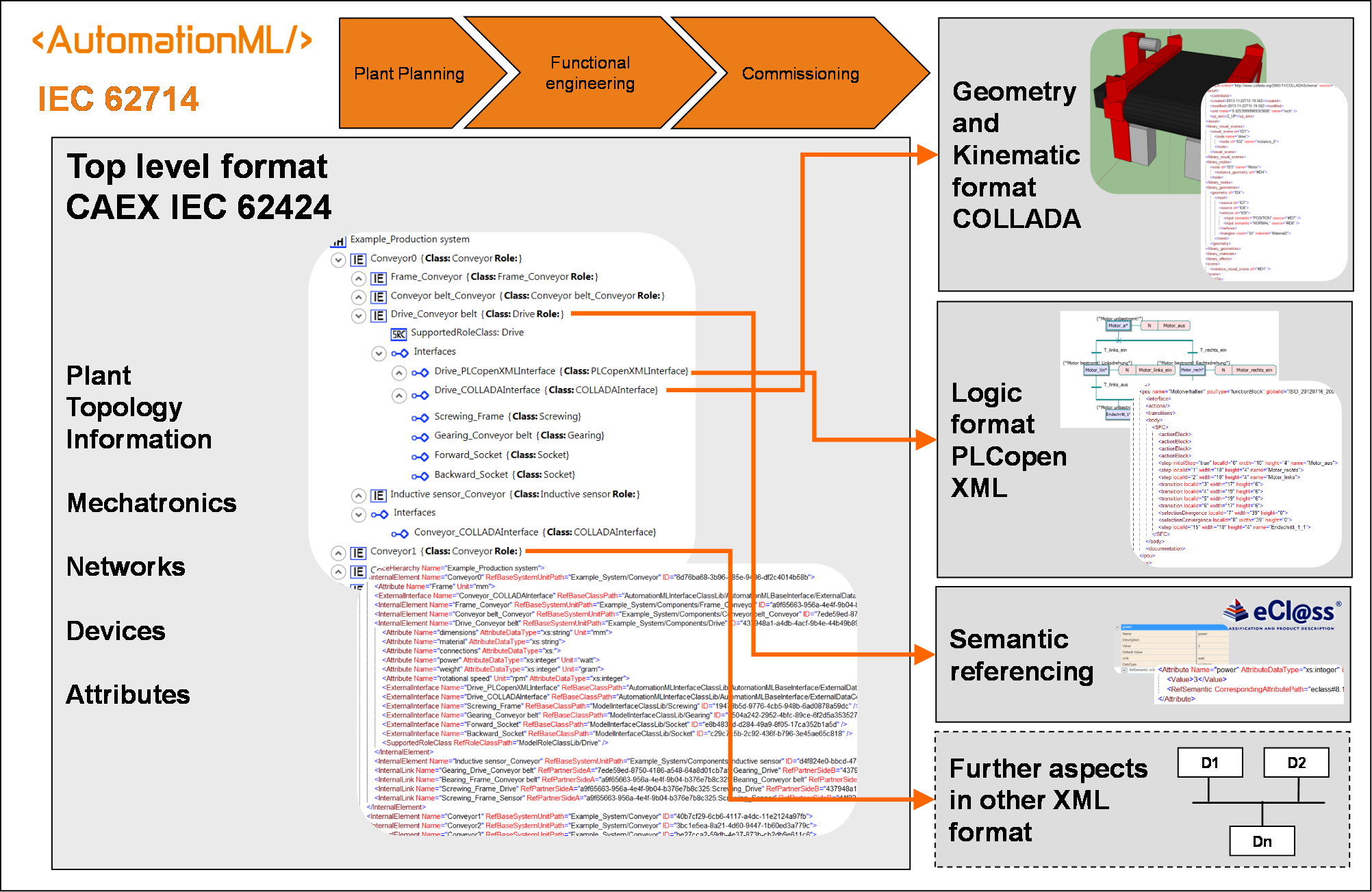
Due to the different aspects of AutomationML, the IEC 62714 series consists of different parts focussing on different aspects:
IEC 62714-1: Architecture and general requirements - This part specifies the general AutomationML architecture, the modelling of engineering data, classes, instances, relations, references, hierarchies, basic AutomationML libraries and extended AutomationML concepts. It describes the use of CAEX. It is the basis of all future parts and provides mechanisms to reference other sub-formats.
IEC 62714-2: Role class libraries - This part is intended to specify additional AutomationML libraries to derive necessary roles for semantic definition in individual application cases.
IEC 62714-3: Geometry and kinematics - This part is intended to specify the modelling of geometry and kinematics information based on COLLADA.
IEC 62714-4: Logic - This part is intended to specify the modelling of logics, sequencing, behaviour and control related information based on PLCopen XML.
Further parts may be added in the future in order to interconnect additional data standards to AutomationML.
4.1.1 Top-level format CAEX
The foundation of AutomationML is the application of CAEX as the top level format. Furthermore, AutomationML defines an appropriate CAEX profile fulfilling all relevant needs of AutomationML to model engineering information of production systems. It integrates the three data formats CAEX, COLLADA, and PLCopenXML, and enables an extension, if necessary, in the future.
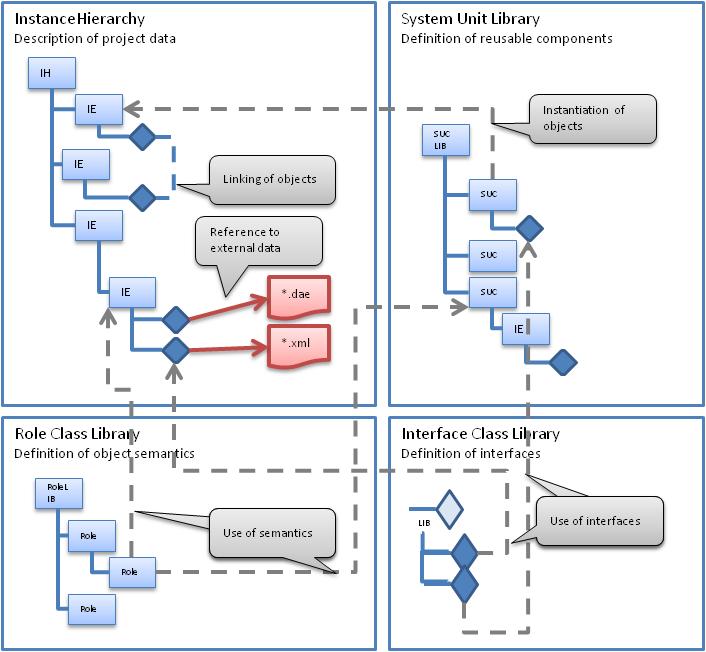
CAEX enables an object oriented approach (see Figure 2) where
semantics of system objects can be specified using roles defined and collected in role class libraries,
semantics of interfaces between system objects can be specified using interface classes defined and collected in interface class libraries,
classes of system objects can be specified using system unit classes (SUC) defined and collected in system unit class libraries, and
individual objects are modelled in an instance hierarchy (IH) as a hierarchy of internal elements (IE) referencing system unit classes they are derived from, role classes defining its semantics, and interface objects used to interlink objects among each other or with externally modelled information (e.g. COLLADA and PLCopenXML files).
4.2 Introduction to OPC Unified Architecture
4.2.1 General
The main use case for OPC standards is the online data exchange between devices and HMI or SCADA systems using Data Access functionality. In this use case the device data is provided by an OPC server and is consumed by an OPC client integrated into the HMI or SCADA system. OPC DA provides functionality to browse through a hierarchical namespaces containing data items and to read, write and to monitor these items for data changes. The classic OPC standards are based on Microsoft COM/DCOM technology for the communication between software components from different vendors. Therefore classic OPC server and clients are restricted to Windows PC based automation systems.
OPC UA incorporates all features of classic OPC standards like OPC DA, A&E and HDA but defines platform independent communication mechanisms and generic, extensible and object-oriented modelling capabilities for the information a system wants to expose.
The OPC UA network communication part defines different mechanisms optimized for different use cases. The first version of OPC UA is defining an optimized binary TCP protocol for high performance intranet communication as well as a mapping to accepted internet standards like Web Services. The abstract communication model does not depend on a specific protocol mapping and allows adding new protocols in the future. Features like security, access control and reliability are directly built into the transport mechanisms. Based on the platform independence of the protocols, OPC UA servers and clients can be directly integrated into devices and controllers.
The OPC UA Information Model provides a standard way for Servers to expose Objects to Clients. Objects in OPC UA terms are composed of other Objects, Variables and Methods. OPC UA also allows relationships to other Objects to be expressed.
The set of Objects and related information that an OPC UA Server makes available to Clients is referred to as its AddressSpace. The elements of the OPC UA Object Model are represented in the AddressSpace as a set of Nodes described by Attributes and interconnected by References. OPC UA defines eight classes of Nodes to represent AddressSpace components. The classes are Object, Variable, Method, ObjectType, DataType, ReferenceType and View. Each NodeClass has a defined set of Attributes.
This specification makes use of three essential OPC UA NodeClasses: Objects, Methods and Variables.
Objects are used to represent components of a system. An Object is associated to a corresponding ObjectType that provides definitions for that Object.
Methods are used to represent commands or services of a system.
Variables are used to represent values. Two categories of Variables are defined, Properties and DataVariables.
Properties are Server-defined characteristics of Objects, DataVariables and other Nodes. Properties are not allowed to have Properties defined for them. An example for Properties of Objects is the Object_Identifier Property of a XXX ObjectType.
DataVariables represent the contents of an Object. DataVariables may have component DataVariables. This is typically used by Servers to expose individual elements of arrays and structures. This specification uses DataVariables to represent data like the XXX of a XXX Object.
4.2.2 Graphical Notation
OPC UA defines a graphical notation for an OPC UA AddressSpace. It defines graphical symbols for all NodeClasses and how different types of References between Nodes can be visualized. Figure 3 shows the symbols for the six NodeClasses used in this specification. NodeClasses representing types always have a shadow.
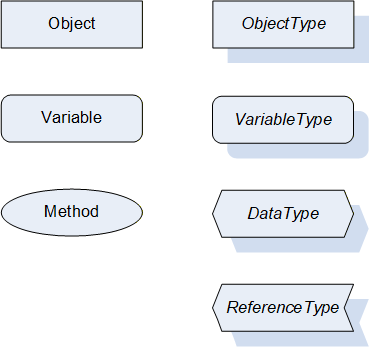
Figure 4 shows the symbols for the ReferenceTypes used in this specification. The Reference symbol is normally pointing from the source Node to the target Node. The only exception is the HasSubType Reference. The most important References like HasComponent, HasProperty, HasTypeDefinition and HasSubType have special symbols avoiding the name of the Reference. For other ReferenceTypes or derived ReferenceTypes the name of the ReferenceType is used together with the symbol.
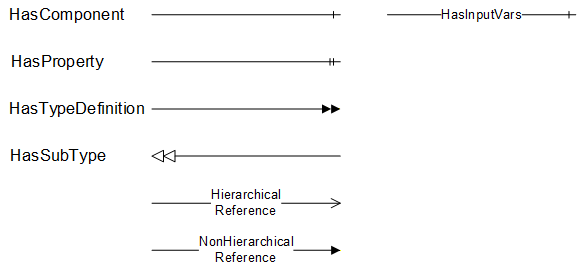
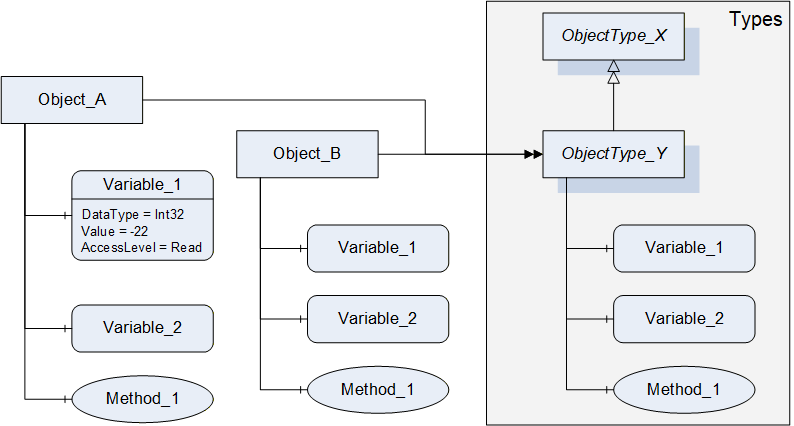
Figure 5 shows a typical example for the use of the graphical notation. Object_A and Object_B are instances of the ObjectType_Y indicated by the HasTypeDefinition References. The ObjectType_Y is derived from ObjectType_X indicated by the HasSubType Reference. The Object_A has the components Variable_1, Variable_2 and Method_1.
To describe the components of an Object on the ObjectType the same NodeClasses and References are used on the Object and on the ObjectType like for ObjectType_Y in the example. The instance Nodes used to describe an ObjectType are instance declaration Nodes.
To provide more detailed information for a Node, a subset or all Attributes and their values can be added to a graphical symbol.
4.3 Use Cases
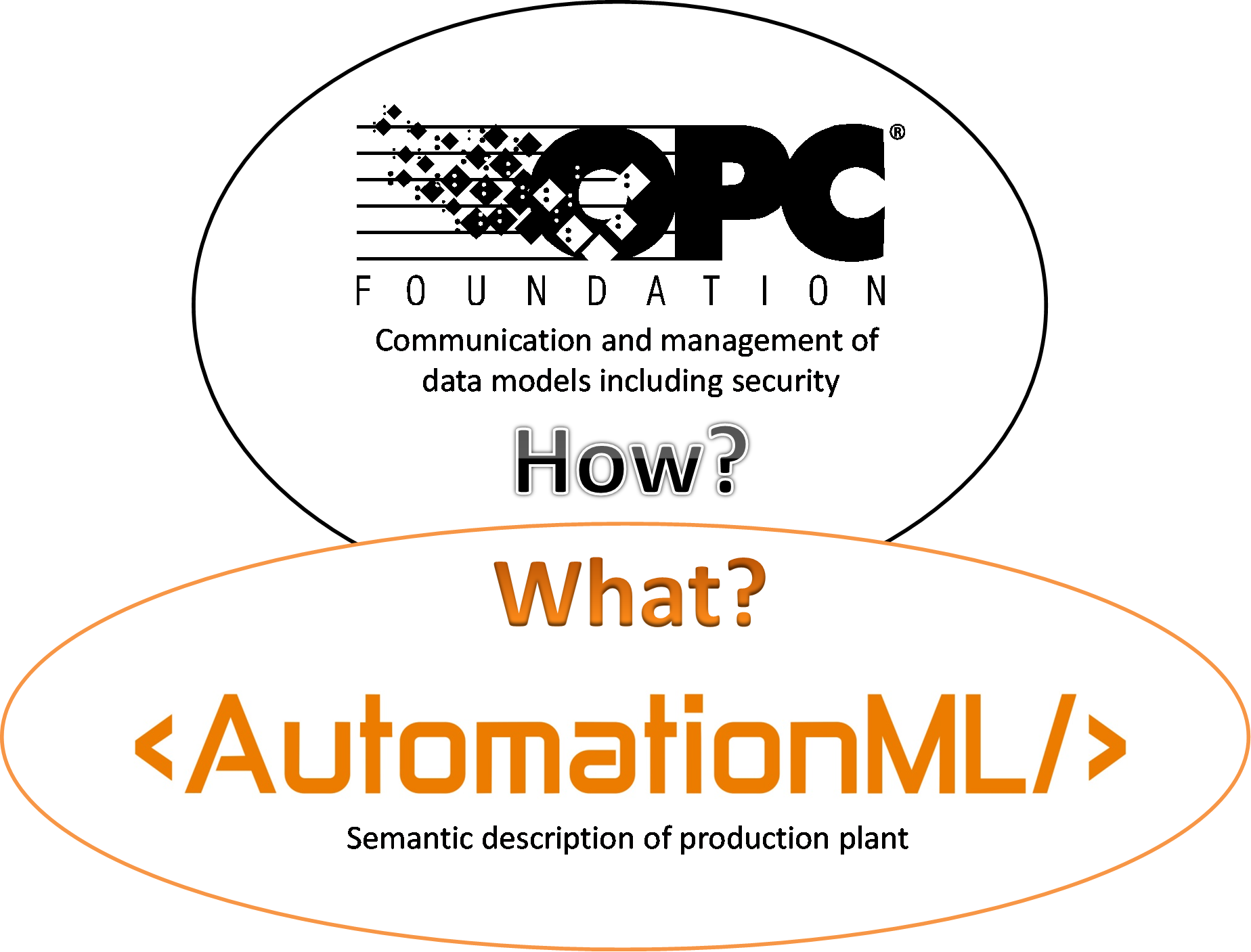
The specification describes the combination of AutomationML with OPC UA online information like process data and diagnostic information. It extends the application domain of OPC UA (see Figure 6). Therefore, different use cases which will be possible by the combination of both standards were identified.
One opportunity from combining AutomationML and OPC UA is to communicate and operationalise AutomationML by means of OPC UA. It is possible to simplify the creation of OPC UA information models based on existing AutomationML data. This can be realized by a so called OPC UA companion specification due to analogies between AutomationML and the OPC UA information model. The companion specification for AutomationML consists of an object model including many specific semantics which can be used online with multiple involved parties by OPC UA. This makes an online version of the AutomationML model possible - AutomationML models can be exchanged via OPC UA - and includes OPC UA data management, online communication functionality, multi-user support, access methods, security, etc. This is especially important for re-engineering and maintenance use cases where the AutomationML model evolves over time. The present AutomationML model can be managed by OPC UA and makes an up-to-date description of the system as-is possible.
One other opportunity is the lossless exchange of the OPC UA system configuration within AutomationML models. The manual exchange of OPC UA server configuration data will be replaced by a specified description in AutomationML. Parameters to set up OPC UA communication between tools can be exchanged using AutomationML. This realizes consistent data, produces less errors and results in an easier and faster configuration of UA servers and clients. OPC UA can benefit from the description of the complete communication network configuration and structure including communication components of sensors and actuators with respect to communication system parameters, network structure and wiring, quality of service.
5 AutomationML Model Overview
5.1 Modeling concepts
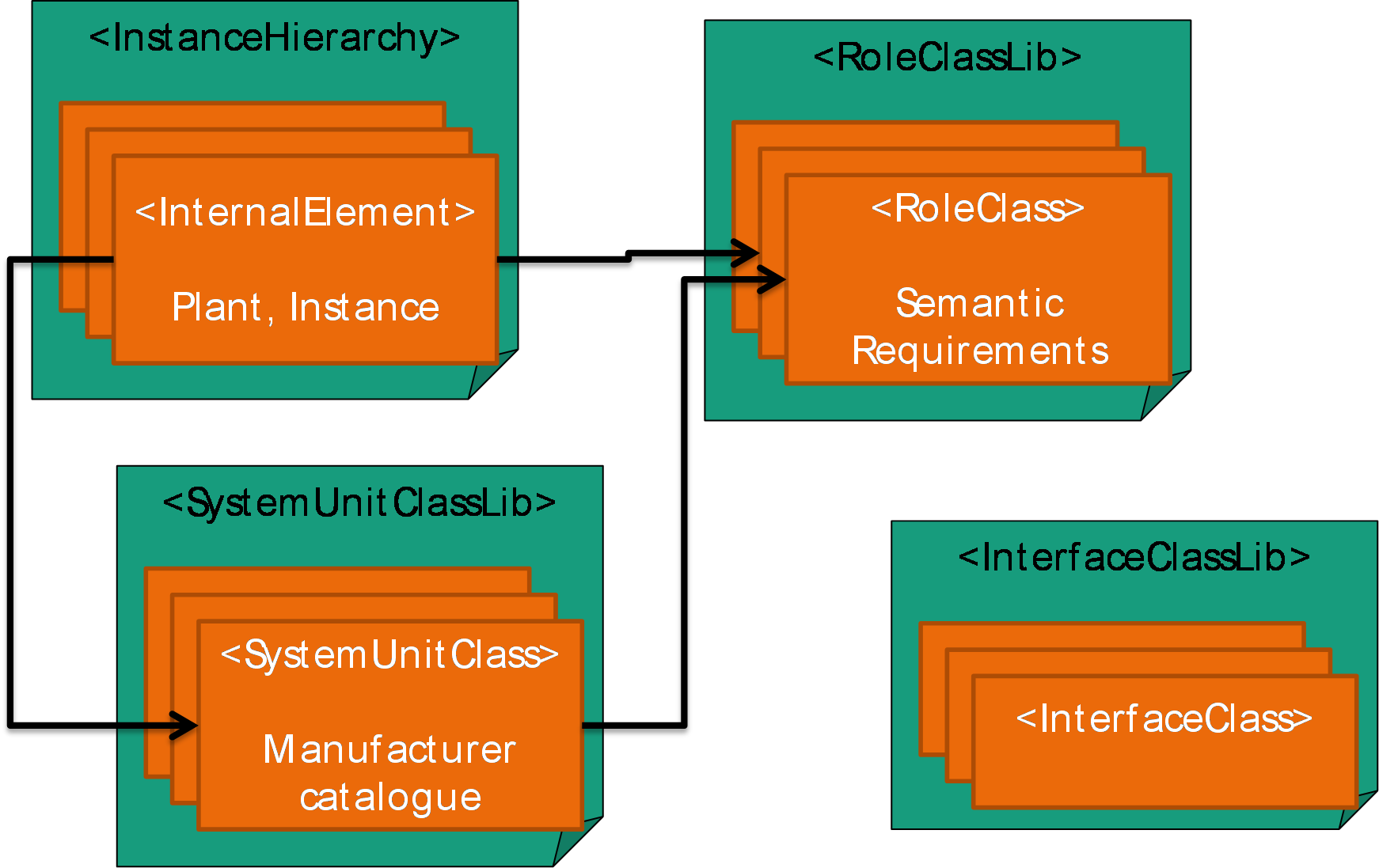
AutomationML models are divided into different hierarchical trees (see Figure 7): InstanceHierarchy, RoleClassLibs, SystemUnitClassLib, and InterfaceClassLib.
The main AutomationML elements and all possible relations between them are shown in Figure 8. The organization in a hierarchical tree involves that every element type can have child elements of the same type (see ChildElement relations). SystemUnitClasses and RoleClasses are defined in an inheritance structure; the RefBaseClassPath relations define such inheritance relations. RoleClasses can be assigned to SystemUnitClasses and InternalElements. In the latter case there are two different ways to make the RoleClass assignment using SupportedRoleClasses or the RoleRequirement. The remaining arrows in Figure 8 describe the possible relations between InternalElements and SystemUnitClasses. An InternalElement can inherit from a SystemUnitClass. In the scope of AutomationML SystemUnitClasses are only templates and can be changed after instantiation. The backward relation indicates that a SystemUnitClass can define sub-elements in terms of InternalElements. These sub-elements (InternalElements) should be included on instantiation. RoleClasses describe functions of a physical or logical plant object independent of a technical implementation. They offer a possibility to specify an object in an abstract way and independent of the manufacturer. The assignment of a RoleClass to an object (SystemUnitClass or InternalElement) results in the allocation of fundamental functions or requirements.
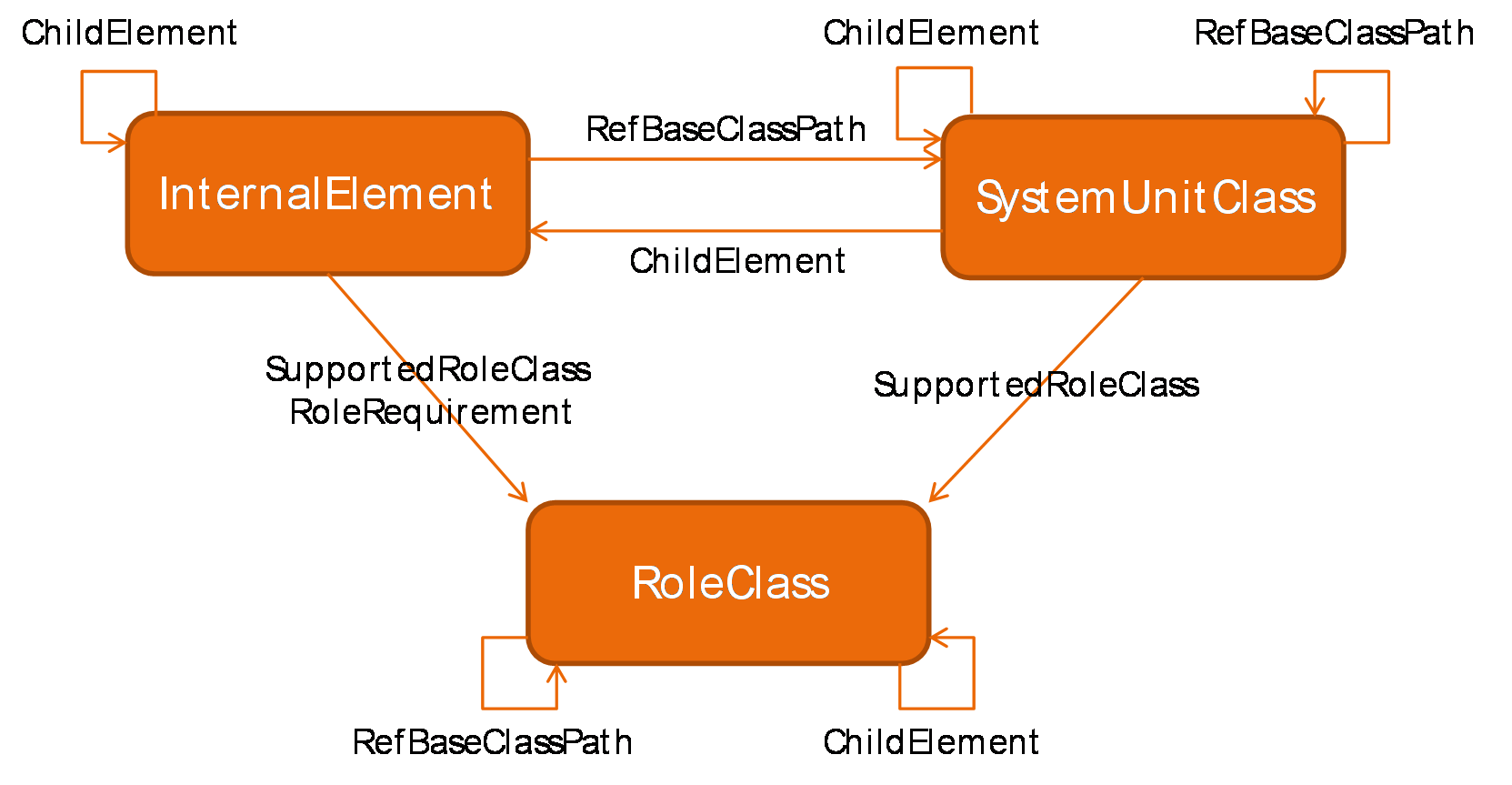
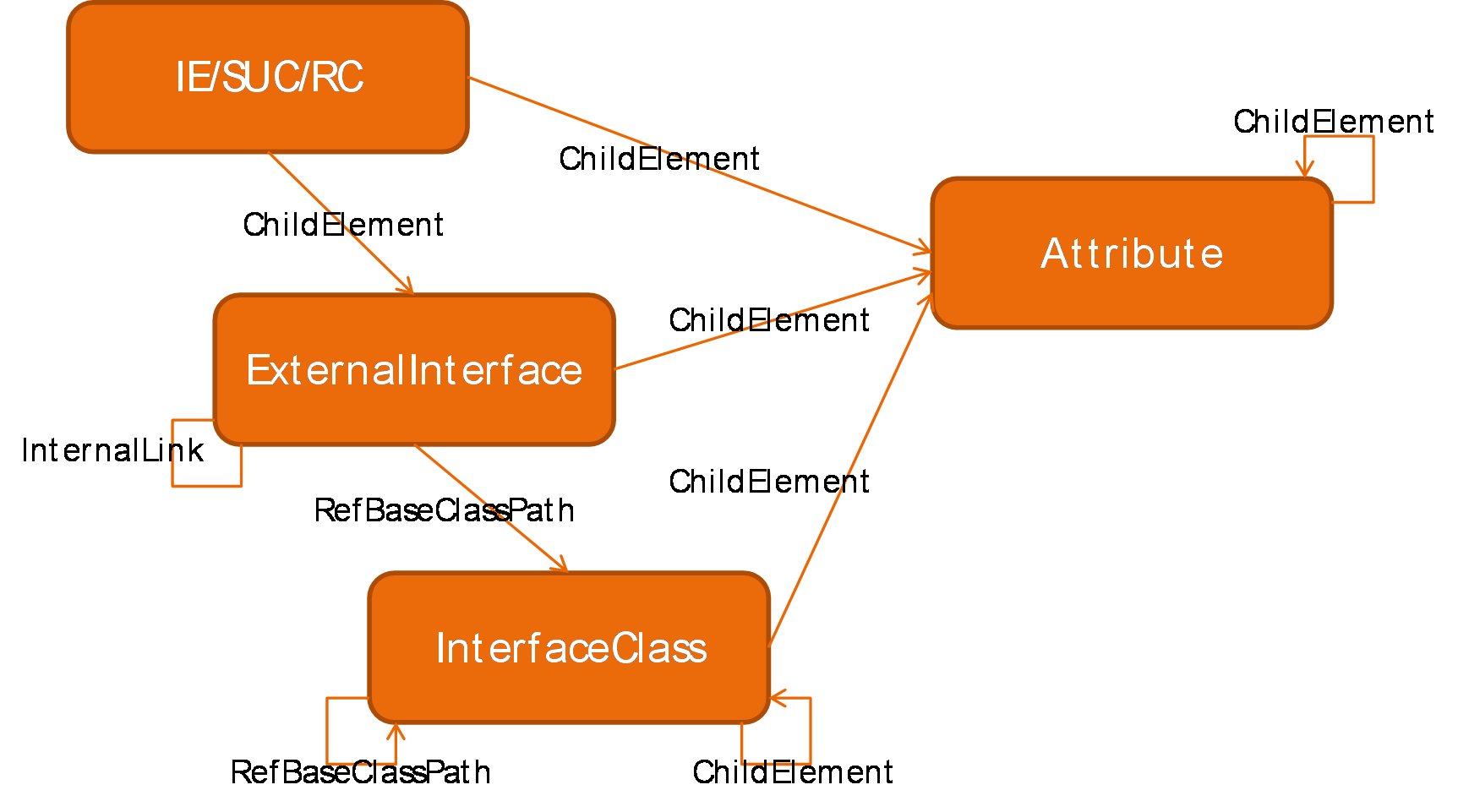
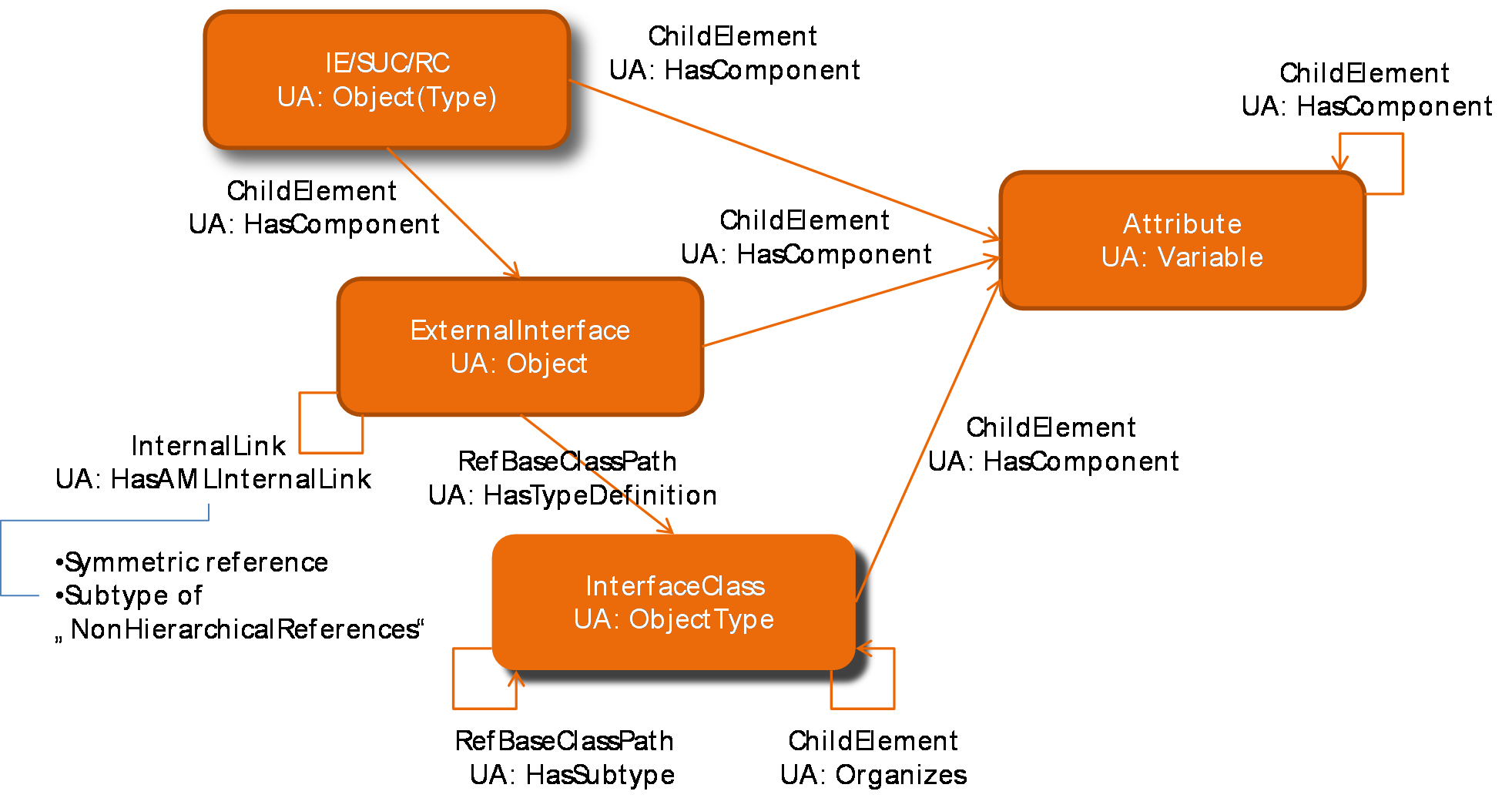
Figure 9 depicts the basic structure of a RoleClass (RC), SystemUnitClass (SUC), or InternalElement (IE). Each can contain arbitrary nested Attributes and Interfaces (see ChildElement relations). The Interfaces are called ExternalInterfaces and shall inherit from an InterfaceClass. They can be connected to other ExternalElements via InternalLinks. The InterfaceClasses are stored hierarchically and shall have independent inheritance relations. InterfaceClasses and certainly ExternalInterfaces may also have arbitrary nested Attributes.
5.2 Model Overview
5.2.1 Mapping Explanations for Namespaces
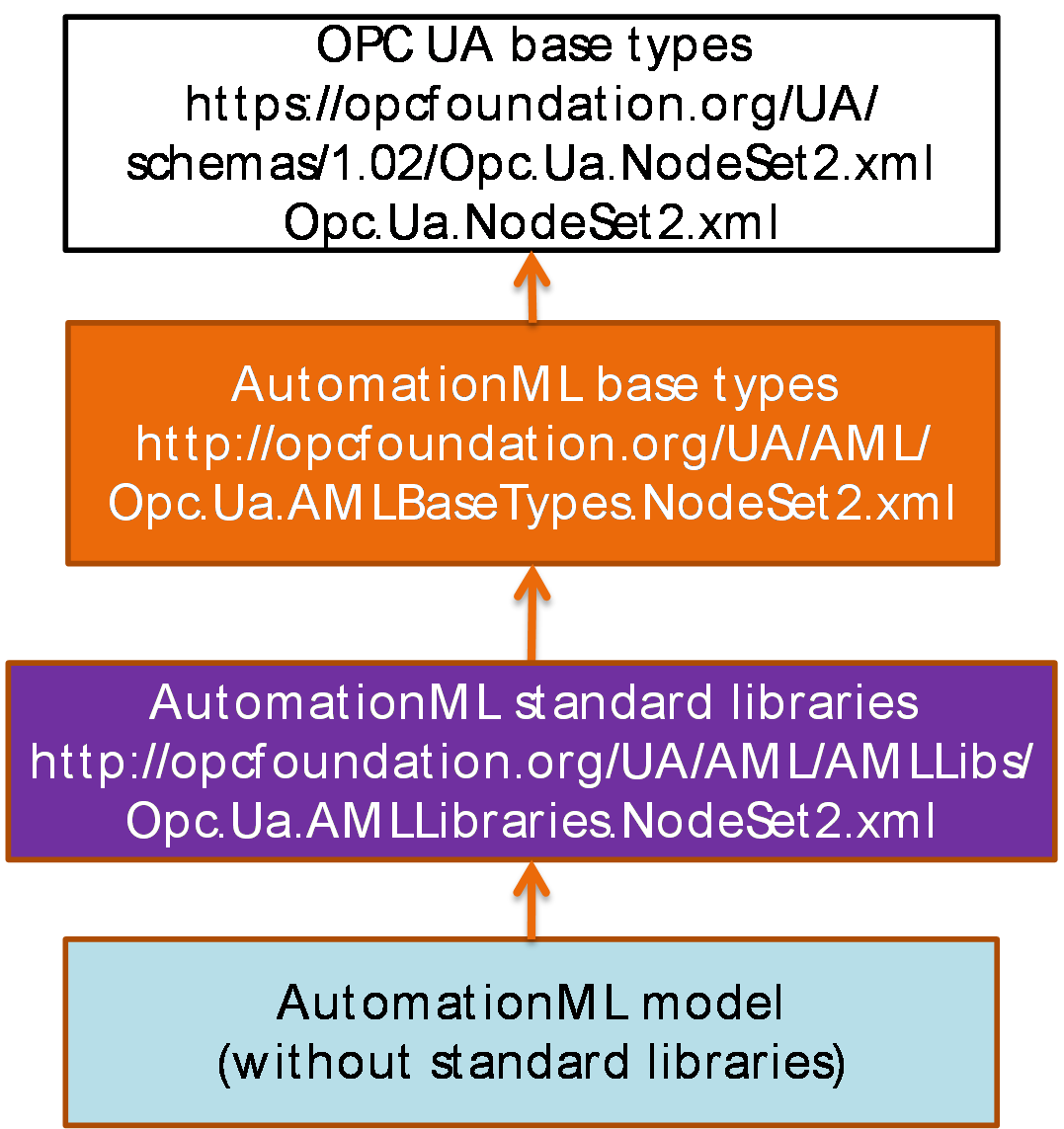
Several nodesets (see Figure 10) are defined to organise the address space. Figure 10 includes the nodeset name, the corresponding namespace URI and the file name containing the nodeset. All nodesets are based on the UA Base types. The nodeset AutomationML Base types (AML, see Chapter 6) defines all nodes and type definitions necessary for the modelling of AutomationML in OPC UA. This includes e.g. organisational nodes for the entry into the AutomationML folder for RoleClassLibs or AutomationML types (ObjectType CAEXFileType). One nodeset is defined for the standardised and informative AutomationML libraries (AMLLibs, see Chapter 6.4) coming from IEC62714-1, IEC62714-2, IEC62714-3, and IEC62714-4. And finally, one or more nodesets are used for the concrete AutomationML documents (Filename of each AutomationML document).
5.2.2 Mapping Explanations for AutomationML model elements
The main structure of an AutomationML file from Figure 7 is mapped into a slightly variant structure depicted in Figure 11. The InstanceHierarchies and libraries shall be stored in common folders (AutomationMLInstanceHierarchies, AutomationMLLibraries, AutomationMLSystemUnitClassLibs, AutomationMLRoleClassLibs, AutomationMLInterfaceClassLibs).
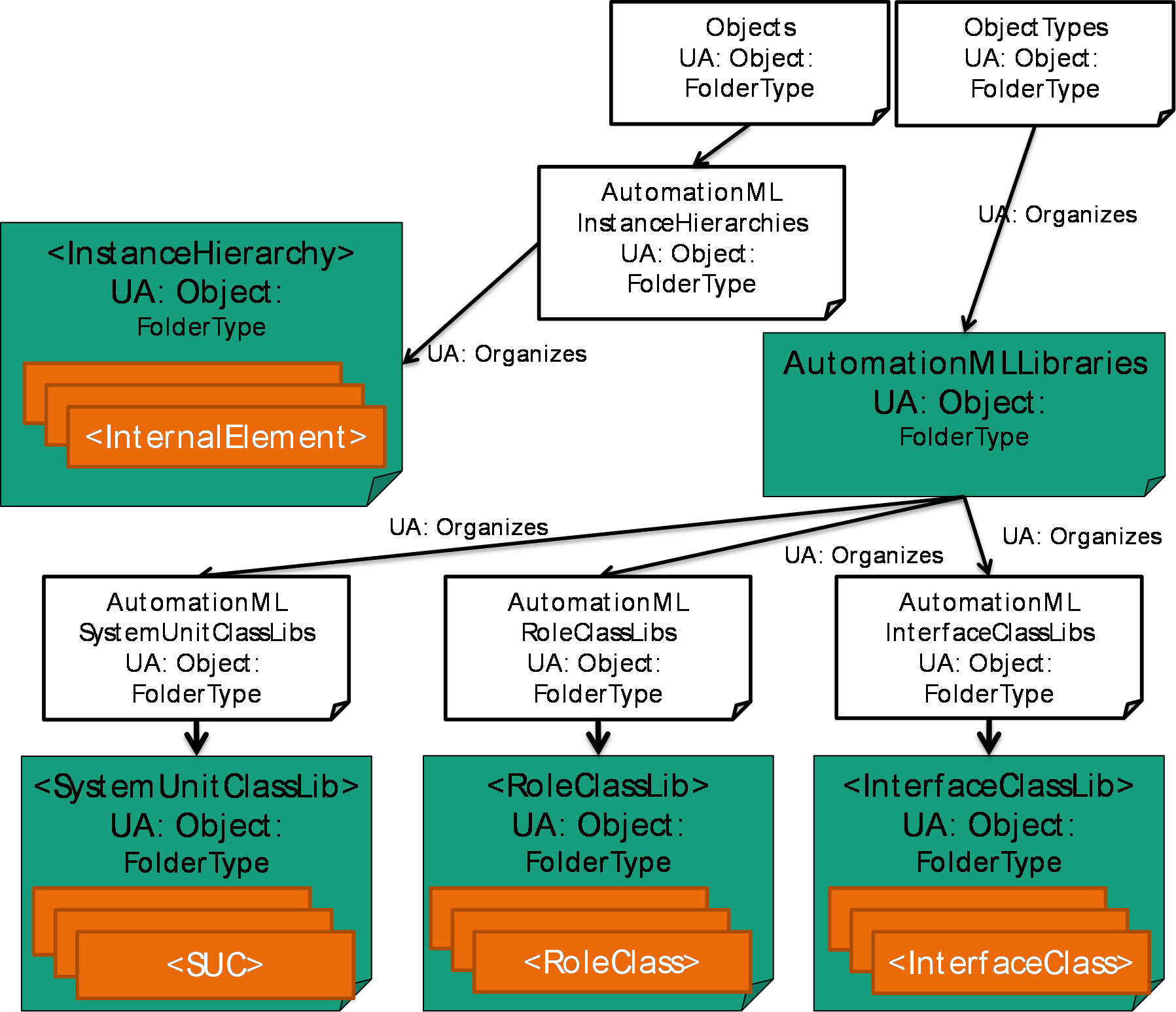
The AutomationML BaseElementTypes transformation into OPC UA Types is depicted in Figure 12, the transformation of AutomationML elements into OPC UA Types is depicted in Figure 13.
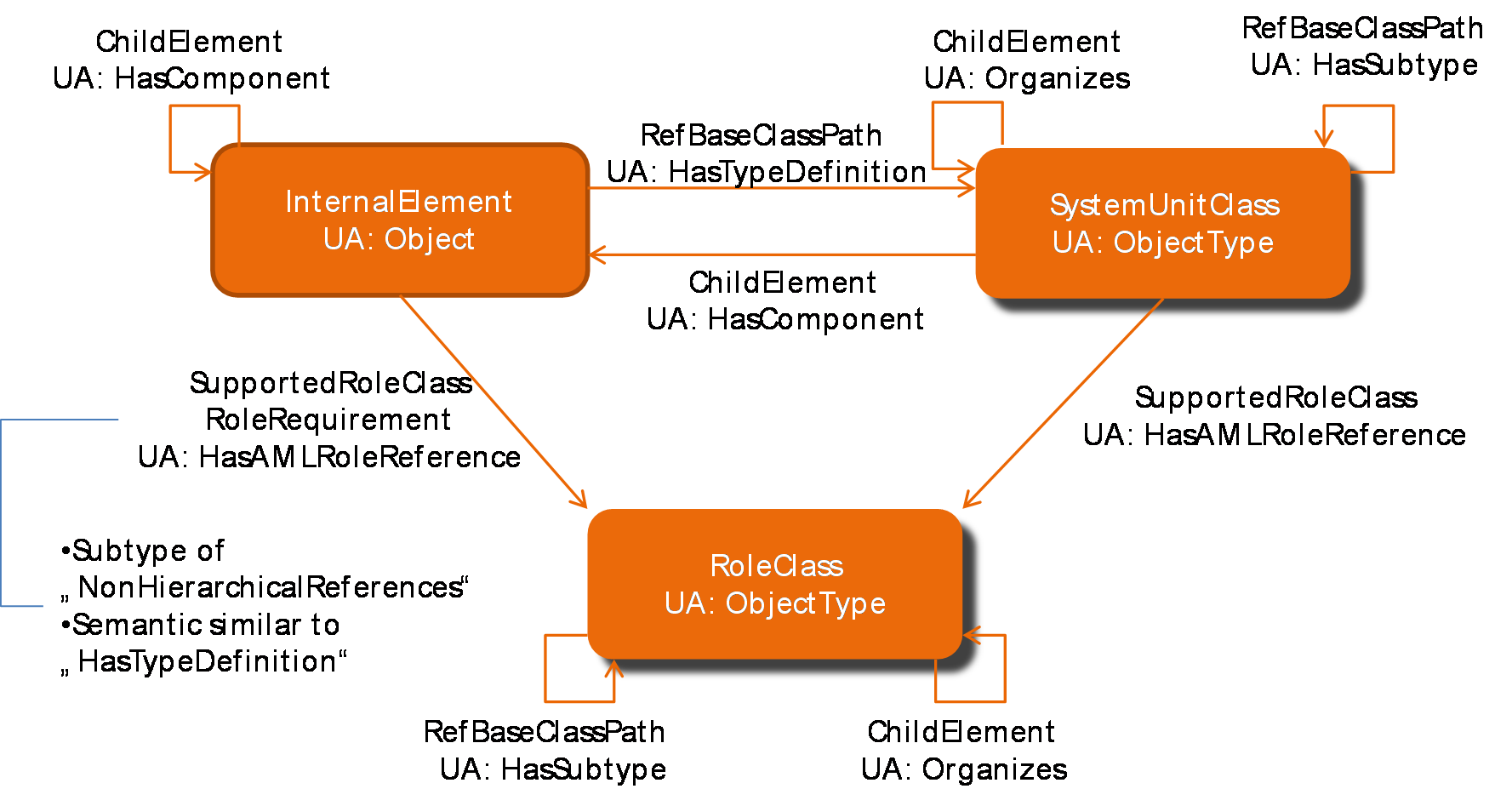
Figure 12 depicts the mapping of the relations between the main AutomationML elements (see Figure 8). The structure of the picture is not changed, so the mapping can be read directly from the graphic. Table 7 and Table 8 resume the mapping rules in a list. Basically, AutomationML InternalElements are represented by OPC UA Objects, AutomationML SystemUnitClasses and RoleClasses are represented by OPC UA ObjectTypes. Detailed definition of new ObjectTypes, ReferenceTypes and VariableTypes are given in Chapter 6.
ChildElement relations within class structures (SystemUnitClass, RoleClass) are mapped to the OPC UA 'Organizes' references. InternalElements which follow the ChildElement relation are referenced via 'HasComponent' references. The inheritance relations within SystemUnitClasses and RoleClasses are mapped to OPC UA 'HasSubtype' references. The internal structures of SystemUnitClasses are depicted by InternalElements which are connected via OPC UA 'HasComponent' references. The RefBaseClassPath relation of AutomationML is an OPC UA 'HasTypeDefinition' reference. The referencing of RoleClasses to InternalElements or SystemUnitClasses via SupportedRoleClass or RoleRequirement of AutomationML is done via OPC UA 'HasAMLRoleReference' references.
| AutomationML | OPC UA |
| InternalElement | Object |
| SystemUnitClass | ObjectType |
| RoleClass | ObjectType |
| AutomationML Source | AutomationML Target | AutomationML Relation | OPC UA Reference | Description |
| InternalElement | RoleClass | SupportedRoleClass | HasAMLRoleReference | Semantic similar to HasTypeDefinition |
| InternalElement | RoleClass | RoleRequirement | HasAMLRoleReference | Semantic similar to HasTypeDefinition |
| InternalElement | SystemUnitClass | RefBaseClassPath | HasTypeDefinition | |
| InternalElement | InternalElement | HasComponent | ChildElement | |
| SystemUnitClass | RoleClass | SupportedRoleClass | HasAMLRoleReference | Semantic similar to HasTypeDefinition |
| SystemUnitClass | InternalElement | HasComponent | ChildElement | |
| SystemUnitClass | SystemUnitClass | Organizes | ChildElement | |
| SystemUnitClass | SystemUnitClass | RefBaseClassPath | HasSubtype | |
| RoleClass | RoleClass | Organizes | ChildElement | |
| RoleClass | RoleClass | RefBaseClassPath | HasSubtype |
The mappings of the AutomationML object details (see Figure 9) are depicted in Figure 13. The analogy between the two figures is obvious. Table 9 and Table 10 summarize the mapping rules in a list. AutomationML Attributes become OPC UA Variables. AutomationML InterfaceClasses are transformed into OPC UA ObjectTypes and the corresponding AutomationML ExternalInterface elements are modelled by OPC UA Objects.
The Attributes and ExternalInterfaces are referenced via 'HasComponent' references. The InterfaceClass is the type definition of the ExternalInterface therefore it is assigned via 'HasTypeDefinition' reference. Similarly to the RoleClasses and SystemUnitClasses, the relations between InterfaceClasses are mapped to 'Organizes' references within the XML tree structure and to 'HasSubtype' references concerning inheritance relation. Relations between ExternalInterfaces (AutomationML InternalLinks) are assigned via 'HasAMLInternalLink' reference. Details are given in Chapter 6.
| AutomationML | OPC UA |
| InternalElement | Object |
| SystemUnitClass | ObjectType |
| RoleClass | ObjectType |
| InterfaceClass | ObjectType |
| Attribute | Variable |
| ExternalInterface | Object |
| AutomationML Source | AutomationML Target | AutomationML Relation | OPC UA Reference | Description |
| InternalElement | Attribute | HasComponent | ChildElement | |
| SystemUnitClass | Attribute | HasComponent | ChildElement | |
| RoleClass | Attribute | HasComponent | ChildElement | |
| InternalElement | ExternalInterface | HasComponent | ChildElement | |
| SystemUnitClass | ExternalInterface | HasComponent | ChildElement | |
| RoleClass | ExternalInterface | HasComponent | ChildElement | |
| ExternalInterface | ExternalInterface | InternalLink | HasAMLInternalLink | |
| ExternalInterface | Attribute | HasComponent | ChildElement | |
| ExternalInterface | InterfaceClass | RefBaseClassPath | HasTypeDefinition | |
| InterfaceClass | Attribute | HasComponent | ChildElement | |
| InterfaceClass | InterfaceClass | RefBaseClassPath | HasSubtype | |
| InterfaceClass | InterfaceClass | Organizes | ChildElement |
5.3 Mapping Example
Figure 14 depicts the tree structure of an AutomationML example. This example shows a simple AutomationML document (version 2.0) which contains:
one InstanceHierarchy with InternalElements
one SystemUnitClassLib with one SystemUnitClass
one RoleClassLib with one RoleClass and
one InterfaceClassLib with one InterfaceClass.
The elements in this example are designed to model some aspects of a manufacturing system. The RoleClassLib contains a RoleClass to characterize a system component as a 'Tool'. The InterfaceClassLib contains an InterfaceClass which models the energy supply of any tool. The SystemUnitClassLib contains a class representing an electric screwdriver. The InstanceHierarchy describes a manufacturing system containing the two screwdrivers in the system.
The used AutomationML-Libraries (AutomationMLBaseRoleClassLibrary and AutomationMLInterfaceClassLibrary) are stored in separated CAEX files and are included via external references.
Annex A contains the XML text of the example in AutomationML.
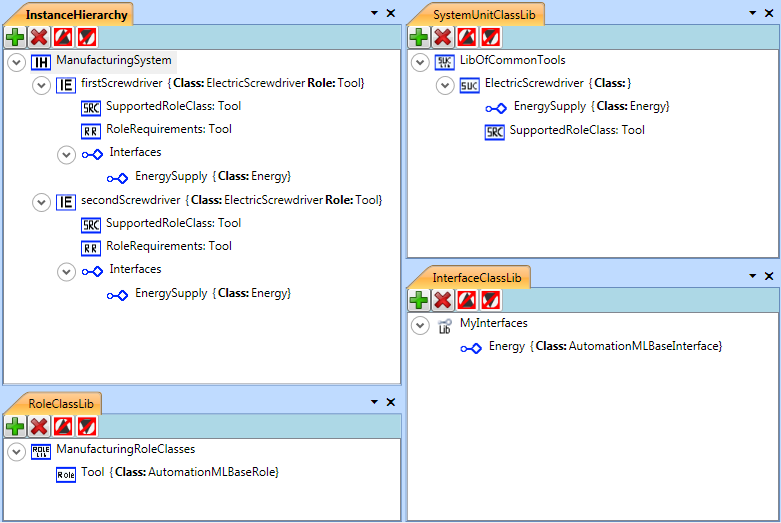
The example shown in Figure 14 will now be redefined within OPC UA. Annex A contains the XML text of the example in OPC UA.
Figure 15 depicts the main structure of the example including the folder objects for the organization of the address space. The used graphical notation is defined by the OPC Foundation and is explained in chapter 4.2.2. It includes the OPC UA Objects used to organize the address space structure which are explained in chapter 6.4.1.
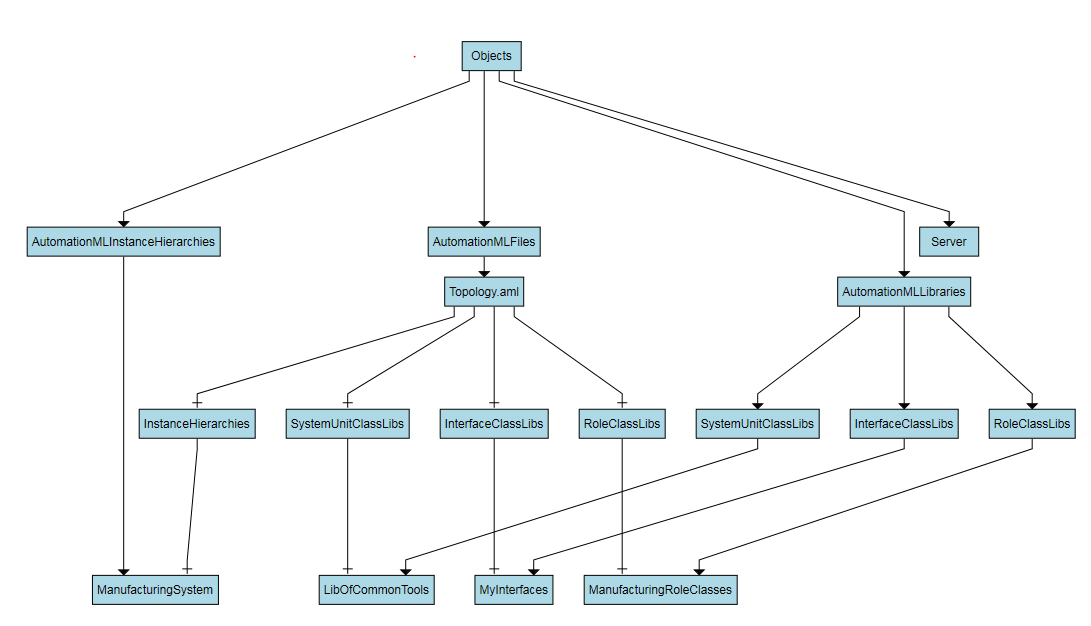
Figure 16 depicts the role classes of the example. It includes the inheritance structure of the roles. In the RoleClassLibs 'ManufacturingRoleClasses' the RoleClass 'Tool' is included.
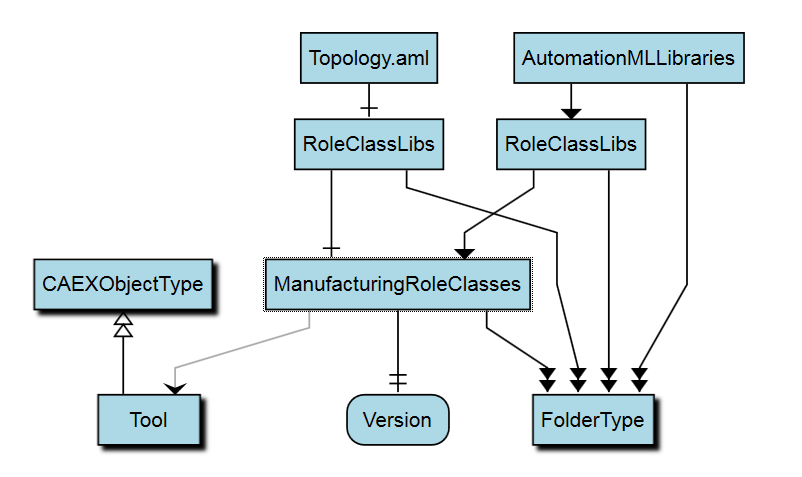
Figure 17 shows the SystemUnitClasses. The SystemUnitClassLib 'LibOfCommonTools' includes a SystemUnitClass 'ElectricScrewdriver' with reference to the role 'Tool'. This SystemUnitClass includes an ExternalInterface 'EnergySupply'.
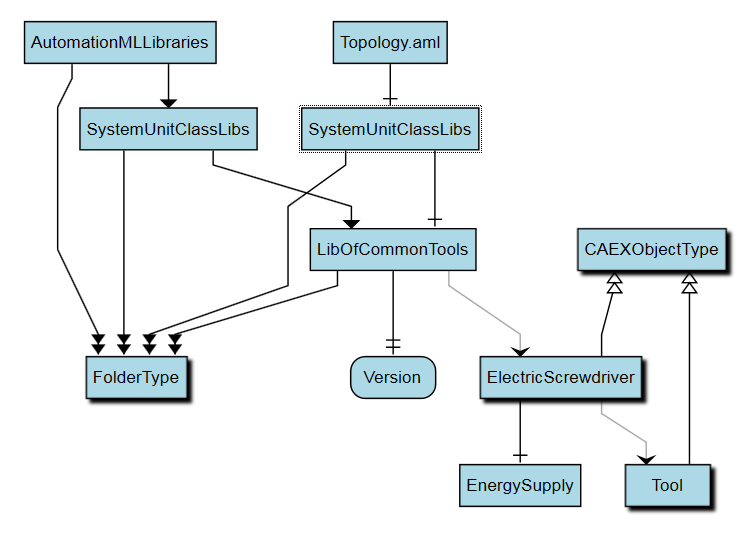
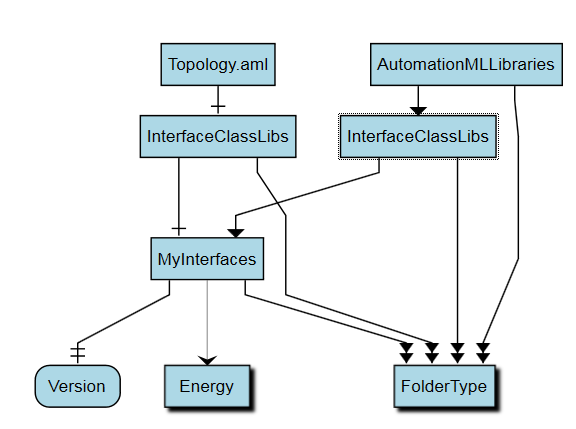
In Figure 18 you can find the InterfaceClassLib 'MyInterfaces' including the InterfaceClass 'Energy'.
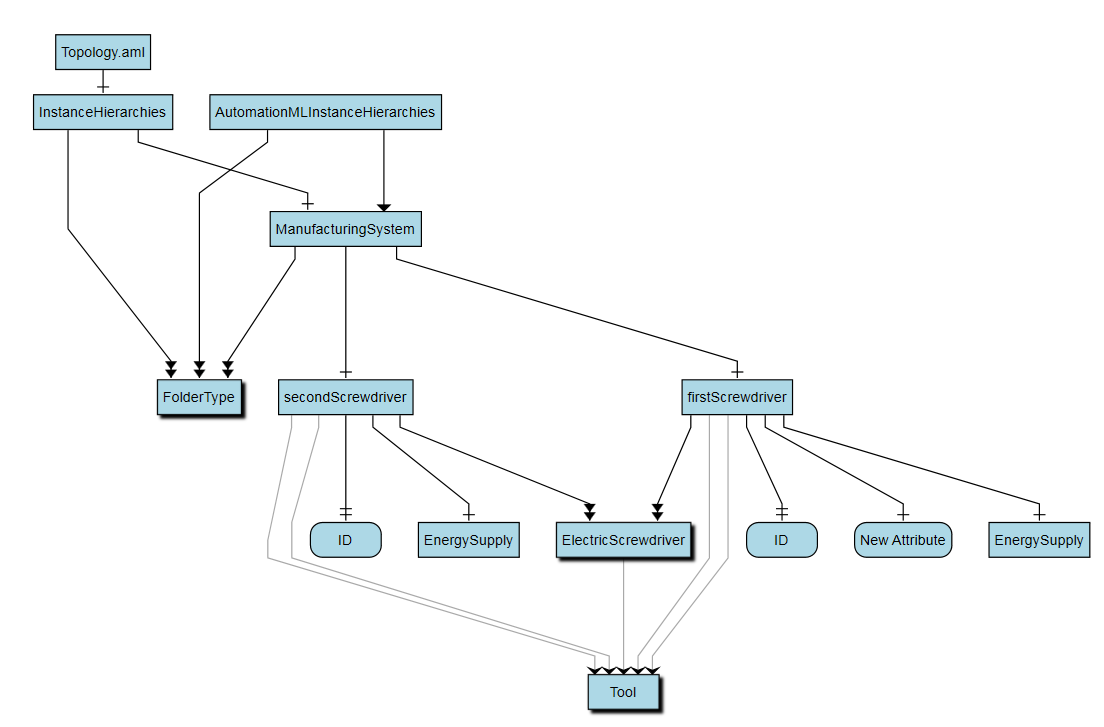
The mapping of the InstanceHierarchy is shown in Figure 19. The File 'Topology.aml' includes the InstanceHierarchy 'ManufacturingSystem' which includes two InternalElements 'firstScrewdriver' and 'secondScrewdriver'. They are derived from the SystemUnitClass 'ElectricScrewdriver' and inherit its structure and elements, such as a variable 'ID', an ExternalInterface 'EnergySupply' and the assigned RoleClass 'Tool'. The InternalElement 'firstScrewdriver' additionally consists of a variable 'NewAttribute'.
6 AutomationML Base Types OPC UA Model
6.1 ObjectTypes
6.1.1 General
The property ID of the ObjectType nodes describes a unique identifier.
The property Version of the ObjectType nodes consists of organizational information about the state of the version.
6.1.2 CAEXBasicObjectType
6.1.2.1 General
The CAEXBasicObjectType defines all general characteristics of a CAEX element. All other CAEX elements derive from it. The CAEXBasicObjectType inherits all Properties of the BaseObjectType.
6.1.2.2 ObjectType Definition
The CAEXBasicObjectType is formally defined in Table 11 .
| Attribute | Value | ||||
| BrowseName | CAEXBasicObjectType | ||||
| IsAbstract | False | ||||
| References | NodeClass | BrowseName | DataType | TypeDefinition | ModellingRule |
|---|---|---|---|---|---|
| Inherit the components of the BaseObjectType | |||||
| HasProperty | Variable | Version | String | PropertyType | Mandatory |
6.1.2.3 ObjectType Description
6.1.2.3.1 Version
Version provides the version number for the CAEXBasicObjectType
6.1.3 CAEXFileType
6.1.3.1 General
The CAEXFileType defines all general characteristics of a CAEX file and includes all CAEX libraries and instance hierarchies. The CAEXFileType inherits all properties of the CAEXBasicObjectType.
6.1.3.2 ObjectType Definition
The CAEXFileType is formally defined in Table 12 .
| Attribute | Value | ||||
| BrowseName | CAEXFileType | ||||
| IsAbstract | False | ||||
| References | NodeClass | BrowseName | DataType | TypeDefinition | ModellingRule |
|---|---|---|---|---|---|
| Inherit the components of the CAEXBasicObjectType | |||||
| HasComponent | Object | InstanceHierarchies | FolderType | Mandatory | |
| HasComponent | Object | InterfaceClassLibs | FolderType | Mandatory | |
| HasComponent | Object | RoleClassLibs | FolderType | Mandatory | |
| HasComponent | Object | SystemUnitClassLibs | FolderType | Mandatory | |
6.1.3.3 ObjectType Description
6.1.3.3.1 InstanceHierarchies
The InstanceHierarchies folder includes all CAEX InstanceHierarchies of a CAEX file.
6.1.3.3.2 InterfaceClassLibs
The InterfaceClassLibs folder includes all CAEX InterfaceClassLibs of a CAEX file.
6.1.3.3.3 RoleClassLibs
The RoleClassLibs folder includes all CAEX RoleClassLibs of a CAEX file.
6.1.3.3.4 SystemUnitClassLibs
The SystemUnitClassLibs folder includes all CAEX SystemUnitClassLibs of a CAEX file.
6.1.4 CAEXObjectType
6.1.4.1 General
The CAEXObjectType defines all general characteristics of a CAEX object. All other CAEX objects derive from it. The CAEXObjectType inherits all Properties of the CAEXBasicObjectType.
6.1.4.2 ObjectType Definition
The CAEXObjectType is formally defined in Table 13 .
| Attribute | Value | ||||
| BrowseName | CAEXObjectType | ||||
| IsAbstract | False | ||||
| References | NodeClass | BrowseName | DataType | TypeDefinition | ModellingRule |
|---|---|---|---|---|---|
| Inherit the components of the CAEXBasicObjectType | |||||
| HasProperty | Variable | ID | String | PropertyType | Mandatory |
6.1.4.3 ObjectType Description
6.1.4.3.1 ID
ID provides a unique ID of the CAEXObjectType which shall be in form of a UUID.
6.1.5 AutomationMLBaseInterface
6.1.5.1 General
The AutomationMLBaseInterface defines all general characteristics of a CAEX InterfaceClass object. All other InterfaceClass objects derive from it. The CAEXObjectType inherits all Properties of the CAEXObjectType.
6.1.5.2 ObjectType Definition
The AutomationMLBaseInterface is formally defined in Table 14 .
| Attribute | Value | ||||
| BrowseName | AutomationMLBaseInterface | ||||
| IsAbstract | False | ||||
| References | NodeClass | BrowseName | DataType | TypeDefinition | ModellingRule |
|---|---|---|---|---|---|
| Inherit the components of the CAEXObjectType | |||||
6.1.6 AutomationMLBaseRole
6.1.6.1 General
The AutomationMLBaseRole defines all general characteristics of a CAEX RoleClass object. All other RoleClass objects derive from it. The AutomationMLBaseRole inherits all Properties of the CAEXObjectType.
6.1.6.2 ObjectType Definition
The AutomationMLBaseRole is formally defined in Table 15 .
| Attribute | Value | ||||
| BrowseName | AutomationMLBaseRole | ||||
| IsAbstract | False | ||||
| References | NodeClass | BrowseName | DataType | TypeDefinition | ModellingRule |
|---|---|---|---|---|---|
| Inherit the components of the CAEXObjectType | |||||
6.1.7 AutomationMLBaseSystemUnit
6.1.7.1 General
The AutomationMLBaseSystemUnit defines all general characteristics of a CAEX SystemUnitClass object. All other SystemUnitClass objects derive from it. The CAEXObjectType inherits all Properties of the CAEXObjectType.
6.1.7.2 ObjectType Definition
The AutomationMLBaseSystemUnit is formally defined in Table 16 .
| Attribute | Value | ||||
| BrowseName | AutomationMLBaseSystemUnit | ||||
| IsAbstract | False | ||||
| References | NodeClass | BrowseName | DataType | TypeDefinition | ModellingRule |
|---|---|---|---|---|---|
| Inherit the components of the CAEXObjectType | |||||
6.2 ReferenceTypes
Following the AutomationML specific OPC UA definitions will be listed.
6.2.1 HasAMLRoleReference
6.2.1.1 General
The HasAMLRoleReference is a concrete ReferenceType that can be used directly. It is a subtype of NonHierarchicalReference.
6.2.1.2 ObjectType Definition
The HasAMLRoleReference is formally defined in Table 17.
| Attribute | Value | ||
| BrowseName | HasAMLRoleReference | ||
| InverseName | IsSupportedRole | ||
| Symmetric | False | ||
| IsAbstract | False | ||
| References | NodeClass | BrowseName | Comment |
|---|---|---|---|
| Subtype of NonHierarchicalReference ReferenceType defined in OPC 10000-5 | |||
This ReferenceType is used to describe a SupportedRoleClass or RoleRequirement relation in AutomationML.
The SourceNode of this ReferenceType shall be an object.
The TargetNode of this ReferenceType shall be a subtype of AMLRoleClass.
6.2.2 HasAMLInternalLink
6.2.2.1 General
The HasAMLInternalLink is a concrete ReferenceType that can be used directly. It is a subtype of NonHierarchicalReference.
6.2.2.2 ReferenceType Definition
The HasAMLInternalLink is formally defined inTable 18.
| Attribute | Value | ||
| BrowseName | HasAMLInternalLink | ||
| InverseName | HasAMLInternalLink | ||
| Symmetric | True | ||
| IsAbstract | False | ||
| References | NodeClass | BrowseName | Comment |
|---|---|---|---|
| Subtype of NonHierarchicalReference ReferenceType defined in OPC 10000-5 | |||
This ReferenceType is used to describe an InternalLink relation in AutomationML.
The SourceNode of this ReferenceType shall be an object which is derived from the AutomationMLBaseInterface or one of its subtypes.
The TargetNode of this ReferenceType shall be an object which is derived from the AutomationMLBaseInterface or one of its subtypes.
6.3 VariableTypes
6.3.1 AMLBaseVariableType
6.3.1.1 General
The AMLBaseVariableType defines all general characteristics of AutomationML attributes. All other AutomationML attributes derive from it.
6.3.1.2 VariableType Definition
The AMLBaseVariableType is formally defined in Table 19 .
| Attribute | Value | ||||
| BrowseName | AMLBaseVariableType | ||||
| IsAbstract | False | ||||
| ValueRank | -1 | ||||
| DataType | BaseDataType | ||||
| References | NodeClass | BrowseName | DataType | TypeDefinition | ModellingRule |
|---|---|---|---|---|---|
| Inherit the components of the BaseVariableType | |||||
| HasProperty | Variable | ID | String | PropertyType | Optional |
| HasProperty | Variable | Version | String | PropertyType | Optional |
6.3.1.3 VariableType Description
6.3.1.3.1 ID
ID provides a unique ID of the AMLBaseVariableType which shall be in form of a UUID.
6.3.1.3.2 Version
Version provides the version number for the AMLBaseVariableType
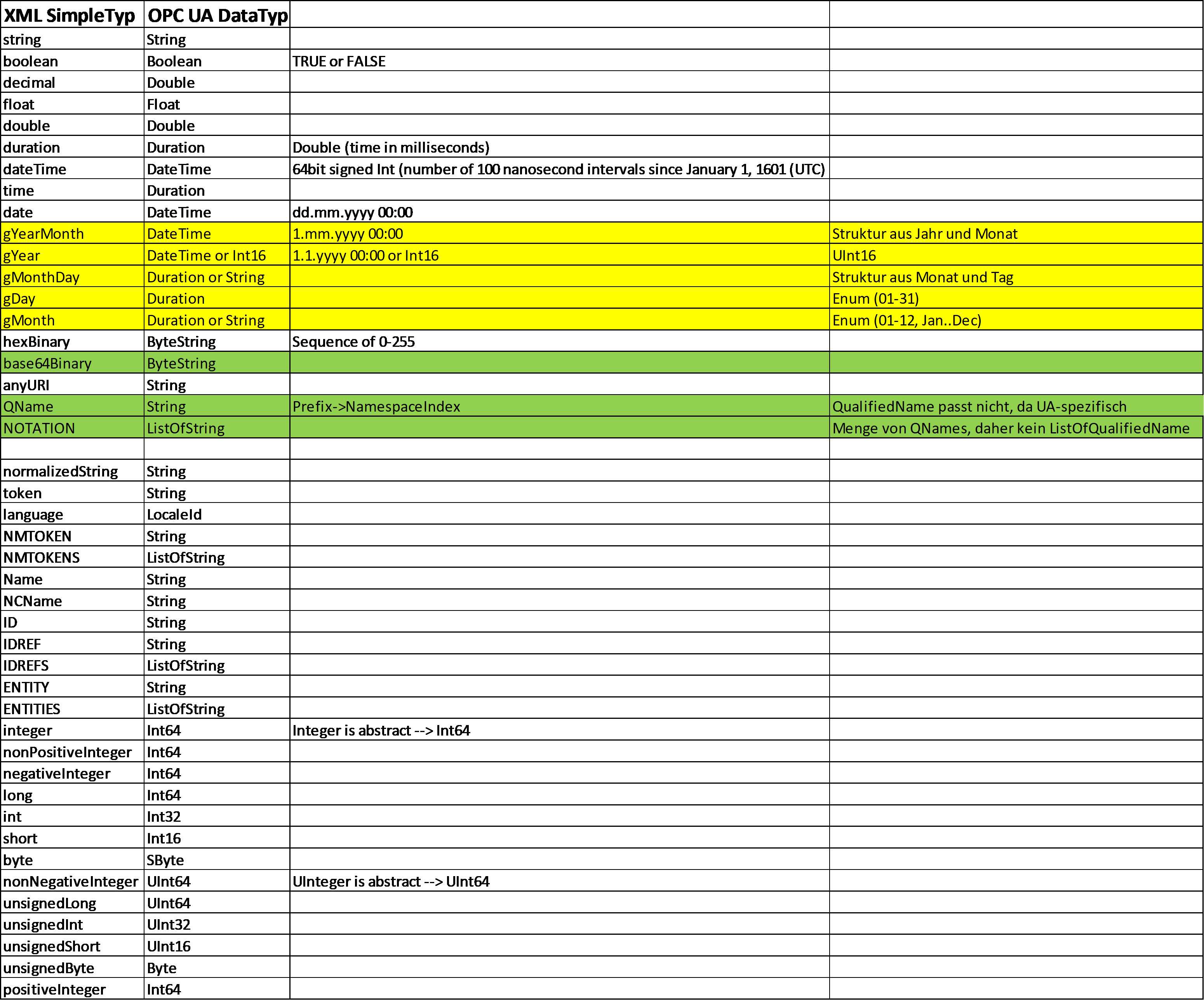
6.4 Mapping of AutomationML XML DataTypes to OPC UA DataTypes
The mapping of AutomationML XML DataTypes to OPC UA DataTypes is described in Table 20.
6.4.1 OPC UA Objects used to organize the address space structure
The access to the model is split up into an AutomationML specific entry possibility and an OPC UA specific entry possibility. The organizational nodes facilitate the navigation (browse) to elements. Figure 20 depicts an example address space. Different colours represent different nodesets as explained in chapter 5.2.1.
For users familiar with OPC UA, objects and object types can be accessed via the classical UA way (Objects folder and ObjectTypes folder). The global instance view can be reached via the Objects node and a specific node called AutomationMLInstanceHierarchies of type FolderType. The global type view can be reached via the ObjectTypes node and the corresponding AutomationML-specific object types.
The file view is dedicated to AutomationML users who are looking for a direct AutomationML view/representation. This is realized by the node of type FolderType named AutomationMLFiles below the Objects node. This node organizes all File_xyz nodes where File_xyz stands for the AML file name.
The File_xyz node consists of nodes of type FolderType called
InstanceHierarchies(for AutomationML InstanceHierarchy elements),
RoleClassLibs (for AutomationML RoleClassLibrary elements),
SystemUnitClassLibs (for AutomationML AutomationML SystemUnitClassLibrary elements), and
InterfaceClassLibs (for AutomationML InterfaceClassLibrary elements).
Below File_xyz all references must be browsable bidirectionally (isForward = False).
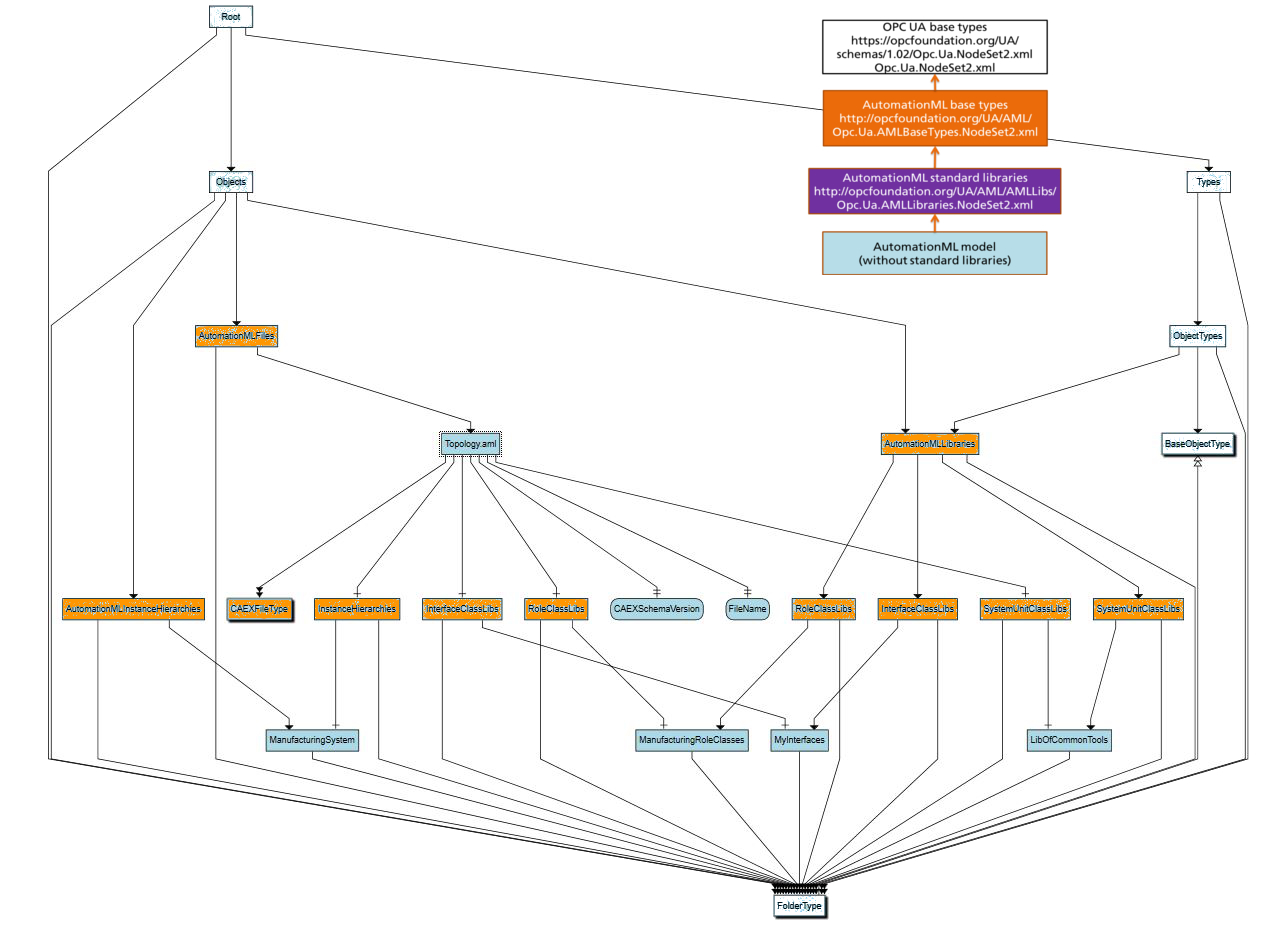
The naming for the AutomationML specific nodes is as follows: AutomationMLFiles, AutomationMLLibraries, AutomationMLInstanceHierarchies, CAEXBaseType are entry points into the hierarchies. They include AutomationML or CAEX in their browse names. Everything below these nodes does not need an AutomationML or CAEX prefix anymore, e.g. RoleClassLibs.
Be careful: The representation of the inheritance hierarchy is confusing if more than one file and AML base libraries are included in one OPC UA address space (with different nodesets).
6.4.1.1 Instances and entry points
6.4.1.1.1 AutomationMLFiles
This Instance is a child of Objects. It is defined in Table 21 .
The AutomationMLFiles folder represents a browse entry point when looking for AutomationML files in the OPC UA information model.
| Name | TypeDefinition |
| AutomationMLFiles | FolderType |
6.4.1.1.2 AutomationMLInstanceHierarchies
This Instance is a child of Objects. It is defined in Table 22 .
The AutomationMLInstanceHierarchies folder represents a browse entry point when looking for AutomationML InstanceHierarchies in the OPC UA information model.
| Name | TypeDefinition |
| AutomationMLInstanceHierarchies | FolderType |
6.4.1.1.3 AutomationMLLibraries
This Instance is a child of Objects. It is defined in Table 23 .
The AutomationMLLibraries folder represents a browse entry point when looking for AutomationML libraries in the OPC UA information model.
| Name | TypeDefinition |
| AutomationMLLibraries | FolderType |
6.4.1.1.4 InterfaceClassLibs
This Instance is a child of AutomationMLLibraries. It is defined in Table 24 .
The InterfaceClassLibsfolder represents a browse entry point when looking for AutomationML InterfaceClassLibs in the OPC UA information model.
| Name | TypeDefinition |
| InterfaceClassLibs | FolderType |
6.4.1.1.5 RoleClassLibs
This Instance is a child of AutomationMLLibraries. It is defined in Table 25 .
The RoleClassLibsfolder represents a browse entry point when looking for AutomationML RoleClassLibs in the OPC UA information model.
| Name | TypeDefinition |
| RoleClassLibs | FolderType |
6.4.1.1.6 SystemUnitClassLibs
This Instance is a child of AutomationMLLibraries. It is defined in Table 26 .
The SystemUnitClassLibsfolder represents a browse entry point when looking for AutomationML SystemUnitClassLibs in the OPC UA information model.
| Name | TypeDefinition |
| SystemUnitClassLibs | FolderType |
7 AutomationML Libraries OPC UA Model
7.1 General
The property ID of the ObjectType nodes describes a unique identifier.
The property Version of the ObjectType nodes consists of organizational information about the state of the version.
7.2 AutomationMLInterfaceClassLib
7.2.1 Instances
7.2.1.1 AutomationMLInterfaceClassLib
This Instance is a child of InterfaceClassLibs. It is defined in Table 27.
It consists of the Standard AutomationML Interface Class Library (Part 1). The content is extended with Part 3 and Part 4 of the AutomationML standard specification.
| Name | TypeDefinition |
| AutomationMLInterfaceClassLib | FolderType |
7.2.2 ObjectTypes
7.2.2.1 AutomationMLBaseInterface
7.2.2.1.1 General
The interface class "AutomationMLBaseInterface" is a base abstract interface type and shall be used as parent for the description of all AML interface classes.
7.2.2.1.2 ObjectType Definition
The AutomationMLBaseInterface is formally defined in Table 28.
| Attribute | Value | ||||
| BrowseName | AutomationMLBaseInterface | ||||
| IsAbstract | False | ||||
| References | NodeClass | BrowseName | DataType | TypeDefinition | ModellingRule |
|---|---|---|---|---|---|
| Inherit the components of the CAEXObjectType | |||||
| HasProperty | Variable | ID | BaseDataType | PropertyType | Optional |
| HasProperty | Variable | Version | BaseDataType | PropertyType | Optional |
7.2.2.2 AttachmentInterface
7.2.2.2.1 General
The interface class "AttachmentInterface" shall be used to denote a geometrical connection point of an AutomationML object.
7.2.2.2.2 ObjectType Definition
The AttachmentInterface is formally defined in Table 29.
| Attribute | Value | ||||
| BrowseName | AttachmentInterface | ||||
| IsAbstract | False | ||||
| References | NodeClass | BrowseName | DataType | TypeDefinition | ModellingRule |
|---|---|---|---|---|---|
| Inherit the components of the AutomationMLBaseInterface | |||||
| HasProperty | Variable | ID | BaseDataType | PropertyType | Optional |
| HasProperty | Variable | Version | BaseDataType | PropertyType | Optional |
7.2.2.3 Communication
7.2.2.3.1 General
The interface class "Communication" shall be used for the description of communication related interfaces.
7.2.2.3.2 ObjectType Definition
The Communication is formally defined in Table 30.
| Attribute | Value | ||||
| BrowseName | Communication | ||||
| IsAbstract | False | ||||
| References | NodeClass | BrowseName | DataType | TypeDefinition | ModellingRule |
|---|---|---|---|---|---|
| Inherit the components of the AutomationMLBaseInterface | |||||
| HasProperty | Variable | ID | BaseDataType | PropertyType | Optional |
| HasProperty | Variable | Version | BaseDataType | PropertyType | Optional |
7.2.2.4 SignalInterface
7.2.2.4.1 General
The interface class "SignalInterface" shall be used for modelling signals.
7.2.2.4.2 ObjectType Definition
The SignalInterface is formally defined in Table 31.
| Attribute | Value | ||||
| BrowseName | SignalInterface | ||||
| IsAbstract | False | ||||
| References | NodeClass | BrowseName | DataType | TypeDefinition | ModellingRule |
|---|---|---|---|---|---|
| Inherit the components of the Communication | |||||
| HasProperty | Variable | ID | BaseDataType | PropertyType | Optional |
| HasProperty | Variable | Version | BaseDataType | PropertyType | Optional |
7.2.2.5 ExternalDataConnector
7.2.2.5.1 General
The interface class "ExternalDataConnector" is a basic abstract interface type and shall be used for the description of connector interfaces referencing external docu¬ments. The classes "COLLADAInterface" and "PLCopenXMLInterface" are derived from this class. All existing and future connector classes shall be derived directly or indirectly from this class.
7.2.2.5.2 ObjectType Definition
The ExternalDataConnector is formally defined in Table 32.
| Attribute | Value | ||||
| BrowseName | ExternalDataConnector | ||||
| IsAbstract | False | ||||
| References | NodeClass | BrowseName | DataType | TypeDefinition | ModellingRule |
|---|---|---|---|---|---|
| Inherit the components of the AutomationMLBaseInterface | |||||
| HasProperty | Variable | ID | BaseDataType | PropertyType | Optional |
| HasComponent | Variable | refURI | String | BaseDataVariableType | Optional |
| HasProperty | Variable | Version | BaseDataType | PropertyType | Optional |
7.2.2.5.3 ObjectType Description
7.2.2.5.3.1 refURI
The attribute "refURI" shall be used in order to store the path to the reference external document.
7.2.2.6 COLLADAInterface
7.2.2.6.1 General
The interface class "COLLADAInterface" shall be used in order to reference external COLLADA documents and to publish interfaces that are defined inside an external COLLADA document. Details are intended to be specified in IEC 62714-3.
7.2.2.6.2 ObjectType Definition
The COLLADAInterface is formally defined in Table 33.
| Attribute | Value | ||||
| BrowseName | COLLADAInterface | ||||
| IsAbstract | False | ||||
| References | NodeClass | BrowseName | DataType | TypeDefinition | ModellingRule |
|---|---|---|---|---|---|
| Inherit the components of the ExternalDataConnector | |||||
| HasProperty | Variable | ID | BaseDataType | PropertyType | Optional |
| HasProperty | Variable | Version | BaseDataType | PropertyType | Optional |
7.2.2.6.3 ObjectType Description
7.2.2.7 PLCopenXMLInterface
7.2.2.7.1 General
The interface class "PLCopenXMLInterface" shall be used in order to reference external PLCOpenXML documents and to publish interfaces that are defined inside an external PLCOpenXML document. Details are intended to be specified in IEC 62714-3.
7.2.2.7.2 ObjectType Definition
The PLCopenXMLInterface is formally defined in Table 34.
| Attribute | Value | ||||
| BrowseName | PLCopenXMLInterface | ||||
| IsAbstract | False | ||||
| References | NodeClass | BrowseName | DataType | TypeDefinition | ModellingRule |
|---|---|---|---|---|---|
| Inherit the components of the ExternalDataConnector | |||||
| HasProperty | Variable | ID | BaseDataType | PropertyType | Optional |
| HasProperty | Variable | Version | BaseDataType | PropertyType | Optional |
7.2.2.8 LogicInterface
7.2.2.8.1 General
The interface class "LogicInterface" shall be used in order to reference a logic description within an external PLCopen XML document.
7.2.2.8.2 ObjectType Definition
The LogicInterface is formally defined in Table 35.
| Attribute | Value | ||||
| BrowseName | LogicInterface | ||||
| IsAbstract | False | ||||
| References | NodeClass | BrowseName | DataType | TypeDefinition | ModellingRule |
|---|---|---|---|---|---|
| Inherit the components of the PLCopenXMLInterface | |||||
| HasProperty | Variable | ID | BaseDataType | PropertyType | Optional |
| HasProperty | Variable | Version | BaseDataType | PropertyType | Optional |
7.2.2.9 VariableInterface
7.2.2.9.1 General
The interface class "VariableInterface" shall be used in order to reference variables in external PLCopen XML document.
7.2.2.9.2 ObjectType Definition
The VariableInterface is formally defined in Table 36.
| Attribute | Value | ||||
| BrowseName | VariableInterface | ||||
| IsAbstract | False | ||||
| References | NodeClass | BrowseName | DataType | TypeDefinition | ModellingRule |
|---|---|---|---|---|---|
| Inherit the components of the PLCopenXMLInterface | |||||
| HasProperty | Variable | ID | BaseDataType | PropertyType | Optional |
| HasProperty | Variable | Version | BaseDataType | PropertyType | Optional |
7.2.2.10 InterlockingVariableInterface
7.2.2.10.1 General
The interface class "InterlockingVariableInterface" shall be used in order to reference variables representing an interlocking condition in external PLCopen XML document.
7.2.2.10.2 ObjectType Definition
The InterlockingVariableInterface is formally defined in Table 37.
| Attribute | Value | ||||
| BrowseName | InterlockingVariableInterface | ||||
| IsAbstract | False | ||||
| References | NodeClass | BrowseName | DataType | TypeDefinition | ModellingRule |
|---|---|---|---|---|---|
| Inherit the components of the VariableInterface | |||||
| HasProperty | Variable | ID | BaseDataType | PropertyType | Optional |
| HasComponent | Variable | SafeConditionEquals | Boolean | BaseDataVariableType | Optional |
| HasProperty | Variable | Version | BaseDataType | PropertyType | Optional |
7.2.2.10.3 ObjectType Description
7.2.2.10.3.1 SafeConditionEquals
SafeConditionEquals indicates which value of the reference variable indicates a save state. Values are
"TRUE": indicates that the value "TRUE" of the variable within the PLCopen XML description represents the safe state of the signal group.
"FALSE": indicates that the value "FALSE" of the variable within the PLCopen XML description represents the safe state of the signal group.
Note: Use of the attribute is optional, default value is TRUE
7.2.2.11 InterlockingConnector
7.2.2.11.1 General
The interface class "InterlockingConnector" shall be used in order to model relations between signal groups and component groups.
7.2.2.11.2 ObjectType Definition
The InterlockingConnector is formally defined in Table 38.
| Attribute | Value | ||||
| BrowseName | InterlockingConnector | ||||
| IsAbstract | False | ||||
| References | NodeClass | BrowseName | DataType | TypeDefinition | ModellingRule |
|---|---|---|---|---|---|
| Inherit the components of the AutomationMLBaseInterface | |||||
| HasProperty | Variable | ID | BaseDataType | PropertyType | Optional |
| HasProperty | Variable | Version | BaseDataType | PropertyType | Optional |
7.2.2.11.3 ObjectType Description
7.2.2.12 Order
7.2.2.12.1 General
The interface class "Order" is an abstract class that shall be used for the description of orders, e.g. a successor or a predecessor.
7.2.2.12.2 ObjectType Definition
The Order is formally defined in Table 39.
| Attribute | Value | ||||
| BrowseName | Order | ||||
| IsAbstract | False | ||||
| References | NodeClass | BrowseName | DataType | TypeDefinition | ModellingRule |
|---|---|---|---|---|---|
| Inherit the components of the AutomationMLBaseInterface | |||||
| HasComponent | Variable | Direction | String | BaseDataVariableType | Optional |
| HasProperty | Variable | ID | BaseDataType | PropertyType | Optional |
| HasProperty | Variable | Version | BaseDataType | PropertyType | Optional |
7.2.2.12.3 ObjectType Description
7.2.2.12.3.1 Direction
The attribute "Direction" shall be used in order to specify the direction. Permitted values are "In", "Out" or "InOut".
7.2.2.13 PortConnector
7.2.2.13.1 General
The interface class "PortConnector" shall be used in order to provide a high level relation between ports.
7.2.2.13.2 ObjectType Definition
The PortConnector is formally defined in Table 40.
| Attribute | Value | ||||
| BrowseName | PortConnector | ||||
| IsAbstract | False | ||||
| References | NodeClass | BrowseName | DataType | TypeDefinition | ModellingRule |
|---|---|---|---|---|---|
| Inherit the components of the AutomationMLBaseInterface | |||||
| HasProperty | Variable | ID | BaseDataType | PropertyType | Optional |
| HasProperty | Variable | Version | BaseDataType | PropertyType | Optional |
7.2.2.14 PPRConnector
7.2.2.14.1 General
The interface class "PPRConnector" shall be used in order to provide a relation between resources, products and processes.
7.2.2.14.2 ObjectType Definition
The PPRConnector is formally defined in Table 41.
| Attribute | Value | ||||
| BrowseName | PPRConnector | ||||
| IsAbstract | False | ||||
| References | NodeClass | BrowseName | DataType | TypeDefinition | ModellingRule |
|---|---|---|---|---|---|
| Inherit the components of the AutomationMLBaseInterface | |||||
| HasProperty | Variable | ID | BaseDataType | PropertyType | Optional |
| HasProperty | Variable | Version | BaseDataType | PropertyType | Optional |
7.2.2.14.2.1 ObjectTypes
7.3 AutomationMLBaseRoleClassLib
7.3.1 Instances
7.3.1.1 AutomationMLBaseRoleClassLib
This Instance is a child of RoleClassLibs. It is defined in Table 42.
It consists of the Standard AutomationML Base Role Class Library (Part 1). The content is extended with Part 3 and Part 4 of the AutomationML standard specification.
| Name | TypeDefinition |
| AutomationMLBaseRoleClassLib | FolderType |
7.3.2 ObjectTypes
7.3.2.1 AutomationMLBaseRoleClassLib
7.3.2.1.1 General
The role class "AutomationMLBaseRole" is a basic abstract role type and the base class for all standard or user-defined role classes.
7.3.2.1.2 ObjectType Definition
The AutomationMLBaseRole is formally defined in Table 43.
| Attribute | Value | ||||
| BrowseName | AutomationMLBaseRole | ||||
| IsAbstract | False | ||||
| References | NodeClass | BrowseName | DataType | TypeDefinition | ModellingRule |
|---|---|---|---|---|---|
| Inherit the components of the CAEXObjectType | |||||
| HasProperty | Variable | ID | BaseDataType | PropertyType | Optional |
| HasProperty | Variable | Version | BaseDataType | PropertyType | Optional |
7.3.2.2 Group
7.3.2.2.1 General
The role class "Group" is a role type for objects that serve for the grouping of mirror objects that belong together from a certain engineering perspective. AML Group objects shall reference this role.
7.3.2.2.2 ObjectType Definition
The Group is formally defined in Table 44.
| Attribute | Value | ||||
| BrowseName | Group | ||||
| IsAbstract | False | ||||
| References | NodeClass | BrowseName | DataType | TypeDefinition | ModellingRule |
|---|---|---|---|---|---|
| Inherit the components of the AutomationMLBaseRole | |||||
| HasComponent | Variable | AssociatedFacet | String | BaseDataVariableType | Optional |
| HasProperty | Variable | ID | BaseDataType | PropertyType | Optional |
| HasProperty | Variable | Version | BaseDataType | PropertyType | Optional |
7.3.2.2.3 ObjectType Description
7.3.2.2.3.1 AssociatedFacet
The attribute "AssociatedFacet" shall be used for the definition of the name of the corresponding Facet. Example: AssociatedFacet = "PLCFacet"
7.3.2.3 Facet
7.3.2.3.1 General
The role class "Facet" is a role type for objects that serve as sub-view on attributes or interfaces of an AML object. AML Facet objects shall reference this role. Details and examples are specified in 8.3.
7.3.2.3.2 ObjectType Definition
The Facet is formally defined in Table 45
| Attribute | Value | ||||
| BrowseName | Facet | ||||
| IsAbstract | False | ||||
| References | NodeClass | BrowseName | DataType | TypeDefinition | ModellingRule |
|---|---|---|---|---|---|
| Inherit the components of the AutomationMLBaseRole | |||||
| HasProperty | Variable | ID | BaseDataType | PropertyType | Optional |
| HasProperty | Variable | Version | BaseDataType | PropertyType | Optional |
7.3.2.4 Port
7.3.2.4.1 General
The role class "Port" is a role type for objects that groups a number of interfaces and allows describing complex interfaces in this way. AML Port objects shall reference this role. Details and examples are specified in 8.2.
7.3.2.4.2 ObjectType Definition
The Port is formally defined in Table 46.
| Attribute | Value | ||||
| BrowseName | Port | ||||
| IsAbstract | False | ||||
| References | NodeClass | BrowseName | DataType | TypeDefinition | ModellingRule |
|---|---|---|---|---|---|
| Inherit the components of the AutomationMLBaseRole | |||||
| HasComponent | Variable | Cardinality | String | BaseDataVariableType | Optional |
| HasComponent | Variable | Category | String | BaseDataVariableType | Optional |
| HasComponent | Object | ConnectionPoint | PortConnector | Optional | |
| HasComponent | Variable | Direction | String | BaseDataVariableType | Optional |
| HasProperty | Variable | ID | BaseDataType | PropertyType | Optional |
| HasProperty | Variable | Version | BaseDataType | PropertyType | Optional |
7.3.2.4.3 ObjectType Description
7.3.2.4.3.1 Cardinality
This attribute is a complex attribute which can describe MaxOccur or MinOccur.
7.3.2.4.3.2 Category
The category attribute describes the Port type. The value of this attribute is user-defined. Only ports with the same category value are allowed to be connected. Example: category = "MaterialFlow"
7.3.2.4.3.3 ConnectionPoint
This CAEX Interface allows connecting this Port with a number of other ports on an abstract level. The internal relations between single Port interfaces are not described in this way.
7.3.2.4.3.4 Direction
This attribute shall be used to describe the direction of the Port. Values shall be one of the following: "In" or "Out" or "InOut". Ports with the direction "In" can only be connected to ports with the direction "Out" or "InOut" and ports with the direction "Out" can only be connected with ports with the direction "In" or "InOut". Ports with the direction "InOut" can be connected to Ports of arbitrary direction. Examples: Direction ="Out" (e.g. a plug) Direction = "In" (e.g. a socket) Direction = "InOut" This information can be used e.g. in order to prove the validity of a connection.
7.3.2.5 Resource
7.3.2.5.1 General
The role class "Resource" is a basic abstract role type and the base class for all AML resource roles. It describes plants, equipment or other production resources. AML resource objects shall directly or indirectly reference this role.
7.3.2.5.2 ObjectType Definition
The Resource is formally defined in Table 47
| Attribute | Value | ||||
| BrowseName | Resource | ||||
| IsAbstract | False | ||||
| References | NodeClass | BrowseName | DataType | TypeDefinition | ModellingRule |
|---|---|---|---|---|---|
| Inherit the components of the AutomationMLBaseRole | |||||
| HasProperty | Variable | ID | BaseDataType | PropertyType | Optional |
| HasProperty | Variable | Version | BaseDataType | PropertyType | Optional |
7.3.2.6 Product
7.3.2.6.1 General
The role class "Product" is a basic abstract role type and the base class for all AML product roles. It describes products, product parts or product related materials that are processed in the described plant. AML product objects shall directly or indirectly reference this role.
7.3.2.6.2 ObjectType Definition
The Product is formally defined in Table 48.
| Attribute | Value | ||||
| BrowseName | Product | ||||
| IsAbstract | False | ||||
| References | NodeClass | BrowseName | DataType | TypeDefinition | ModellingRule |
|---|---|---|---|---|---|
| Inherit the components of the AutomationMLBaseRole | |||||
| HasProperty | Variable | ID | BaseDataType | PropertyType | Optional |
| HasProperty | Variable | Version | BaseDataType | PropertyType | Optional |
7.3.2.7 Process
7.3.2.7.1 General
The role class "Process" is a basic abstract role type and the base class for all AML process roles. It describes production related processes. AML process objects shall directly or indirectly reference this role.
7.3.2.7.2 ObjectType Definition
The Process is formally defined in Table 49.
| Attribute | Value | ||||
| BrowseName | Process | ||||
| IsAbstract | False | ||||
| References | NodeClass | BrowseName | DataType | TypeDefinition | ModellingRule |
|---|---|---|---|---|---|
| Inherit the components of the AutomationMLBaseRole | |||||
| HasProperty | Variable | ID | BaseDataType | PropertyType | Optional |
| HasProperty | Variable | Version | BaseDataType | PropertyType | Optional |
7.3.2.8 Structure
7.3.2.8.1 General
The role class "Structure" is a basic abstract role type for objects that serve as structure elements in the plant hierarchy, e.g. a folder, a site or a manufacturing line. AML structure objects shall directly or indirectly reference this role.
7.3.2.8.2 ObjectType Definition
The Structure is formally defined in Table 50.
| Attribute | Value | ||||
| BrowseName | Structure | ||||
| IsAbstract | False | ||||
| References | NodeClass | BrowseName | DataType | TypeDefinition | ModellingRule |
|---|---|---|---|---|---|
| Inherit the components of the AutomationMLBaseRole | |||||
| HasProperty | Variable | ID | BaseDataType | PropertyType | Optional |
| HasProperty | Variable | Version | BaseDataType | PropertyType | Optional |
7.3.2.9 ResourceStructure
7.3.2.9.1 General
The role class "ResourceStructure" is an abstract role type for a resource oriented object hierarchy. AML resource structure objects shall directly or indirectly reference this role
7.3.2.9.2 ObjectType Definition
The ResourceStructure is formally defined in Table 51.
| Attribute | Value | ||||
| BrowseName | ResourceStructure | ||||
| IsAbstract | False | ||||
| References | NodeClass | BrowseName | DataType | TypeDefinition | ModellingRule |
|---|---|---|---|---|---|
| Inherit the components of the Structure | |||||
| HasProperty | Variable | ID | BaseDataType | PropertyType | Optional |
| HasProperty | Variable | Version | BaseDataType | PropertyType | Optional |
7.3.2.10 ProductStructure
7.3.2.10.1 General
The role class "ProductStructure" is an abstract role type for a product oriented object hierarchy. AML product structure objects shall directly or indirectly reference this role.
7.3.2.10.2 ObjectType Definition
The ProductStructure is formally defined in Table 52.
| Attribute | Value | ||||
| BrowseName | ProductStructure | ||||
| IsAbstract | False | ||||
| References | NodeClass | BrowseName | DataType | TypeDefinition | ModellingRule |
|---|---|---|---|---|---|
| Inherit the components of the Structure | |||||
| HasProperty | Variable | ID | BaseDataType | PropertyType | Optional |
| HasProperty | Variable | Version | BaseDataType | PropertyType | Optional |
7.3.2.11 ProcessStructure
7.3.2.11.1 General
The role class "ProcessStructure" is an abstract role type for a process oriented object hierarchy. AML process structure objects shall directly or indirectly reference this role.
7.3.2.11.2 ObjectType Definition
The ProcessStructure is formally defined in Table 53.
| Attribute | Value | ||||
| BrowseName | ProcessStructure | ||||
| IsAbstract | False | ||||
| References | NodeClass | BrowseName | DataType | TypeDefinition | ModellingRule |
|---|---|---|---|---|---|
| Inherit the components of the Structure | |||||
| HasProperty | Variable | ID | BaseDataType | PropertyType | Optional |
| HasProperty | Variable | Version | BaseDataType | PropertyType | Optional |
7.3.2.12 Frame
7.3.2.12.1 General
The role class "Frame" denotes a distinct coordinate system. This coordinate system is explicitly accentuated for special usage.
7.3.2.12.2 ObjectType Definition
The Frame is formally defined in Table 54.
| Attribute | Value | ||||
| BrowseName | Frame | ||||
| IsAbstract | False | ||||
| References | NodeClass | BrowseName | DataType | TypeDefinition | ModellingRule |
|---|---|---|---|---|---|
| Inherit the components of the AutomationMLBaseRole | |||||
| HasProperty | Variable | ID | BaseDataType | PropertyType | Optional |
| HasProperty | Variable | Version | BaseDataType | PropertyType | Optional |
7.3.2.13 ComponentGroup
7.3.2.13.1 General
The role class "ComponentGroup" is a role type for objects that group objects belonging to one component group according to the interlocking definition of AutomationML.
7.3.2.13.2 ObjectType Definition
The ComponentGroup is formally defined in Table 55.
| Attribute | Value | ||||
| BrowseName | ComponentGroup | ||||
| IsAbstract | False | ||||
| References | NodeClass | BrowseName | DataType | TypeDefinition | ModellingRule |
|---|---|---|---|---|---|
| Inherit the components of the Group | |||||
| HasProperty | Variable | ID | BaseDataType | PropertyType | Optional |
| HasProperty | Variable | Version | BaseDataType | PropertyType | Optional |
7.3.2.14 SignalGroup
7.3.2.14.1 General
The role class "SignalGroup" is a role type for objects that group objects belonging to one signal group according to the interlocking definition of AutomationML.
7.3.2.14.2 ObjectType Definition
The SignalGroup is formally defined in Table 56.
| Attribute | Value | ||||
| BrowseName | SignalGroup | ||||
| IsAbstract | False | ||||
| References | NodeClass | BrowseName | DataType | TypeDefinition | ModellingRule |
|---|---|---|---|---|---|
| Inherit the components of the Group | |||||
| HasProperty | Variable | ID | BaseDataType | PropertyType | Optional |
| HasProperty | Variable | Version | BaseDataType | PropertyType | Optional |
7.3.2.15 PropertySet
7.3.2.15.1 General
The role class "PropertySet" is an abstract role type that serves for the definition of sets of properties corresponding to a certain engineering aspect. AML property set objects shall directly or indirectly reference this role.
7.3.2.15.2 ObjectType Definition
The PropertySet is formally defined in Table 57.
| Attribute | Value | ||||
| BrowseName | PropertySet | ||||
| IsAbstract | False | ||||
| References | NodeClass | BrowseName | DataType | TypeDefinition | ModellingRule |
|---|---|---|---|---|---|
| Inherit the components of the AutomationMLBaseRole | |||||
| HasProperty | Variable | ID | BaseDataType | PropertyType | Optional |
| HasProperty | Variable | Version | BaseDataType | PropertyType | Optional |
7.4 AutomationMLDMIRoleClassLib
7.4.1 Instances
7.4.1.1 AutomationMLDMIRoleClassLib
This Instance is a child of RoleClassLibs. It is defined in Table 58.
It consists of the AutomationML Discrete Manufacturing Industry Role Class Library.
| Name | TypeDefinition |
| AutomationMLDMIRoleClassLib | FolderType |
7.4.2 ObjectTypes
7.4.2.1 DiscManufacturingEquipment
7.4.2.1.1 General
The role class "DiscManufacturingEquipment" shall be used for equipment related to discrete manufacturing industries.
7.4.2.1.2 ObjectType Definition
The DiscManufacturingEquipment is formally defined in Table 59.
| Attribute | Value | ||||
| BrowseName | DiscManufacturingEquipment | ||||
| IsAbstract | False | ||||
| References | NodeClass | BrowseName | DataType | TypeDefinition | ModellingRule |
|---|---|---|---|---|---|
| Inherit the components of the Resource | |||||
| HasProperty | Variable | ID | BaseDataType | PropertyType | Optional |
| HasProperty | Variable | Version | BaseDataType | PropertyType | Optional |
7.4.2.2 Transport
7.4.2.2.1 General
The role class "Transport" shall be used for equipment that performs transport processes to transfer items.
7.4.2.2.2 ObjectType Definition
The Transport is formally defined in Table 60.
| Attribute | Value | ||||
| BrowseName | Transport | ||||
| IsAbstract | False | ||||
| References | NodeClass | BrowseName | DataType | TypeDefinition | ModellingRule |
|---|---|---|---|---|---|
| Inherit the components of the DiscManufacturingEquipment | |||||
| HasProperty | Variable | ID | BaseDataType | PropertyType | Optional |
| HasProperty | Variable | Version | BaseDataType | PropertyType | Optional |
7.4.2.3 Storage
7.4.2.3.1 General
The role class "Storage" shall be used for equipment that is used to buffer products or material temporarily within the plant. It can also be used to feed products or materials into the production process or to export products or materials out of the production process.
7.4.2.3.2 ObjectType Definition
The Storage is formally defined in Table 61.
| Attribute | Value | ||||
| BrowseName | Storage | ||||
| IsAbstract | False | ||||
| References | NodeClass | BrowseName | DataType | TypeDefinition | ModellingRule |
|---|---|---|---|---|---|
| Inherit the components of the DiscManufacturingEquipment | |||||
| HasProperty | Variable | ID | BaseDataType | PropertyType | Optional |
| HasProperty | Variable | Version | BaseDataType | PropertyType | Optional |
7.4.2.4 Fixture
7.4.2.4.1 General
The role class "Fixture" shall be used for equipment that reduces the degrees of freedom of an item.
7.4.2.4.2 ObjectType Definition
The Fixture is formally defined in Table 62.
| Attribute | Value | ||||
| BrowseName | Fixture | ||||
| IsAbstract | False | ||||
| References | NodeClass | BrowseName | DataType | TypeDefinition | ModellingRule |
|---|---|---|---|---|---|
| Inherit the components of the DiscManufacturingEquipment | |||||
| HasProperty | Variable | ID | BaseDataType | PropertyType | Optional |
| HasProperty | Variable | Version | BaseDataType | PropertyType | Optional |
7.4.2.5 Gate
7.4.2.5.1 General
The role class "Gate" shall be used for equipment that can block or monitor an entrance, departure, or a passage way.
7.4.2.5.2 ObjectType Definition
The Gate is formally defined in Table 63.
| Attribute | Value | ||||
| BrowseName | Gate | ||||
| IsAbstract | False | ||||
| References | NodeClass | BrowseName | DataType | TypeDefinition | ModellingRule |
|---|---|---|---|---|---|
| Inherit the components of the DiscManufacturingEquipment | |||||
| HasProperty | Variable | ID | BaseDataType | PropertyType | Optional |
| HasProperty | Variable | Version | BaseDataType | PropertyType | Optional |
7.4.2.6 Robot
7.4.2.6.1 General
The role class "Robot" shall be used for robots.
7.4.2.6.2 ObjectType Definition
The Robot is formally defined in Table 64.
| Attribute | Value | ||||
| BrowseName | Robot | ||||
| IsAbstract | False | ||||
| References | NodeClass | BrowseName | DataType | TypeDefinition | ModellingRule |
|---|---|---|---|---|---|
| Inherit the components of the DiscManufacturingEquipment | |||||
| HasProperty | Variable | ID | BaseDataType | PropertyType | Optional |
| HasProperty | Variable | Version | BaseDataType | PropertyType | Optional |
7.4.2.7 Tool
7.4.2.7.1 General
The role class "Tool" shall be used for equipment used by resources that is necessary to or aids in the performance of an operation on the product.
7.4.2.7.2 ObjectType Definition
The Tool is formally defined in Table 65.
| Attribute | Value | ||||
| BrowseName | Tool | ||||
| IsAbstract | False | ||||
| References | NodeClass | BrowseName | DataType | TypeDefinition | ModellingRule |
|---|---|---|---|---|---|
| Inherit the components of the DiscManufacturingEquipment | |||||
| HasProperty | Variable | ID | BaseDataType | PropertyType | Optional |
| HasProperty | Variable | Version | BaseDataType | PropertyType | Optional |
7.4.2.8 Carrier
7.4.2.8.1 General
The role class "Carrier" shall be used for transport equipment that carries items.
7.4.2.8.2 ObjectType Definition
The Carrier is formally defined in Table 66.
| Attribute | Value | ||||
| BrowseName | Carrier | ||||
| IsAbstract | False | ||||
| References | NodeClass | BrowseName | DataType | TypeDefinition | ModellingRule |
|---|---|---|---|---|---|
| Inherit the components of the DiscManufacturingEquipment | |||||
| HasProperty | Variable | ID | BaseDataType | PropertyType | Optional |
| HasProperty | Variable | Version | BaseDataType | PropertyType | Optional |
7.4.2.9 Machine
7.4.2.9.1 General
The role class "Machine" shall be used for mechanic or mechatronic equipment that creates added value on products and is designed expressly to perform specific tasks.
7.4.2.9.2 ObjectType Definition
The Machine is formally defined in Table 67.
| Attribute | Value | ||||
| BrowseName | Machine | ||||
| IsAbstract | False | ||||
| References | NodeClass | BrowseName | DataType | TypeDefinition | ModellingRule |
|---|---|---|---|---|---|
| Inherit the components of the DiscManufacturingEquipment | |||||
| HasProperty | Variable | ID | BaseDataType | PropertyType | Optional |
| HasProperty | Variable | Version | BaseDataType | PropertyType | Optional |
7.4.2.10 StaticObject
7.4.2.10.1 General
The role class "StaticObject" shall be used for passive, static items positioned in the production environment.
7.4.2.10.2 ObjectType Definition
The StaticObject is formally defined in Table 68.
| Attribute | Value | ||||
| BrowseName | StaticObject | ||||
| IsAbstract | False | ||||
| References | NodeClass | BrowseName | DataType | TypeDefinition | ModellingRule |
|---|---|---|---|---|---|
| Inherit the components of the DiscManufacturingEquipment | |||||
| HasProperty | Variable | ID | BaseDataType | PropertyType | Optional |
| HasProperty | Variable | Version | BaseDataType | PropertyType | Optional |
7.5 AutomationMLCMIRoleClassLib
7.5.1 Instances
7.5.1.1 AutomationMLCMIRoleClassLib
This Instance is a child of RoleClassLibs. It is defined in Table 69.
It consists of the AutomationML Continuous Manufacturing Industry Role Class Library.
| Name | TypeDefinition |
| AutomationMLCMIRoleClassLib | FolderType |
7.5.2 ObjectTypes
7.5.2.1 ContManufacturingEquipment
7.5.2.1.1 General
The role class "ContManufacturingEquipment" shall be used for equipment related to continuous manufacturing industries.
7.5.2.1.2 ObjectType Definition
The ContManufacturingEquipment is formally defined in Table 70.
| Attribute | Value | ||||
| BrowseName | ContManufacturingEquipment | ||||
| IsAbstract | False | ||||
| References | NodeClass | BrowseName | DataType | TypeDefinition | ModellingRule |
|---|---|---|---|---|---|
| Inherit the components of the CAEXObjectType | |||||
| HasProperty | Variable | ID | BaseDataType | PropertyType | Optional |
| HasProperty | Variable | Version | BaseDataType | PropertyType | Optional |
7.6 AutomationMLBMIRoleClassLib
7.6.1 Instances
7.6.1.1 AutomationMLBMIRoleClassLib
This Instance is a child of RoleClassLibs. It is defined in Table 71.
It consists of the AutomationML Batch Manufacturing Industry Role Class Library.
| Name | TypeDefinition |
| AutomationMLBMIRoleClassLib | FolderType |
7.6.2 ObjectTypes
7.6.2.1 BatchManufacturingEquipment
7.6.2.1.1 General
The role class "BatchManufacturingEquipment" shall be used for equipment related to batch manufacturing industries.
7.6.2.1.2 ObjectType Definition
The BatchManufacturingEquipment is formally defined in Table 72.
| Attribute | Value | ||||
| BrowseName | BatchManufacturingEquipment | ||||
| IsAbstract | False | ||||
| References | NodeClass | BrowseName | DataType | TypeDefinition | ModellingRule |
|---|---|---|---|---|---|
| Inherit the components of the CAEXObjectType | |||||
| HasProperty | Variable | ID | BaseDataType | PropertyType | Optional |
| HasProperty | Variable | Version | BaseDataType | PropertyType | Optional |
7.7 AutomationMLCSRoleClassLib
7.7.1 Instances
7.7.1.1 AutomationMLCSRoleClassLib
This Instance is a child of RoleClassLibs. It is defined in Table 73.
It consists of the AutomationML Control Industry Role Class Library.
| Name | TypeDefinition |
| AutomationMLCSRoleClassLib | FolderType |
7.7.2 ObjectTypes
7.7.2.1 ControlEquipment
7.7.2.1.1 General
The role class "ControlEquipment" shall be used for equipment related to a control system. ControlEquipment can be used for every type of industry.
7.7.2.1.2 ObjectType Definition
The ControlEquipment is formally defined in Table 74.
| Attribute | Value | ||||
| BrowseName | ControlEquipment | ||||
| IsAbstract | False | ||||
| References | NodeClass | BrowseName | DataType | TypeDefinition | ModellingRule |
|---|---|---|---|---|---|
| Inherit the components of the Resource | |||||
| HasProperty | Variable | ID | BaseDataType | PropertyType | Optional |
| HasProperty | Variable | Version | BaseDataType | PropertyType | Optional |
7.7.2.2 Communication
7.7.2.2.1 General
7.7.2.2.2 ObjectType Definition
The Communication is formally defined in Table 75.
| Attribute | Value | ||||
| BrowseName | Communication | ||||
| IsAbstract | False | ||||
| References | NodeClass | BrowseName | DataType | TypeDefinition | ModellingRule |
|---|---|---|---|---|---|
| Inherit the components of the ControlEquipment | |||||
| HasProperty | Variable | ID | BaseDataType | PropertyType | Optional |
| HasProperty | Variable | Version | BaseDataType | PropertyType | Optional |
7.7.2.3 ControlHardware
7.7.2.3.1 General
The role class "ControlHardware" shall be used for hardware that provides runtime environments.
7.7.2.3.2 ObjectType Definition
The ControlHardware is formally defined in Table 76.
| Attribute | Value | ||||
| BrowseName | ControlHardware | ||||
| IsAbstract | False | ||||
| References | NodeClass | BrowseName | DataType | TypeDefinition | ModellingRule |
|---|---|---|---|---|---|
| Inherit the components of the ControlEquipment | |||||
| HasProperty | Variable | ID | BaseDataType | PropertyType | Optional |
| HasProperty | Variable | Version | BaseDataType | PropertyType | Optional |
7.7.2.4 PC
7.7.2.4.1 General
The role class "PC" shall be used for any general-purpose computer that provides runtime environments for software being executed on it.
7.7.2.4.2 ObjectType Definition
The PC is formally defined in Table 77.
| Attribute | Value | ||||
| BrowseName | PC | ||||
| IsAbstract | False | ||||
| References | NodeClass | BrowseName | DataType | TypeDefinition | ModellingRule |
|---|---|---|---|---|---|
| Inherit the components of the ControlHardware | |||||
| HasProperty | Variable | ID | BaseDataType | PropertyType | Optional |
| HasProperty | Variable | Version | BaseDataType | PropertyType | Optional |
7.7.2.5 IPC
7.7.2.5.1 General
The role class "IPC" shall be used for any PC-based computing platform for industrial applications that provides runtime environments for software being executed on it.
7.7.2.5.2 ObjectType Definition
The IPC is formally defined in Table 78.
| Attribute | Value | ||||
| BrowseName | IPC | ||||
| IsAbstract | False | ||||
| References | NodeClass | BrowseName | DataType | TypeDefinition | ModellingRule |
|---|---|---|---|---|---|
| Inherit the components of the ControlHardware | |||||
| HasProperty | Variable | ID | BaseDataType | PropertyType | Optional |
| HasProperty | Variable | Version | BaseDataType | PropertyType | Optional |
7.7.2.6 Handheld
7.7.2.6.1 General
The role class "Handheld" shall be used for any portable, programmable, electronic device with an own power supply for particular applications.
7.7.2.6.2 ObjectType Definition
The Handheld is formally defined in Table 79.
| Attribute | Value | ||||
| BrowseName | Handheld | ||||
| IsAbstract | False | ||||
| References | NodeClass | BrowseName | DataType | TypeDefinition | ModellingRule |
|---|---|---|---|---|---|
| Inherit the components of the ControlHardware | |||||
| HasProperty | Variable | ID | BaseDataType | PropertyType | Optional |
| HasProperty | Variable | Version | BaseDataType | PropertyType | Optional |
7.7.2.7 EmbeddedDevice
7.7.2.7.1 General
The role class "EmbeddedDevice" shall be used for any device designed to perform one or a few dedicated software functions. It is embedded as part of a complete device often including hardware and mechanical parts.
7.7.2.7.2 ObjectType Definition
The EmbeddedDevice is formally defined in Table 80.
| Attribute | Value | ||||
| BrowseName | EmbeddedDevice | ||||
| IsAbstract | False | ||||
| References | NodeClass | BrowseName | DataType | TypeDefinition | ModellingRule |
|---|---|---|---|---|---|
| Inherit the components of the ControlHardware | |||||
| HasProperty | Variable | ID | BaseDataType | PropertyType | Optional |
| HasProperty | Variable | Version | BaseDataType | PropertyType | Optional |
7.7.2.8 Sensor
7.7.2.8.1 General
The role class "Sensor" shall be used for sensors.
7.7.2.8.2 ObjectType Definition
The Sensor is formally defined in Table 81.
| Attribute | Value | ||||
| BrowseName | Sensor | ||||
| IsAbstract | False | ||||
| References | NodeClass | BrowseName | DataType | TypeDefinition | ModellingRule |
|---|---|---|---|---|---|
| Inherit the components of the ControlEquipment | |||||
| HasProperty | Variable | ID | BaseDataType | PropertyType | Optional |
| HasProperty | Variable | Version | BaseDataType | PropertyType | Optional |
7.7.2.9 Actuator
7.7.2.9.1 General
The role class "Actuator" shall be used for actuators.
7.7.2.9.2 ObjectType Definition
The Actuator is formally defined in Table 82.
| Attribute | Value | ||||
| BrowseName | Actuator | ||||
| IsAbstract | False | ||||
| References | NodeClass | BrowseName | DataType | TypeDefinition | ModellingRule |
|---|---|---|---|---|---|
| Inherit the components of the ControlEquipment | |||||
| HasProperty | Variable | ID | BaseDataType | PropertyType | Optional |
| HasProperty | Variable | Version | BaseDataType | PropertyType | Optional |
7.7.2.10 Controller
7.7.2.10.1 General
The role class "Controller" shall be used for self-acting functionalities that process signals according to a predefined logic and generate output signals in order to reach an intended behaviour of technical processes.
7.7.2.10.2 ObjectType Definition
The Controller is formally defined in Table 83.
| Attribute | Value | ||||
| BrowseName | Controller | ||||
| IsAbstract | False | ||||
| References | NodeClass | BrowseName | DataType | TypeDefinition | ModellingRule |
|---|---|---|---|---|---|
| Inherit the components of the ControlEquipment | |||||
| HasProperty | Variable | ID | BaseDataType | PropertyType | Optional |
| HasProperty | Variable | Version | BaseDataType | PropertyType | Optional |
7.7.2.11 PLC
7.7.2.11.1 General
The role class "PLC" shall be used for programmable control functionality focusing the processing of signals.
7.7.2.11.2 ObjectType Definition
The PLC is formally defined in Table 84.
| Attribute | Value | ||||
| BrowseName | PLC | ||||
| IsAbstract | False | ||||
| References | NodeClass | BrowseName | DataType | TypeDefinition | ModellingRule |
|---|---|---|---|---|---|
| Inherit the components of the Controller | |||||
| HasProperty | Variable | ID | BaseDataType | PropertyType | Optional |
| HasProperty | Variable | Version | BaseDataType | PropertyType | Optional |
7.7.2.12 NC
7.7.2.12.1 General
The role class "NC" shall be used for programmable control functionality focusing the processing of numerical signals.
7.7.2.12.2 ObjectType Definition
The NC is formally defined in Table 85.
| Attribute | Value | ||||
| BrowseName | NC | ||||
| IsAbstract | False | ||||
| References | NodeClass | BrowseName | DataType | TypeDefinition | ModellingRule |
|---|---|---|---|---|---|
| Inherit the components of the Controller | |||||
| HasProperty | Variable | ID | BaseDataType | PropertyType | Optional |
| HasProperty | Variable | Version | BaseDataType | PropertyType | Optional |
7.7.2.13 RC
7.7.2.13.1 General
The role class "RC" shall be used for programmable control functionality driving robots in order to reach an intended behaviour of the robot kinematic system and corresponding connected periphery.
7.7.2.13.2 ObjectType Definition
The RC is formally defined in Table 86.
| Attribute | Value | ||||
| BrowseName | RC | ||||
| IsAbstract | False | ||||
| References | NodeClass | BrowseName | DataType | TypeDefinition | ModellingRule |
|---|---|---|---|---|---|
| Inherit the components of the Controller | |||||
| HasProperty | Variable | ID | BaseDataType | PropertyType | Optional |
| HasProperty | Variable | Version | BaseDataType | PropertyType | Optional |
7.7.2.14 PAC
7.7.2.14.1 General
The role class "PAC" shall be used for programmable automation functionality focusing on cross-domain functionality like binary, motion and continuous control.
7.7.2.14.2 ObjectType Definition
The PAC is formally defined in Table 87.
| Attribute | Value | ||||
| BrowseName | PAC | ||||
| IsAbstract | False | ||||
| References | NodeClass | BrowseName | DataType | TypeDefinition | ModellingRule |
|---|---|---|---|---|---|
| Inherit the components of the Controller | |||||
| HasProperty | Variable | ID | BaseDataType | PropertyType | Optional |
| HasProperty | Variable | Version | BaseDataType | PropertyType | Optional |
7.8 AutomationMLExtendedRoleClassLib
7.8.1 Instances
7.8.1.1 AutomationMLExtendedRoleClassLib
This Instance is a child of RoleClassLibs. It is defined in Table 88.
The AutomationMLExtendedRoleClassLibrary is a recommended extension of the AutomationMLBaseRoleClassLib and the AutomationMLDMIRoleClassLib and covers a wide area of typical roles of the discrete manufacturing industry.
| Name | TypeDefinition |
| AutomationMLExtendedRoleClassLib | FolderType |
7.8.2 ObjectTypes
7.8.2.1 PLCFacet
7.8.2.1.1 General
The role class "PLCFacet" should be used for the view concerning everything involved in PLC control code generators: PLC view on AML objects which points to information concerning PLC.
7.8.2.1.2 ObjectType Definition
The PLCFacet is formally defined in Table 89.
| Attribute | Value | ||||
| BrowseName | PLCFacet | ||||
| IsAbstract | False | ||||
| References | NodeClass | BrowseName | DataType | TypeDefinition | ModellingRule |
|---|---|---|---|---|---|
| Inherit the components of the Facet | |||||
| HasProperty | Variable | ID | BaseDataType | PropertyType | Optional |
| HasProperty | Variable | Version | BaseDataType | PropertyType | Optional |
7.8.2.2 HMIFacet
7.8.2.2.1 General
The role class "HMIFacet" should be used for the view concerning everything involved in HMI: HMI view on AML objects which points to information concerning HMI.
7.8.2.2.2 ObjectType Definition
The HMIFacet is formally defined in Table 90.
| Attribute | Value | ||||
| BrowseName | HMIFacet | ||||
| IsAbstract | False | ||||
| References | NodeClass | BrowseName | DataType | TypeDefinition | ModellingRule |
|---|---|---|---|---|---|
| Inherit the components of the Facet | |||||
| HasProperty | Variable | ID | BaseDataType | PropertyType | Optional |
| HasProperty | Variable | Version | BaseDataType | PropertyType | Optional |
7.8.2.3 Enterprise
7.8.2.3.1 General
The role class "Enterprise" should be used for business structures. The definition of an "Enterprise" is given in IEC 62264-1:2013, 5.3.2: "An enterprise is a collection of sites and areas and represents the top level of a role based equipment hierarchy. The enterprise is responsible for determining what products will be manufactured, at which sites they will be manufactured, and in general how they will be manufactured. Level 4 functions are generally concerned with the enterprise and site levels. However, enterprise planning and scheduling may involve areas, work centers, or work units within an area."
7.8.2.3.2 ObjectType Definition
The Enterprise is formally defined in Table 91.
| Attribute | Value | ||||
| BrowseName | Enterprise | ||||
| IsAbstract | False | ||||
| References | NodeClass | BrowseName | DataType | TypeDefinition | ModellingRule |
|---|---|---|---|---|---|
| Inherit the components of the ResourceStructure | |||||
| HasProperty | Variable | ID | BaseDataType | PropertyType | Optional |
| HasProperty | Variable | Version | BaseDataType | PropertyType | Optional |
7.8.2.4 Site
7.8.2.4.1 General
The role class "Site" should be used for localisation. It is also used for hierarchical organization. The definition of a "Site" is given in IEC 62264-1:2013, 5.3.3: "A site is a physical, geographical, or logical grouping determined by the enterprise. It may contain areas, production lines, process cells, and production units. Site planning and scheduling may involve cells, lines, or units within the areas. A geographical location and main production capability usually identifies a site. Examples of site identifications are 'Deer Park Olefins Plant' and 'Johnson City Manufacturing Facility'. Sites are often used for rough-cut planning and scheduling. Sites generally have well-defined manufacturing capabilities.
7.8.2.4.2 ObjectType Definition
The Site is formally defined in Table 92.
| Attribute | Value | ||||
| BrowseName | Site | ||||
| IsAbstract | False | ||||
| References | NodeClass | BrowseName | DataType | TypeDefinition | ModellingRule |
|---|---|---|---|---|---|
| Inherit the components of the ResourceStructure | |||||
| HasProperty | Variable | ID | BaseDataType | PropertyType | Optional |
| HasProperty | Variable | Version | BaseDataType | PropertyType | Optional |
7.8.2.5 Area
7.8.2.5.1 General
The role class "Area" should be used for production buildings and their subdivisions (structure/hall), used for hierarchical organization. The definition of an "Area" is given in IEC 62264-1:2013, 5.3.4: "An area is a physical, geographical, or logical grouping determined by the site. It may contain process cells, production units, and production lines. The main production capability and geographical location within a site usually identify areas. Examples of area identifications are 'North End Tank Farm' and 'Building 2 Electronic Assembly'. Areas generally have well-defined manufacturing capabilities and capacities. The capabilities and capacities are used for planning and scheduling. An area is made up of lower-level elements that perform the manufacturing functions. There are three types of elements defined that correspond to continuous manufacturing models, discrete (repetitive and nonrepetitive) manufacturing models, and batch manufacturing models. An area may have one or more of any of the lower-level elements depending upon the manufacturing requirements. Many areas will have a combination of production lines for the discrete operations, production units for the continuous processes, and process cells for batch processes. For example, a beverage manufacturer may have an area with continuous mixing in a production unit, which feeds a batch process cell for batch processing, feeding a bottling line for a discrete bottling process."
7.8.2.5.2 ObjectType Definition
The Area is formally defined in Table 93.
| Attribute | Value | ||||
| BrowseName | Area | ||||
| IsAbstract | False | ||||
| References | NodeClass | BrowseName | DataType | TypeDefinition | ModellingRule |
|---|---|---|---|---|---|
| Inherit the components of the ResourceStructure | |||||
| HasProperty | Variable | ID | BaseDataType | PropertyType | Optional |
| HasProperty | Variable | Version | BaseDataType | PropertyType | Optional |
7.8.2.6 ProductionLine
7.8.2.6.1 General
The role class "ProductionLine" should be used for defining the role based equipment hierarchy defined in IEC 62264-1:2013, 5.3.7, for discrete manufacturing at the work cell level: "Production lines and work cells are the lowest level of equipment. Work cells are usually only identified when there is flexibility in the routing of work within a production line. Production lines and work cells may be composed of lower-level elements, but definitions of these are outside the scope of this document. The major processing activity often identifies the production line. Examples of production line identifications are 'Bottling Line #1', 'Capping Line #15', and 'Water Pump Assembly Line #4'. Production line and work cells have well-defined manufacturing capabilities and throughput capacities."
7.8.2.6.2 ObjectType Definition
The ProductionLine is formally defined in Table 94.
| Attribute | Value | ||||
| BrowseName | ProductionLine | ||||
| IsAbstract | False | ||||
| References | NodeClass | BrowseName | DataType | TypeDefinition | ModellingRule |
|---|---|---|---|---|---|
| Inherit the components of the ResourceStructure | |||||
| HasProperty | Variable | ID | BaseDataType | PropertyType | Optional |
| HasProperty | Variable | Version | BaseDataType | PropertyType | Optional |
7.8.2.7 WorkCell
7.8.2.7.1 General
The role class "WorkCell" should be used for defining the role based equipment hierarchy defined in IEC 62264-1:2013 at the work cell level: for sub units/sub production steps of units/production lines, station, processes single component, cycle, location in which the production step takes place. It is used for hierarchization. The definition of a "WorkCell" is given in IEC 62264-1:2013, 5.3.7: "Production lines and work cells are the lowest level of equipment. Work cells are usually only identified when there is flexibility in the routing of work within a production line. Production lines and work cells may be composed of lower-level elements, but definitions of these are outside the scope of this document. The major processing activity often identifies the production line. Examples of production line identifications are 'Bottling Line #1', 'Capping Line #15', and 'Water Pump Assembly Line #4'. Production line and work cells have well-defined manufacturing capabilities and throughput capacities."
7.8.2.7.2 ObjectType Definition
The WorkCell is formally defined in Table 95.
| Attribute | Value | ||||
| BrowseName | WorkCell | ||||
| IsAbstract | False | ||||
| References | NodeClass | BrowseName | DataType | TypeDefinition | ModellingRule |
|---|---|---|---|---|---|
| Inherit the components of the ResourceStructure | |||||
| HasProperty | Variable | ID | BaseDataType | PropertyType | Optional |
| HasProperty | Variable | Version | BaseDataType | PropertyType | Optional |
7.8.2.8 ProcessCell
7.8.2.8.1 General
The role class "ProcessCell" should be used for sub units/sub production steps of units/production lines, station, processes single component, cycle, location in which the production step takes place. It is used for hierarchization. The definition of a "ProcessCell" is given in IEC 62264-1:2013, 5.3.8: "Process cells and units are the lowest level of equipment for batch manufacturing processes. Units are usually only identified if there is flexibility in the routing of product within a process cell. The definitions for process cells and units are contained in the IEC 61512-1 standard. The major processing capability or family of products produced often identifies the process cell. Examples of process cell identifications are 'Mixing Line #5' and 'Detergent Line 13'. Process cells and units have well-defined manufacturing capabilities and batch capacities."
7.8.2.8.2 ObjectType Definition
The ProcessCell is formally defined in Table 96.
| Attribute | Value | ||||
| BrowseName | ProcessCell | ||||
| IsAbstract | False | ||||
| References | NodeClass | BrowseName | DataType | TypeDefinition | ModellingRule |
|---|---|---|---|---|---|
| Inherit the components of the ResourceStructure | |||||
| HasProperty | Variable | ID | BaseDataType | PropertyType | Optional |
| HasProperty | Variable | Version | BaseDataType | PropertyType | Optional |
7.8.2.9 Unit
7.8.2.9.1 General
The role class "Unit" should be used for linked chained production plants. It is used for hierarchization. The definition of a "Unit" is given in IEC 62264-1:2013, 5.3.8: "Process cells and units are the lowest level of equipment for batch manufacturing processes. Units are usually only identified if there is flexibility in the routing of product within a process cell. The definitions for process cells and units are contained in the IEC 61512-1 standard. The major processing capability or family of products produced often identifies the process cell. Examples of process cell identifications are 'Mixing Line #5' and 'Detergent Line 13'. Process cells and units have well-defined manufacturing capabilities and batch capacities."
7.8.2.9.2 ObjectType Definition
The Unit is formally defined in Table 97.
| Attribute | Value | ||||
| BrowseName | Unit | ||||
| IsAbstract | False | ||||
| References | NodeClass | BrowseName | DataType | TypeDefinition | ModellingRule |
|---|---|---|---|---|---|
| Inherit the components of the ResourceStructure | |||||
| HasProperty | Variable | ID | BaseDataType | PropertyType | Optional |
| HasProperty | Variable | Version | BaseDataType | PropertyType | Optional |
7.8.2.10 ProductionUnit
7.8.2.10.1 General
The role class "ProductionUnit" should be used for sub units/sub production steps of units/production lines, station, processes single component, cycle, location in which the production step takes place. It is used for hierarchization. The definition of a "ProductionUnit" is given in IEC 62264-1:2013, 5.3.6: "Production units are the lowest level of equipment for continuous manufacturing processes. Production units are composed of lower level elements, such as equipment modules, sensors, and actuators, but definitions of these are outside the scope of the IEC 62714 series. A production unit generally encompasses all of the equipment required for a segment of continuous production that operates in a relatively autonomous manner. It generally converts, separates, or reacts to one or more feedstocks to produce intermediate or final products. The major processing activity or product generated often identifies the production unit. Examples of production unit identifications are 'Catalytic Cracker #1' and 'Alkylation Unit 2'. Production units have well-defined processing capabilities and throughput capacities."
7.8.2.10.2 ObjectType Definition
The ProductionUnit is formally defined in Table 98.
| Attribute | Value | ||||
| BrowseName | ProductionUnit | ||||
| IsAbstract | False | ||||
| References | NodeClass | BrowseName | DataType | TypeDefinition | ModellingRule |
|---|---|---|---|---|---|
| Inherit the components of the ResourceStructure | |||||
| HasProperty | Variable | ID | BaseDataType | PropertyType | Optional |
| HasProperty | Variable | Version | BaseDataType | PropertyType | Optional |
7.8.2.11 StorageZone
7.8.2.11.1 General
The role class "StorageZone" should be used defining the role based equipment hierarchy defined in IEC 62264-1:2013 at the storage zone level: The definition of an "StorageZone" is given in IEC 62264-1: 2013, 5.3.9: "Storage zones and storage units are the lowest level of material movement equipment typically scheduled by the Level 4 and Level 3 functions for discrete, batch and continuous manufacturing processes. A storage zone is a type of work center and a storage unit is a type of work unit that is organized as elements within an area. These are the lower-level elements of an equipment hierarchy used in material storage and movement activities. A storage zone typically has the capability needed for the receipt, storage, retrieval, movement and shipment of materials. This may include the movement of materials from one work center to another work center within or between enterprises."
7.8.2.11.2 ObjectType Definition
The StorageZone is formally defined in Table 99.
| Attribute | Value | ||||
| BrowseName | StorageZone | ||||
| IsAbstract | False | ||||
| References | NodeClass | BrowseName | DataType | TypeDefinition | ModellingRule |
|---|---|---|---|---|---|
| Inherit the components of the ResourceStructure | |||||
| HasProperty | Variable | ID | BaseDataType | PropertyType | Optional |
| HasProperty | Variable | Version | BaseDataType | PropertyType | Optional |
7.8.2.12 StorageUnit
7.8.2.12.1 General
The role class "StorageUnit" should be used defining the role based equipment hierarchy defined in IEC 62264-1:2013 at the storage unit level: The definition of an "StorageUnit" is given in IEC 62264-1: 2013, 5.3.9: "Storage zones and storage units are the lowest level of material movement equipment typically scheduled by the Level 4 and Level 3 functions for discrete, batch and continuous manufacturing processes. Storage units are typically managed at a finer level of detail than a storage zone. The physical location of a storage unit may change over time; for example, for goods in transit. Storage units may be dedicated to a given material, group of materials, or method of storage. Storage units can be further divided to address any hierarchical storage management scheme."
7.8.2.12.2 ObjectType Definition
The StorageUnit is formally defined in Table 100.
| Attribute | Value | ||||
| BrowseName | StorageUnit | ||||
| IsAbstract | False | ||||
| References | NodeClass | BrowseName | DataType | TypeDefinition | ModellingRule |
|---|---|---|---|---|---|
| Inherit the components of the ResourceStructure | |||||
| HasProperty | Variable | ID | BaseDataType | PropertyType | Optional |
| HasProperty | Variable | Version | BaseDataType | PropertyType | Optional |
7.8.2.13 Turntable
7.8.2.13.1 General
The role class "Turntable" should be used for rotating transport equipment which changes the horizontal transport direction of a product and/or carrier.
7.8.2.13.2 ObjectType Definition
The Turntable is formally defined in Table 101.
| Attribute | Value | ||||
| BrowseName | Turntable | ||||
| IsAbstract | False | ||||
| References | NodeClass | BrowseName | DataType | TypeDefinition | ModellingRule |
|---|---|---|---|---|---|
| Inherit the components of the Transport | |||||
| HasProperty | Variable | ID | BaseDataType | PropertyType | Optional |
| HasProperty | Variable | Version | BaseDataType | PropertyType | Optional |
7.8.2.14 Conveyor
7.8.2.14.1 General
The role class "Conveyor" should be used for generic equipment which performs linear transport.
7.8.2.14.2 ObjectType Definition
The Conveyor is formally defined in Table 102.
| Attribute | Value | ||||
| BrowseName | Conveyor | ||||
| IsAbstract | False | ||||
| References | NodeClass | BrowseName | DataType | TypeDefinition | ModellingRule |
|---|---|---|---|---|---|
| Inherit the components of the Transport | |||||
| HasProperty | Variable | ID | BaseDataType | PropertyType | Optional |
| HasProperty | Variable | Version | BaseDataType | PropertyType | Optional |
7.8.2.15 BeltConveyor
7.8.2.15.1 General
The role class "BeltConveyor" should be used for equipment which performs linear transport realized by one or more belts as transport platform.
7.8.2.15.2 ObjectType Definition
The BeltConveyor is formally defined in Table 103.
| Attribute | Value | ||||
| BrowseName | BeltConveyor | ||||
| IsAbstract | False | ||||
| References | NodeClass | BrowseName | DataType | TypeDefinition | ModellingRule |
|---|---|---|---|---|---|
| Inherit the components of the Conveyor | |||||
| HasProperty | Variable | ID | BaseDataType | PropertyType | Optional |
| HasProperty | Variable | Version | BaseDataType | PropertyType | Optional |
7.8.2.16 RollConveyor
7.8.2.16.1 General
The role class "RollConveyor" should be used for equipment which performs linear transport realized by a sequence of rolls as transport platform.
7.8.2.16.2 ObjectType Definition
The RollConveyor is formally defined in Table 104.
| Attribute | Value | ||||
| BrowseName | RollConveyor | ||||
| IsAbstract | False | ||||
| References | NodeClass | BrowseName | DataType | TypeDefinition | ModellingRule |
|---|---|---|---|---|---|
| Inherit the components of the Conveyor | |||||
| HasProperty | Variable | ID | BaseDataType | PropertyType | Optional |
| HasProperty | Variable | Version | BaseDataType | PropertyType | Optional |
7.8.2.17 ChainConveyor
7.8.2.17.1 General
The role class "ChainConeyor" should be used for equipment which performs linear transport driven by an endless chain as transport medium.
7.8.2.17.2 ObjectType Definition
The ChainConveyor is formally defined in Table 105.
| Attribute | Value | ||||
| BrowseName | ChainConveyor | ||||
| IsAbstract | False | ||||
| References | NodeClass | BrowseName | DataType | TypeDefinition | ModellingRule |
|---|---|---|---|---|---|
| Inherit the components of the Conveyor | |||||
| HasProperty | Variable | ID | BaseDataType | PropertyType | Optional |
| HasProperty | Variable | Version | BaseDataType | PropertyType | Optional |
7.8.2.18 PalletConveyor
7.8.2.18.1 General
The role class "PalletConveyor" should be used for equipment which is especially designed for linear transport of pallets.
7.8.2.18.2 ObjectType Definition
The PalletConveyor is formally defined in Table 106.
| Attribute | Value | ||||
| BrowseName | PalletConveyor | ||||
| IsAbstract | False | ||||
| References | NodeClass | BrowseName | DataType | TypeDefinition | ModellingRule |
|---|---|---|---|---|---|
| Inherit the components of the Conveyor | |||||
| HasProperty | Variable | ID | BaseDataType | PropertyType | Optional |
| HasProperty | Variable | Version | BaseDataType | PropertyType | Optional |
7.8.2.19 OverheadConveyor
7.8.2.19.1 General
The role class "OverheadConveyor" should be used for equipment that performs overhead transport of hanging products or carriers.
7.8.2.19.2 ObjectType Definition
The OverheadConveyor is formally defined in Table 107.
| Attribute | Value | ||||
| BrowseName | OverheadConveyor | ||||
| IsAbstract | False | ||||
| References | NodeClass | BrowseName | DataType | TypeDefinition | ModellingRule |
|---|---|---|---|---|---|
| Inherit the components of the Conveyor | |||||
| HasProperty | Variable | ID | BaseDataType | PropertyType | Optional |
| HasProperty | Variable | Version | BaseDataType | PropertyType | Optional |
7.8.2.20 LiftingTable
7.8.2.20.1 General
The role class "LiftingTable" should be used for equipment that performs discrete vertical transport. The transport medium is also lifted. Normally used for minor heights.
7.8.2.20.2 ObjectType Definition
The LiftingTable is formally defined in Table 108.
| Attribute | Value | ||||
| BrowseName | LiftingTable | ||||
| IsAbstract | False | ||||
| References | NodeClass | BrowseName | DataType | TypeDefinition | ModellingRule |
|---|---|---|---|---|---|
| Inherit the components of the Transport | |||||
| HasProperty | Variable | ID | BaseDataType | PropertyType | Optional |
| HasProperty | Variable | Version | BaseDataType | PropertyType | Optional |
7.8.2.21 AGV
7.8.2.21.1 General
The role class "AGV" should be used for equipment that performs automated transportation of discrete units independent of other transport equipment.
7.8.2.21.2 ObjectType Definition
The AGV is formally defined in Table 109.
| Attribute | Value | ||||
| BrowseName | AGV | ||||
| IsAbstract | False | ||||
| References | NodeClass | BrowseName | DataType | TypeDefinition | ModellingRule |
|---|---|---|---|---|---|
| Inherit the components of the Transport | |||||
| HasProperty | Variable | ID | BaseDataType | PropertyType | Optional |
| HasProperty | Variable | Version | BaseDataType | PropertyType | Optional |
7.8.2.22 Transposer
7.8.2.22.1 General
The role class "Transposer" should be used for transport equipment that performs the change of the transport medium. Changes the classification or relation of product to the carrier (one to another).
7.8.2.22.2 ObjectType Definition
The Transposer is formally defined in Table 110.
| Attribute | Value | ||||
| BrowseName | Transposer | ||||
| IsAbstract | False | ||||
| References | NodeClass | BrowseName | DataType | TypeDefinition | ModellingRule |
|---|---|---|---|---|---|
| Inherit the components of the Transport | |||||
| HasProperty | Variable | ID | BaseDataType | PropertyType | Optional |
| HasProperty | Variable | Version | BaseDataType | PropertyType | Optional |
7.8.2.23 CarrierHandlingSystem
7.8.2.23.1 General
The role class "CarrierHandlingSystem" should be used for equipment that performs an action to the carrier.
7.8.2.23.2 ObjectType Definition
The CarrierHandlingSystem is formally defined in Table 111.
| Attribute | Value | ||||
| BrowseName | CarrierHandlingSystem | ||||
| IsAbstract | False | ||||
| References | NodeClass | BrowseName | DataType | TypeDefinition | ModellingRule |
|---|---|---|---|---|---|
| Inherit the components of the Transport | |||||
| HasProperty | Variable | ID | BaseDataType | PropertyType | Optional |
| HasProperty | Variable | Version | BaseDataType | PropertyType | Optional |
7.8.2.24 BodyStore
7.8.2.24.1 General
The role class "BodyStore" should be used for buffering discrete products.
7.8.2.24.2 ObjectType Definition
The BodyStore is formally defined in Table 112.
| Attribute | Value | ||||
| BrowseName | BodyStore | ||||
| IsAbstract | False | ||||
| References | NodeClass | BrowseName | DataType | TypeDefinition | ModellingRule |
|---|---|---|---|---|---|
| Inherit the components of the Storage | |||||
| HasProperty | Variable | ID | BaseDataType | PropertyType | Optional |
| HasProperty | Variable | Version | BaseDataType | PropertyType | Optional |
7.8.2.25 Lift
7.8.2.25.1 General
The role class "Lift" should be used for equipment that performs discrete vertical transport. Normally used for larger heights.
7.8.2.25.2 ObjectType Definition
The Lift is formally defined in Table 113.
| Attribute | Value | ||||
| BrowseName | Lift | ||||
| IsAbstract | False | ||||
| References | NodeClass | BrowseName | DataType | TypeDefinition | ModellingRule |
|---|---|---|---|---|---|
| Inherit the components of the Transport | |||||
| HasProperty | Variable | ID | BaseDataType | PropertyType | Optional |
| HasProperty | Variable | Version | BaseDataType | PropertyType | Optional |
7.8.2.26 Rollerbed
7.8.2.26.1 General
The role class "Rollerbed" should be used for a sequence of rolls. None of these rolls are driven.
7.8.2.26.2 ObjectType Definition
The Rollerbed is formally defined in Table 114.
| Attribute | Value | ||||
| BrowseName | Rollerbed | ||||
| IsAbstract | False | ||||
| References | NodeClass | BrowseName | DataType | TypeDefinition | ModellingRule |
|---|---|---|---|---|---|
| Inherit the components of the Transport | |||||
| HasProperty | Variable | ID | BaseDataType | PropertyType | Optional |
| HasProperty | Variable | Version | BaseDataType | PropertyType | Optional |
7.8.2.27 StationaryTool
7.8.2.27.1 General
The role class "StationaryTool" should be used for tools fixed at one place.
7.8.2.27.2 ObjectType Definition
The StationaryTool is formally defined in Table 115.
| Attribute | Value | ||||
| BrowseName | StationaryTool | ||||
| IsAbstract | False | ||||
| References | NodeClass | BrowseName | DataType | TypeDefinition | ModellingRule |
|---|---|---|---|---|---|
| Inherit the components of the Tool | |||||
| HasProperty | Variable | ID | BaseDataType | PropertyType | Optional |
| HasProperty | Variable | Version | BaseDataType | PropertyType | Optional |
7.8.2.28 MovableTool
7.8.2.28.1 General
The role class "MovableTool" should be used for tools which can be moved by equipment e.g. robots.
7.8.2.28.2 ObjectType Definition
The MovableTool is formally defined in Table 116.
| Attribute | Value | ||||
| BrowseName | MovableTool | ||||
| IsAbstract | False | ||||
| References | NodeClass | BrowseName | DataType | TypeDefinition | ModellingRule |
|---|---|---|---|---|---|
| Inherit the components of the Tool | |||||
| HasProperty | Variable | ID | BaseDataType | PropertyType | Optional |
| HasProperty | Variable | Version | BaseDataType | PropertyType | Optional |
7.8.2.29 ControlCabinet
7.8.2.29.1 General
The role class "ControlCabinet" should be used for enclosed electrical and/or electronic assembly.
7.8.2.29.2 ObjectType Definition
The ControlCabinet is formally defined in Table 117.
| Attribute | Value | ||||
| BrowseName | ControlCabinet | ||||
| IsAbstract | False | ||||
| References | NodeClass | BrowseName | DataType | TypeDefinition | ModellingRule |
|---|---|---|---|---|---|
| Inherit the components of the ControlEquipment | |||||
| HasProperty | Variable | ID | BaseDataType | PropertyType | Optional |
| HasProperty | Variable | Version | BaseDataType | PropertyType | Optional |
7.8.2.30 IODevice
7.8.2.30.1 General
The role class "IODevice" should be used for devices providing the functionality to connect sensors or actuators with an automation system. IODevice can consist of different modules.
7.8.2.30.2 ObjectType Definition
The IODevice is formally defined in Table 118.
| Attribute | Value | ||||
| BrowseName | IODevice | ||||
| IsAbstract | False | ||||
| References | NodeClass | BrowseName | DataType | TypeDefinition | ModellingRule |
|---|---|---|---|---|---|
| Inherit the components of the ControlEquipment | |||||
| HasProperty | Variable | ID | BaseDataType | PropertyType | Optional |
| HasProperty | Variable | Version | BaseDataType | PropertyType | Optional |
7.8.2.31 HMI
7.8.2.31.1 General
The role class "HMI" should be used for the functionality to visualize an industrial control and monitoring system for the effective operation and control of the machine by humans.
7.8.2.31.2 ObjectType Definition
The HMI is formally defined in Table 119.
| Attribute | Value | ||||
| BrowseName | HMI | ||||
| IsAbstract | False | ||||
| References | NodeClass | BrowseName | DataType | TypeDefinition | ModellingRule |
|---|---|---|---|---|---|
| Inherit the components of the ControlEquipment | |||||
| HasProperty | Variable | ID | BaseDataType | PropertyType | Optional |
| HasProperty | Variable | Version | BaseDataType | PropertyType | Optional |
7.8.2.32 WarningEquipment
7.8.2.32.1 General
The role class "WarningEquipment" should be used for equipment providing warning functionality. NOTE The functionality can be realized in auditive, visual, haptic or other way.
7.8.2.32.2 ObjectType Definition
The WarningEquipment is formally defined in Table 120.
| Attribute | Value | ||||
| BrowseName | WarningEquipment | ||||
| IsAbstract | False | ||||
| References | NodeClass | BrowseName | DataType | TypeDefinition | ModellingRule |
|---|---|---|---|---|---|
| Inherit the components of the HMI | |||||
| HasProperty | Variable | ID | BaseDataType | PropertyType | Optional |
| HasProperty | Variable | Version | BaseDataType | PropertyType | Optional |
7.8.2.33 ActuatingDrive
7.8.2.33.1 General
The role class "ActuatingDrive" should be used for physical unit used for driving mechanically actuated final controlling elements.
7.8.2.33.2 ObjectType Definition
The ActuatingDrive is formally defined in Table 121.
| Attribute | Value | ||||
| BrowseName | ActuatingDrive | ||||
| IsAbstract | False | ||||
| References | NodeClass | BrowseName | DataType | TypeDefinition | ModellingRule |
|---|---|---|---|---|---|
| Inherit the components of the Actuator | |||||
| HasProperty | Variable | ID | BaseDataType | PropertyType | Optional |
| HasProperty | Variable | Version | BaseDataType | PropertyType | Optional |
7.8.2.34 MotionController
7.8.2.34.1 General
The role class "MotionController" should be used for logic to generate set points (the desired output or motion profile) and close a position or velocity feedback loop.
7.8.2.34.2 ObjectType Definition
The MotionController is formally defined in Table 122.
| Attribute | Value | ||||
| BrowseName | MotionController | ||||
| IsAbstract | False | ||||
| References | NodeClass | BrowseName | DataType | TypeDefinition | ModellingRule |
|---|---|---|---|---|---|
| Inherit the components of the ControlEquipment | |||||
| HasProperty | Variable | ID | BaseDataType | PropertyType | Optional |
| HasProperty | Variable | Version | BaseDataType | PropertyType | Optional |
7.8.2.35 Panel
7.8.2.35.1 General
The role class "Panel" should be used for physical object providing one possibility for humans to interact with machines.
7.8.2.35.2 ObjectType Definition
The Panel is formally defined in Table 123.
| Attribute | Value | ||||
| BrowseName | Panel | ||||
| IsAbstract | False | ||||
| References | NodeClass | BrowseName | DataType | TypeDefinition | ModellingRule |
|---|---|---|---|---|---|
| Inherit the components of the ControlHardware | |||||
| HasProperty | Variable | ID | BaseDataType | PropertyType | Optional |
| HasProperty | Variable | Version | BaseDataType | PropertyType | Optional |
7.8.2.36 MeasuringEquipment
7.8.2.36.1 General
The role class "MeasuringEquipment" should be used for defining equipment defined in IEC60050-311:2001, 311-03-05: "assembly of measuring instruments intended for specified measurement purposes"
7.8.2.36.2 ObjectType Definition
The MeasuringEquipment is formally defined in Table 124.
| Attribute | Value | ||||
| BrowseName | MeasuringEquipment | ||||
| IsAbstract | False | ||||
| References | NodeClass | BrowseName | DataType | TypeDefinition | ModellingRule |
|---|---|---|---|---|---|
| Inherit the components of the Resource | |||||
| HasProperty | Variable | ID | BaseDataType | PropertyType | Optional |
| HasProperty | Variable | Version | BaseDataType | PropertyType | Optional |
7.8.2.37 Clamp
7.8.2.37.1 General
The role class "Clamp" should be used for equipment that performs fixation processes to hold items at one specific point.
7.8.2.37.2 ObjectType Definition
The Clamp is formally defined in Table 125.
| Attribute | Value | ||||
| BrowseName | Clamp | ||||
| IsAbstract | False | ||||
| References | NodeClass | BrowseName | DataType | TypeDefinition | ModellingRule |
|---|---|---|---|---|---|
| Inherit the components of the Fixture | |||||
| HasProperty | Variable | ID | BaseDataType | PropertyType | Optional |
| HasProperty | Variable | Version | BaseDataType | PropertyType | Optional |
7.8.2.38 ProcessController
7.8.2.38.1 General
The role class "ProcessController" should be used for the control of a specific tool or machine that performs process steps on a product.
7.8.2.38.2 ObjectType Definition
The ProcessController is formally defined in Table 126.
| Attribute | Value | ||||
| BrowseName | ProcessController | ||||
| IsAbstract | False | ||||
| References | NodeClass | BrowseName | DataType | TypeDefinition | ModellingRule |
|---|---|---|---|---|---|
| Inherit the components of the Controller | |||||
| HasProperty | Variable | ID | BaseDataType | PropertyType | Optional |
| HasProperty | Variable | Version | BaseDataType | PropertyType | Optional |
7.8.2.39 Loader
7.8.2.39.1 General
The role class "Loader" should be used for equipment to introduce products into the production process.
7.8.2.39.2 ObjectType Definition
The Loader is formally defined in Table 127.
| Attribute | Value | ||||
| BrowseName | Loader | ||||
| IsAbstract | False | ||||
| References | NodeClass | BrowseName | DataType | TypeDefinition | ModellingRule |
|---|---|---|---|---|---|
| Inherit the components of the Storage | |||||
| HasProperty | Variable | ID | BaseDataType | PropertyType | Optional |
| HasProperty | Variable | Version | BaseDataType | PropertyType | Optional |
7.8.2.40 Unloader
7.8.2.40.1 General
The role class "Unloader" should be used for equipment to export products out of the production process.
7.8.2.40.2 ObjectType Definition
The Unloader is formally defined in Table 128.
| Attribute | Value | ||||
| BrowseName | Unloader | ||||
| IsAbstract | False | ||||
| References | NodeClass | BrowseName | DataType | TypeDefinition | ModellingRule |
|---|---|---|---|---|---|
| Inherit the components of the Storage | |||||
| HasProperty | Variable | ID | BaseDataType | PropertyType | Optional |
| HasProperty | Variable | Version | BaseDataType | PropertyType | Optional |
8 Profiles
8.1 OPC UA Conformance Units and Profiles
This chapter defines the corresponding profiles and conformance units for the OPC UA Information Model for AutomationML. Profiles are named groupings of conformance units. Facets are profiles that will be combined with other Profiles to define the complete functionality of an OPC UA Server or Client.
Table 129 specify the facet available for Servers that implement the AutomationML Information Model companion specification.
| Conformance Unit | Description | Optional/ Mandatory |
| AML Information Model | Support Objects that conform to the AutomationML base types specified in the AutomationML companion standard in chapter 6. This includes in particular all types derived from CAEXBasicObjectType. | M |
| AML Libraries | Server provides additional data for AutomationML Liberaries defined in chapter 7. | O |
Table 130 defines the facet available for Clients that implement the AutomationML Information Model companion specification.
| Conformance Unit | Description | Optional/ Mandatory |
| AML Client Information Model | Consume Objects that conform to the AutomationML base types specified in the AutomationML companion standard in chapter 6. This includes in particular all types derived from CAEXBasicObjectType. | M |
| AML Client Libraries | Use available additional data for AutomationML Liberaries defined in chapter 7. | O |
9 Address space structure
9.1 Handling of OPC UA namespaces
Namespaces are used by OPC UA to create unique identifiers across different naming authorities. The Attributes NodeId and BrowseName are identifiers. A node in the UA Address Space is unambiguously identified using a NodeId. Unlike NodeIds, the BrowseName cannot be used to unambiguously identify a node. Different nodes may have the same BrowseName. They are used to build a browse path between two nodes or to define a standard Property.
Servers may often choose to use the same namespace for the NodeId and the BrowseName. However, if they want to provide a standard Property, its BrowseName shall have the namespace of the standards body although the namespace of the NodeId reflects something else, for example the EngineeringUnits propery. All NodeIds of nodes not defined in this specification shall not use the standard namespaces.
Table 131 provides a list of mandatory and optional namespaces used in an AutomationML OPC UA Server.
| Namespace | Description | Use |
| http://opcfoundation.org/UA/ | Namespace for NodeIds and BrowsNames defined in the OPC UA specification. This namespace shall have namespace index 0. | Mandatory |
| Local Server URI | Namespace for nodes defined in the local server. This may include types and instances used in a device represented by the server. This namespace shall have namespace index 1. | Mandatory |
| http://opcfoundation.org/UA/AML/ | Namespace for NodeIds and BrowseNames defined in AutomationML. The namespace index is server specific. | Mandatory |
| http://opcfoundation.org/UA/AML/AMLLibs/ | Namespace for NodeIds and BrowseNames defined in AutomationML libraries. The namespace index is server specific. | Optional |
Annex A (informative): Mapping example
<?xml version="1.0" encoding="utf-8"?>
<CAEXFile FileName="Topology.aml" SchemaVersion="2.15" xsi:noNamespaceSchemaLocation="./Source/CAEX_ClassModel_V2.15.xsd" xmlns:xsi="http://www.w3.org/2001/XMLSchema-instance">
	<AdditionalInformation AutomationMLVersion="2.0"/>
	<AdditionalInformation>
		<WriterHeader>
			<WriterName>AutomationML e.V.</WriterName>
			<WriterID>AutomationML e.V.</WriterID>
			<WriterVendor>AutomationML e.V.</WriterVendor>
			<WriterVendorURL>www.AutomationML.org</WriterVendorURL>
			<WriterVersion>1.0</WriterVersion>
			<WriterRelease>1.0</WriterRelease>
			<LastWritingDateTime>2012-02-20
			</LastWritingDateTime>
			<WriterProjectTitle>AutomationML Tutorial Examples</WriterProjectTitle>
			<WriterProjectID>AutomationML Tutorial Examples
			</WriterProjectID>
		</WriterHeader>
	</AdditionalInformation>
	<ExternalReference Path="Libs/RoleClass Libraries/AutomationMLBaseRoleClassLib.aml" Alias="BaseRoleClassLib"/>
	<ExternalReference Path="Libs/InterfaceClass Libraries/AutomationMLInterfaceClassLib.aml" Alias="BaseInterfaceClassLib"/>
	<InstanceHierarchy Name="ManufacturingSystem">
		<InternalElement Name="firstScrewdriver" ID="{788eb291-f103-4fdc-aba0-4893b599f556}" RefBaseSystemUnitPath="LibOfCommonTools/ElectricScrewdriver">
			<Attribute Name="New Attribute"/>
			<ExternalInterface Name="EnergySupply" ID="{5f535d4c-dd46-4c1c-898c-4e58419048b6}" RefBaseClassPath="MyInterfaces/Energy"/>
			<SupportedRoleClass RefRoleClassPath="ManufacturingRoleClasses/Tool"/>
			<RoleRequirements RefBaseRoleClassPath="ManufacturingRoleClasses/Tool"/>
		</InternalElement>
		<InternalElement Name="secondScrewdriver" ID="{19dcf818-4716-4fc1-a85f-28e1938c4c3a}" RefBaseSystemUnitPath="LibOfCommonTools/ElectricScrewdriver">
			<ExternalInterface Name="EnergySupply" ID="50e10905-ac18-413c-afab-ad8ed1569fff" RefBaseClassPath="MyInterfaces/Energy"/>
			<SupportedRoleClass RefRoleClassPath="ManufacturingRoleClasses/Tool"/>
			<RoleRequirements RefBaseRoleClassPath="ManufacturingRoleClasses/Tool"/>
		</InternalElement>
	</InstanceHierarchy>
	<InterfaceClassLib Name="MyInterfaces">
		<Version>1.0</Version>
		<InterfaceClass Name="Energy" RefBaseClassPath="BaseInterfaceClassLib@AutomationMLInterfaceClassLib/AutomationMLBaseInterface"/>
	</InterfaceClassLib>
	<RoleClassLib Name="ManufacturingRoleClasses">
		<Version>1.0</Version>
		<RoleClass Name="Tool" RefBaseClassPath="BaseRoleClassLib@AutomationMLBaseRoleClassLib/AutomationMLBaseRole"/>
	</RoleClassLib>
	<SystemUnitClassLib Name="LibOfCommonTools">
		<Version>1.0</Version>
		<SystemUnitClass Name="ElectricScrewdriver">
			<ExternalInterface Name="EnergySupply" ID="dd0e0dfe-10f8-4068-845b-9c29699ac79b" RefBaseClassPath="MyInterfaces/Energy"/>
			<SupportedRoleClass RefRoleClassPath="ManufacturingRoleClasses/Tool"/>
		</SystemUnitClass>
	</SystemUnitClassLib>
</CAEXFile>
<?xml version="1.0" encoding="utf-8"?>
<UANodeSet xmlns:xsi="http://www.w3.org/2001/XMLSchema-instance" xmlns:xsd="http://www.w3.org/2001/XMLSchema" xmlns="http://opcfoundation.org/UA/2011/03/UANodeSet.xsd">
  <NamespaceUris>
    <Uri>http://opcfoundation.org/UA/AML/</Uri>
    <Uri>http://www.iosb.fraunhofer.de/Topology.aml</Uri>
  </NamespaceUris>
  <Aliases>
    <Alias Alias="Boolean">i=1</Alias>
    <Alias Alias="SByte">i=2</Alias>
    <Alias Alias="Byte">i=3</Alias>
    <Alias Alias="Int16">i=4</Alias>
    <Alias Alias="UInt16">i=5</Alias>
    <Alias Alias="Int32">i=6</Alias>
    <Alias Alias="UInt32">i=7</Alias>
    <Alias Alias="Int64">i=8</Alias>
    <Alias Alias="UInt64">i=9</Alias>
    <Alias Alias="Float">i=10</Alias>
    <Alias Alias="Double">i=11</Alias>
    <Alias Alias="DateTime">i=13</Alias>
    <Alias Alias="String">i=12</Alias>
    <Alias Alias="ByteString">i=15</Alias>
    <Alias Alias="Guid">i=14</Alias>
    <Alias Alias="XmlElement">i=16</Alias>
    <Alias Alias="NodeId">i=17</Alias>
    <Alias Alias="ExpandedNodeId">i=18</Alias>
    <Alias Alias="QualifiedName">i=20</Alias>
    <Alias Alias="LocalizedText">i=21</Alias>
    <Alias Alias="StatusCode">i=19</Alias>
    <Alias Alias="Structure">i=22</Alias>
    <Alias Alias="Number">i=26</Alias>
    <Alias Alias="Integer">i=27</Alias>
    <Alias Alias="UInteger">i=28</Alias>
    <Alias Alias="HasComponent">i=47</Alias>
    <Alias Alias="HasProperty">i=46</Alias>
    <Alias Alias="Organizes">i=35</Alias>
    <Alias Alias="HasEventSource">i=36</Alias>
    <Alias Alias="HasNotifier">i=48</Alias>
    <Alias Alias="HasSubtype">i=45</Alias>
    <Alias Alias="HasTypeDefinition">i=40</Alias>
    <Alias Alias="HasModellingRule">i=37</Alias>
    <Alias Alias="HasEncoding">i=38</Alias>
    <Alias Alias="HasDescription">i=39</Alias>
    <Alias Alias="Duration">i=290</Alias>
  </Aliases>
  <UAObject NodeId="ns=2;i=1" BrowseName="ManufacturingSystem">
    <DisplayName>ManufacturingSystem</DisplayName>
    <Description></Description>
    <References>
      <Reference ReferenceType="HasTypeDefinition">i=61</Reference>
      <Reference ReferenceType="Organizes" IsForward="false">ns=1;i=5005</Reference>
      <Reference ReferenceType="HasComponent" IsForward="false">ns=2;i=25</Reference>
      <Reference ReferenceType="HasComponent">ns=2;i=8</Reference>
      <Reference ReferenceType="HasComponent">ns=2;i=10</Reference>
    </References>
  </UAObject>
  <UAObject NodeId="ns=2;i=2" BrowseName="MyInterfaces">
    <DisplayName>MyInterfaces</DisplayName>
    <Description></Description>
    <References>
      <Reference ReferenceType="HasProperty">ns=2;i=3</Reference>
      <Reference ReferenceType="HasTypeDefinition">i=61</Reference>
      <Reference ReferenceType="Organizes" IsForward="false">ns=1;i=5008</Reference>
      <Reference ReferenceType="HasComponent" IsForward="false">ns=2;i=28</Reference>
      <Reference ReferenceType="ns=1;i=4002">ns=2;i=17</Reference>
    </References>
  </UAObject>
  <UAObject NodeId="ns=2;i=4" BrowseName="ManufacturingRoleClasses">
    <DisplayName>ManufacturingRoleClasses</DisplayName>
    <Description></Description>
    <References>
      <Reference ReferenceType="HasProperty">ns=2;i=5</Reference>
      <Reference ReferenceType="HasTypeDefinition">i=61</Reference>
      <Reference ReferenceType="Organizes" IsForward="false">ns=1;i=5009</Reference>
      <Reference ReferenceType="HasComponent" IsForward="false">ns=2;i=27</Reference>
      <Reference ReferenceType="ns=1;i=4002">ns=2;i=18</Reference>
    </References>
  </UAObject>
  <UAObject NodeId="ns=2;i=6" BrowseName="LibOfCommonTools">
    <DisplayName>LibOfCommonTools</DisplayName>
    <Description></Description>
    <References>
      <Reference ReferenceType="HasProperty">ns=2;i=7</Reference>
      <Reference ReferenceType="HasTypeDefinition">i=61</Reference>
      <Reference ReferenceType="Organizes" IsForward="false">ns=1;i=5010</Reference>
      <Reference ReferenceType="HasComponent" IsForward="false">ns=2;i=26</Reference>
      <Reference ReferenceType="ns=1;i=4002">ns=2;i=19</Reference>
    </References>
  </UAObject>
  <UAObject NodeId="ns=2;i=8" BrowseName="firstScrewdriver">
    <DisplayName>firstScrewdriver</DisplayName>
    <Description></Description>
    <References>
      <Reference ReferenceType="HasProperty">ns=2;i=9</Reference>
      <Reference ReferenceType="HasComponent" IsForward="false">ns=2;i=1</Reference>
      <Reference ReferenceType="HasTypeDefinition">ns=2;i=19</Reference>
      <Reference ReferenceType="ns=1;i=4001">ns=2;i=18</Reference>
      <Reference ReferenceType="ns=1;i=4001">ns=2;i=18</Reference>
      <Reference ReferenceType="HasComponent">ns=2;i=12</Reference>
      <Reference ReferenceType="HasComponent">ns=2;i=13</Reference>
    </References>
  </UAObject>
  <UAObject NodeId="ns=2;i=10" BrowseName="secondScrewdriver">
    <DisplayName>secondScrewdriver</DisplayName>
    <Description></Description>
    <References>
      <Reference ReferenceType="HasProperty">ns=2;i=11</Reference>
      <Reference ReferenceType="HasComponent" IsForward="false">ns=2;i=1</Reference>
      <Reference ReferenceType="HasTypeDefinition">ns=2;i=19</Reference>
      <Reference ReferenceType="ns=1;i=4001">ns=2;i=18</Reference>
      <Reference ReferenceType="ns=1;i=4001">ns=2;i=18</Reference>
      <Reference ReferenceType="HasComponent">ns=2;i=15</Reference>
    </References>
  </UAObject>
  <UAObject NodeId="ns=2;i=13" BrowseName="EnergySupply" ParentNodeId="ns=2;i=8">
    <DisplayName>EnergySupply</DisplayName>
    <Description></Description>
    <References>
      <Reference ReferenceType="HasProperty">ns=2;i=14</Reference>
      <Reference ReferenceType="HasComponent" IsForward="false">ns=2;i=8</Reference>
      <Reference ReferenceType="HasTypeDefinition">ns=2;i=17</Reference>
    </References>
  </UAObject>
  <UAObject NodeId="ns=2;i=15" BrowseName="EnergySupply" ParentNodeId="ns=2;i=10">
    <DisplayName>EnergySupply</DisplayName>
    <Description></Description>
    <References>
      <Reference ReferenceType="HasProperty">ns=2;i=16</Reference>
      <Reference ReferenceType="HasComponent" IsForward="false">ns=2;i=10</Reference>
      <Reference ReferenceType="HasTypeDefinition">ns=2;i=17</Reference>
    </References>
  </UAObject>
  <UAObject NodeId="ns=2;i=20" BrowseName="EnergySupply" ParentNodeId="ns=2;i=19">
    <DisplayName>EnergySupply</DisplayName>
    <Description></Description>
    <References>
      <Reference ReferenceType="HasProperty">ns=2;i=21</Reference>
      <Reference ReferenceType="HasComponent" IsForward="false">ns=2;i=19</Reference>
      <Reference ReferenceType="HasTypeDefinition">ns=2;i=17</Reference>
    </References>
  </UAObject>
  <UAObject NodeId="ns=2;i=22" BrowseName="Topology.aml">
    <DisplayName>Topology.aml</DisplayName>
    <Description></Description>
    <References>
      <Reference ReferenceType="HasTypeDefinition">ns=1;i=1005</Reference>
      <Reference ReferenceType="HasProperty">ns=2;i=23</Reference>
      <Reference ReferenceType="HasProperty">ns=2;i=24</Reference>
      <Reference ReferenceType="HasComponent">ns=2;i=25</Reference>
      <Reference ReferenceType="HasComponent">ns=2;i=26</Reference>
      <Reference ReferenceType="HasComponent">ns=2;i=27</Reference>
      <Reference ReferenceType="HasComponent">ns=2;i=28</Reference>
      <Reference ReferenceType="Organizes" IsForward="false">ns=1;i=5006</Reference>
    </References>
  </UAObject>
  <UAObject NodeId="ns=2;i=25" BrowseName="InstanceHierarchies" ParentNodeId="ns=2;i=22">
    <DisplayName>InstanceHierarchies</DisplayName>
    <References>
      <Reference ReferenceType="HasComponent" IsForward="false">ns=2;i=22</Reference>
      <Reference ReferenceType="HasTypeDefinition">i=61</Reference>
      <Reference ReferenceType="HasComponent">ns=2;i=1</Reference>
    </References>
  </UAObject>
  <UAObject NodeId="ns=2;i=26" BrowseName="SystemUnitClassLibs" ParentNodeId="ns=2;i=22">
    <DisplayName>SystemUnitClassLibs</DisplayName>
    <References>
      <Reference ReferenceType="HasComponent" IsForward="false">ns=2;i=22</Reference>
      <Reference ReferenceType="HasTypeDefinition">i=61</Reference>
      <Reference ReferenceType="HasComponent">ns=2;i=6</Reference>
    </References>
  </UAObject>
  <UAObject NodeId="ns=2;i=27" BrowseName="RoleClassLibs" ParentNodeId="ns=2;i=22">
    <DisplayName>RoleClassLibs</DisplayName>
    <References>
      <Reference ReferenceType="HasComponent" IsForward="false">ns=2;i=22</Reference>
      <Reference ReferenceType="HasTypeDefinition">i=61</Reference>
      <Reference ReferenceType="HasComponent">ns=2;i=4</Reference>
    </References>
  </UAObject>
  <UAObject NodeId="ns=2;i=28" BrowseName="InterfaceClassLibs" ParentNodeId="ns=2;i=22">
    <DisplayName>InterfaceClassLibs</DisplayName>
    <References>
      <Reference ReferenceType="HasComponent" IsForward="false">ns=2;i=22</Reference>
      <Reference ReferenceType="HasTypeDefinition">i=61</Reference>
      <Reference ReferenceType="HasComponent">ns=2;i=2</Reference>
    </References>
  </UAObject>
  <UAVariable NodeId="ns=2;i=3" BrowseName="Version" ParentNodeId="ns=2;i=2" DataType="String">
    <DisplayName>Version</DisplayName>
    <References>
      <Reference ReferenceType="HasTypeDefinition">i=68</Reference>
    </References>
    <Value>
      <String xmlns="http://opcfoundation.org/UA/2008/02/Types.xsd">1.0</String>
    </Value>
  </UAVariable>
  <UAVariable NodeId="ns=2;i=5" BrowseName="Version" ParentNodeId="ns=2;i=4" DataType="String">
    <DisplayName>Version</DisplayName>
    <References>
      <Reference ReferenceType="HasTypeDefinition">i=68</Reference>
    </References>
    <Value>
      <String xmlns="http://opcfoundation.org/UA/2008/02/Types.xsd">1.0</String>
    </Value>
  </UAVariable>
  <UAVariable NodeId="ns=2;i=7" BrowseName="Version" ParentNodeId="ns=2;i=6" DataType="String">
    <DisplayName>Version</DisplayName>
    <References>
      <Reference ReferenceType="HasTypeDefinition">i=68</Reference>
    </References>
    <Value>
      <String xmlns="http://opcfoundation.org/UA/2008/02/Types.xsd">1.0</String>
    </Value>
  </UAVariable>
  <UAVariable NodeId="ns=2;i=9" BrowseName="ID" ParentNodeId="ns=2;i=8" DataType="String">
    <DisplayName>ID</DisplayName>
    <References>
      <Reference ReferenceType="HasTypeDefinition">i=68</Reference>
    </References>
    <Value>
      <String xmlns="http://opcfoundation.org/UA/2008/02/Types.xsd">{788eb291-f103-4fdc-aba0-4893b599f556}</String>
    </Value>
  </UAVariable>
  <UAVariable NodeId="ns=2;i=11" BrowseName="ID" ParentNodeId="ns=2;i=10" DataType="String">
    <DisplayName>ID</DisplayName>
    <References>
      <Reference ReferenceType="HasTypeDefinition">i=68</Reference>
    </References>
    <Value>
      <String xmlns="http://opcfoundation.org/UA/2008/02/Types.xsd">{19dcf818-4716-4fc1-a85f-28e1938c4c3a}</String>
    </Value>
  </UAVariable>
  <UAVariable NodeId="ns=2;i=12" BrowseName="New Attribute" ParentNodeId="ns=2;i=8" DataType="String" AccessLevel="15" UserAccessLevel="15">
    <DisplayName>New Attribute</DisplayName>
    <Description></Description>
    <References>
      <Reference ReferenceType="HasTypeDefinition">i=63</Reference>
      <Reference ReferenceType="HasComponent" IsForward="false">ns=2;i=8</Reference>
    </References>
    <Value>
      <String xmlns="http://opcfoundation.org/UA/2008/02/Types.xsd" />
    </Value>
  </UAVariable>
  <UAVariable NodeId="ns=2;i=14" BrowseName="ID" ParentNodeId="ns=2;i=13" DataType="String">
    <DisplayName>ID</DisplayName>
    <References>
      <Reference ReferenceType="HasTypeDefinition">i=68</Reference>
    </References>
    <Value>
      <String xmlns="http://opcfoundation.org/UA/2008/02/Types.xsd">{5f535d4c-dd46-4c1c-898c-4e58419048b6}</String>
    </Value>
  </UAVariable>
  <UAVariable NodeId="ns=2;i=16" BrowseName="ID" ParentNodeId="ns=2;i=15" DataType="String">
    <DisplayName>ID</DisplayName>
    <References>
      <Reference ReferenceType="HasTypeDefinition">i=68</Reference>
    </References>
    <Value>
      <String xmlns="http://opcfoundation.org/UA/2008/02/Types.xsd">50e10905-ac18-413c-afab-ad8ed1569fff</String>
    </Value>
  </UAVariable>
  <UAVariable NodeId="ns=2;i=21" BrowseName="ID" ParentNodeId="ns=2;i=20" DataType="String">
    <DisplayName>ID</DisplayName>
    <References>
      <Reference ReferenceType="HasTypeDefinition">i=68</Reference>
    </References>
    <Value>
      <String xmlns="http://opcfoundation.org/UA/2008/02/Types.xsd">dd0e0dfe-10f8-4068-845b-9c29699ac79b</String>
    </Value>
  </UAVariable>
  <UAVariable NodeId="ns=2;i=23" BrowseName="FileName" ParentNodeId="ns=2;i=22" DataType="String">
    <DisplayName>FileName</DisplayName>
    <References>
      <Reference ReferenceType="HasTypeDefinition">i=68</Reference>
    </References>
    <Value>
      <String xmlns="http://opcfoundation.org/UA/2008/02/Types.xsd">Topology.aml</String>
    </Value>
  </UAVariable>
  <UAVariable NodeId="ns=2;i=24" BrowseName="CAEXSchemaVersion" ParentNodeId="ns=2;i=22" DataType="String">
    <DisplayName>CAEXSchemaVersion</DisplayName>
    <References>
      <Reference ReferenceType="HasTypeDefinition">i=68</Reference>
    </References>
    <Value>
      <String xmlns="http://opcfoundation.org/UA/2008/02/Types.xsd">2.15</String>
    </Value>
  </UAVariable>
  <UAObjectType NodeId="ns=2;i=17" BrowseName="Energy">
    <DisplayName>Energy</DisplayName>
    <Description></Description>
    <References>
      <Reference ReferenceType="ns=1;i=4002" IsForward="false">ns=2;i=2</Reference>
      <Reference ReferenceType="HasSubtype" IsForward="false">ns=1;i=1001</Reference>
    </References>
  </UAObjectType>
  <UAObjectType NodeId="ns=2;i=18" BrowseName="Tool">
    <DisplayName>Tool</DisplayName>
    <Description></Description>
    <References>
      <Reference ReferenceType="ns=1;i=4002" IsForward="false">ns=2;i=4</Reference>
      <Reference ReferenceType="HasSubtype" IsForward="false">ns=1;i=1001</Reference>
    </References>
  </UAObjectType>
  <UAObjectType NodeId="ns=2;i=19" BrowseName="ElectricScrewdriver">
    <DisplayName>ElectricScrewdriver</DisplayName>
    <Description></Description>
    <References>
      <Reference ReferenceType="ns=1;i=4002" IsForward="false">ns=2;i=6</Reference>
      <Reference ReferenceType="HasSubtype" IsForward="false">ns=1;i=1001</Reference>
      <Reference ReferenceType="ns=1;i=4001">ns=2;i=18</Reference>
      <Reference ReferenceType="HasComponent">ns=2;i=20</Reference>
    </References>
  </UAObjectType>
</UANodeSet>
Annex B (informative): Bibliography
| [1] | Robert Henssen, Miriam Schleipen: Interoperability between OPC-UA and AutomationML.Disruptive Innovation in Manufacturing Engineering towards the 4th Industrial Revolution, Proceedings of the 8th International CIRP Conference on Digital Enterprise Technology - DET 2014 mit CD-ROM, Hrsg.: Wilhelm Bauer, Carmen Constantinescu, Olaf Sauer, Paul Maropoulos, Jody Muelaner; Fraunhofer IAO, Stuttgart; 2014, Sprache: Englisch, Fraunhofer Verlag, ISBN 978-3-8396-0697-1, 2014. Full-text: Procedia CIRP, Volume 25, 2014, Pages 297-304, http://www.sciencedirect.com/science/article/pii/S2212827114010737, 2014. |
Agreement of Use
COPYRIGHT RESTRICTIONS
This document is provided "as is" by the OPC Foundation and the AutomationML e.V..
Right of use for the Mapping Document is restricted to the Mapping Document.
Right of use for the Mapping Document will be granted without cost.
The Mapping Document may be distributed through computer systems, printed or copied as long as the content remains unchanged and the document is not modified.
OPC Foundation and AutomationML e.V. do not guarantee usability for any purpose and shall not be made liable for any case using the content of this document.
The user of the document agrees to indemnify OPC Foundation and AutomationML e.V. and their officers, directors and agents harmless from all demands, claims, actions, losses, damages (including damages from personal injuries), costs and expenses (including attorneys' fees) which are in any way related to activities associated with its use of content from the Mapping Document.
The document shall not be used in conjunction with company advertising, shall not be sold or licensed to any party.
The intellectual property and copyright is solely owned by the OPC Foundation and AutomationML e.V..
PATENTS
The attention of adopters is directed to the possibility that compliance with or adoption of OPC or AutomationML specifications may require use of an invention covered by patent rights. OPC Foundation or AutomationML e.V. shall not be responsible for identifying patents for which a license may be required by any OPC or AutomationML specification, or for conducting legal inquiries into the legal validity or scope of those patents that are brought to its attention. OPC or AutomationML specifications are prospective and advisory only. Prospective users are responsible for protecting themselves against liability for infringement of patents.
WARRANTY AND LIABILITY DISCLAIMERS
WHILE THIS PUBLICATION IS BELIEVED TO BE ACCURATE, IT IS PROVIDED "AS IS" AND MAY CONTAIN ERRORS OR MISPRINTS. THE OPC FOUDATION NOR AUTOMATIONML E.V. MAKES NO WARRANTY OF ANY KIND, EXPRESSED OR IMPLIED, WITH REGARD TO THIS PUBLICATION, INCLUDING BUT NOT LIMITED TO ANY WARRANTY OF TITLE OR OWNERSHIP, IMPLIED WARRANTY OF MERCHANTABILITY OR WARRANTY OF FITNESS FOR A PARTICULAR PURPOSE OR USE. IN NO EVENT SHALL THE OPC FOUNDATION NOR AUTOMATIONML E.V. BE LIABLE FOR ERRORS CONTAINED HEREIN OR FOR DIRECT, INDIRECT, INCIDENTAL, SPECIAL, CONSEQUENTIAL, RELIANCE OR COVER DAMAGES, INCLUDING LOSS OF PROFITS, REVENUE, DATA OR USE, INCURRED BY ANY USER OR ANY THIRD PARTY IN CONNECTION WITH THE FURNISHING, PERFORMANCE, OR USE OF THIS MATERIAL, EVEN IF ADVISED OF THE POSSIBILITY OF SUCH DAMAGES.
The entire risk as to the quality and performance of software developed using this specification is borne by you.
RESTRICTED RIGHTS LEGEND
This Specification is provided with Restricted Rights. Use, duplication or disclosure by the U.S. government is subject to restrictions as set forth in (a) this Agreement pursuant to DFARs 227.7202-3(a); (b) subparagraph (c)(1)(i) of the Rights in Technical Data and Computer Software clause at DFARs 252.227-7013; or (c) the Commercial Computer Software Restricted Rights clause at FAR 52.227-19 subdivision (c)(1) and (2), as applicable. Contractor / manufacturer are the OPC Foundation, 16101 N. 82nd Street, Suite 3B, Scottsdale, AZ, 85260-1830
COMPLIANCE
The combination of AutomationML e.V. and OPC Foundation shall at all times be the sole entities that may authorize developers, suppliers and sellers of hardware and software to use certification marks, trademarks or other special designations to indicate compliance with these materials as specified within this document. Products developed using this specification may claim compliance or conformance with this specification if and only if the software satisfactorily meets the certification requirements set by AutomationML e.V. or the OPC Foundation. Products that do not meet these requirements may claim only that the product was based on this specification and must not claim compliance or conformance with this specification.
Trademarks
Most computer and software brand names have trademarks or registered trademarks. The individual trademarks have not been listed here.
GENERAL PROVISIONS
Should any provision of this Agreement be held to be void, invalid, unenforceable or illegal by a court, the validity and enforceability of the other provisions shall not be affected thereby.
This Agreement shall be governed by and construed under the laws of Germany.
This Agreement embodies the entire understanding between the parties with respect to, and supersedes any prior understanding or agreement (oral or written) relating to, this specification.