OPC Unified Architecture – Part 5: Information Model
8.2 Objects used to organise the AddressSpace structure
8.2.1 Overview
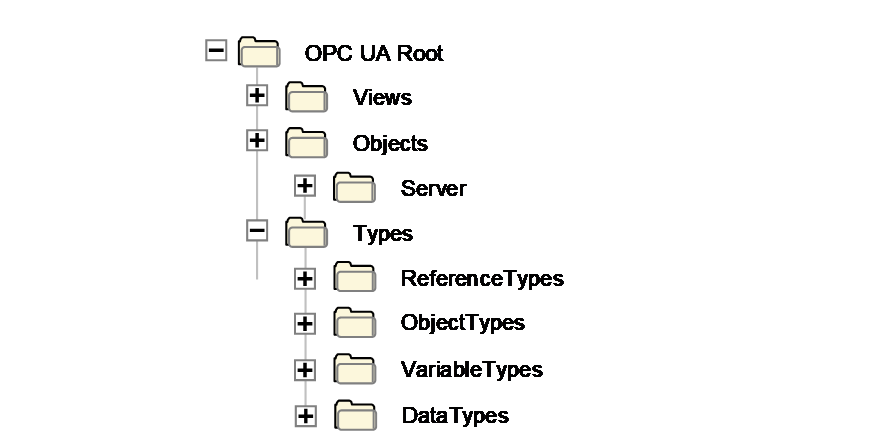
To promote interoperability of clients and Servers, the OPC UA AddressSpace is structured as a hierarchy, with the top levels standardised for all Servers. Figure 1 illustrates the structure of the AddressSpace. All Objects in this figure are organised using OrganizesReferences and have the ObjectType FolderType as type definition.
Figure 1 – Standard AddressSpace structure
The remainder of this provides descriptions of these standard Nodes and the organization of Nodes beneath them. Servers typically implement a subset of these standard Nodes, depending on their capabilities.
8.2.2 Root
This standard Object is the browse entry point for the AddressSpace. It contains a set of OrganizesReferences that point to the other standard Objects. The "Root" Object shall not reference any other NodeClasses. It is formally defined in Table 100.
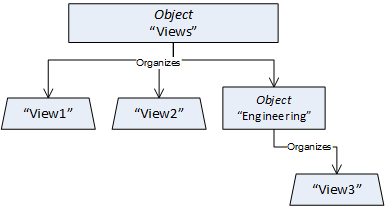
This standard Object is the browse entry point for Views. Only OrganizesReferences are used to relate View Nodes to the "Views" standard Object. All View Nodes in the AddressSpace shall be referenced by this Node, either directly or indirectly. That is, the "Views" Object may reference other Objects using OrganizesReferences. Those Objects may reference additional Views. Figure 2 illustrates the Views organization. The "Views" standard Object directly references the Views "View1" and "View2" and indirectly "View3" by referencing another Object called "Engineering".
Figure 2 – Views organization
The "Views" Object shall not reference any other NodeClasses. The "Views" Object is formally defined in Table 101.
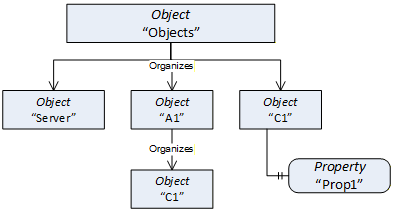
This standard Object is the browse entry point for Object Nodes. Figure 3 illustrates the structure beneath this Node. Only OrganizesReferences are used to relate Objects to the "Objects" standard Object. A ViewNode can be used as entry point into a subset of the AddressSpace containing Objects and Variables and thus the "Objects" Object can also reference ViewNodes using OrganizesReferences. The intent of the "Objects" Object is that all Objects and Variables that are not used for type definitions or other organizational purposes (e.g. organizing the Views) are accessible through hierarchical References starting from this Node. However, this is not a requirement, because not all Servers may be able to support this. This Object references the standard Server Object defined in 8.3.2.
Figure 3 – Objects organization
The "Objects" Object is formally defined in Table 102.
This standard Object Node is the browse entry point for type Nodes. Figure 1 illustrates the structure beneath this Node. Only OrganizesReferences are used to relate Objects to the "Types" standard Object. The "Types" Object shall not reference any other NodeClasses. It is formally defined in Table 103.
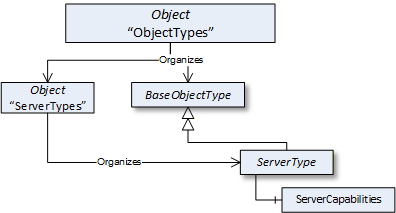
This standard Object Node is the browse entry point for ObjectType Nodes. Figure 4 illustrates the structure beneath this Node showing some of the standard ObjectTypes defined in Clause 6. Only OrganizesReferences are used to relate Objects and ObjectTypes to the "ObjectTypes" standard Object. The "ObjectTypes" Object shall not reference any other NodeClasses.
Figure 4 – ObjectTypes organization
The intention of the "ObjectTypes" Object is that all ObjectTypes of the Server are either directly or indirectly accessible browsing HierarchicalReferences starting from this Node. However, this is not required and Servers might not provide some of their ObjectTypes because they may be well-known in the industry, such as the ServerType defined in 6.3.1.
This Object also indirectly references the BaseEventType defined in 6.4.2, which is the base type of all EventTypes. Thereby it is the entry point for all EventTypes provided by the Server. It is required that the Server expose all its EventTypes, so a client can usefully subscribe to Events.
The "ObjectTypes" Object is formally defined in Table 104.
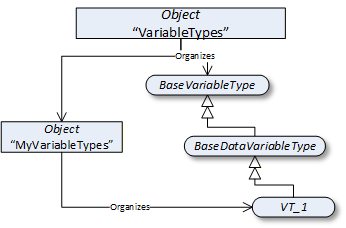
This standard Object is the browse entry point for VariableType Nodes. Figure 5 illustrates the structure beneath this Node. Only OrganizesReferences are used to relate Objects and VariableTypes to the "VariableTypes" standard Object. The "VariableTypes" Object shall not reference any other NodeClasses.
Figure 5 – VariableTypes organization
The intent of the "VariableTypes" Object is that all VariableTypes of the Server are either directly or indirectly accessible browsing HierarchicalReferences starting from this Node. However, this is not required and Servers might not provide some of their VariableTypes, because they may be well-known in the industry, such as the "BaseVariableType" defined in 7.2.
The "VariableTypes" Object is formally defined in Table 105.
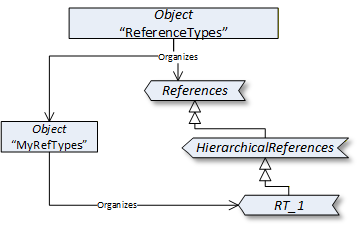
This standard Object is the browse entry point for ReferenceType Nodes. Figure 6 illustrates the organization of ReferenceTypes. OrganizesReferences are used to define ReferenceTypes and Objects referenced by the "ReferenceTypes" Object. The "ReferenceTypes" Object shall not reference any other NodeClasses. See Clause 11 for a discussion of the standard ReferenceTypes that appear beneath the "ReferenceTypes" Object.
Figure 6 – ReferenceType definitions
Since ReferenceTypes will be used as filters in the browse Service and in queries, the Server shall provide all its ReferenceTypes, directly or indirectly following hierarchical References starting from the "ReferenceTypes" Object. This means that, whenever the client follows a Reference, the Server shall expose the type of this Reference in the ReferenceType hierarchy. It shall provide all ReferenceTypes so that the client would be able, following the inverse subtype of References, to come to the base ReferencesReferenceType. It does not mean that the Server shall expose the ReferenceTypes that the client has not used any Reference of.
The "ReferenceTypes" Object is formally defined in Table 106.
This standard Object is the browse entry point for DataTypes that the Server wishes to expose in the AddressSpace.
DataTypeNodes should be made available using OrganizesReferences pointing either directly from the "DataTypes" Object to the DataTypeNodes or using additional FolderObjects for grouping purposes. The intent is that all DataTypes of the Server exposed in the AddressSpace are accessible following hierarchical References starting from the "DataTypes" Object. However, this is not required.
The "DataTypes" Object is formally defined in Table 107.
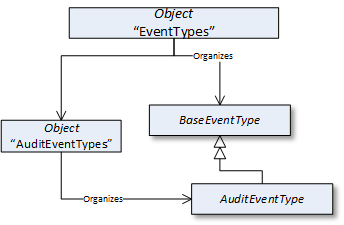
This standard Object Node is the browse entry point for EventType Nodes. Figure 7 illustrates the structure beneath this Node showing some of the standard EventTypes defined in Clause 6. Only OrganizesReferences are used to relate Objects and ObjectTypes to the "EventTypes" standard Object. The "EventTypes" Object shall not reference any other NodeClasses.
Figure 7 – EventTypes organization
The intention of the "EventTypes" Object is that all EventTypes of the Server are either directly or indirectly accessible browsing HierarchicalReferences starting from this Node. It is required that the Server expose all its EventTypes, so a client can usefully subscribe to Events.
The "EventTypes" Object is formally defined in Table 108.
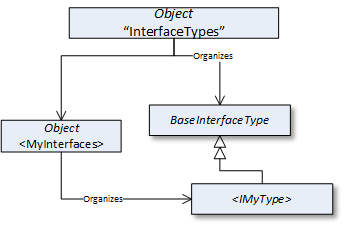
This standard Object Node is the browse entry point for ObjectType Nodes that represent Interfaces. Figure 8 illustrates the structure beneath this Node showing some of the standard ObjectTypes defined in clause 6. Only OrganizesReferences are used to relate Objects and Interfaces to the “InterfaceTypes” standard Object. The “InterfaceTypes” Object shall not reference any other NodeClasses.
Figure 8 – InterfaceTypes Organization
The intention of the “InterfaceTypes” Object is that all Interfaces of the Server are either directly or indirectly accessible browsing HierarchicalReferences starting from this Node. However, this is not required and Servers might not provide some of their Interfaces because they may be well-known in the industry.
The “InterfaceTypes” Object is formally defined in Table 109.
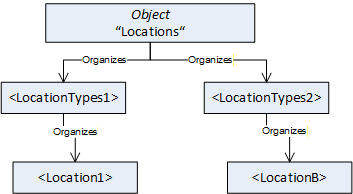
This standard Object is the browse entry point for Object Nodes which represent different types of locations. Figure 9 illustrates the structure beneath this Node. Only OrganizesReferences are used to relate Objects.
Figure 9 – Locations organization
The intent of the "Locations" Object is an entry point for different types of locations. The types of locations organize locations.
The "Locations" Object is formally defined in Table 110.