
H.2 Joint Model Overview
While assembling a product, a blueprint is used to describe how to make many instances of the product. The idea with the joint model is to capture the same type of data for a joint.
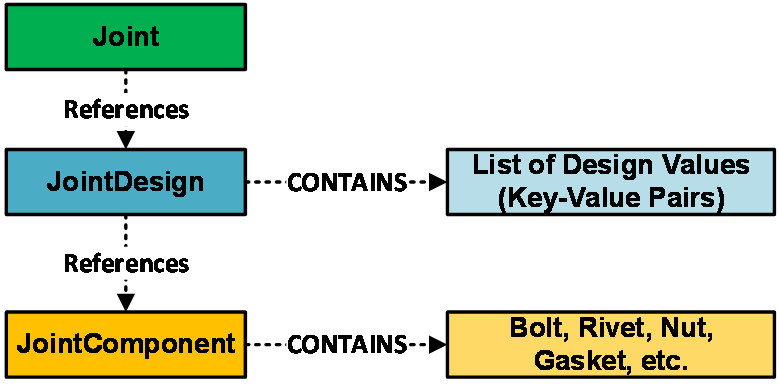
H.2.1 Joint
A joint is used to represent a point where several different parts on a particular product model should be joined together. Refer section 10.15 for joint structure.
H.2.2 Joint Design
Joint design represents the physical properties of a joint. It can contain the following data. Refer section 10.16 for joint design structure.
Torque, Torque tolerance, Torsion angle limits.
Residual torque, Clamping force, Tension.
…
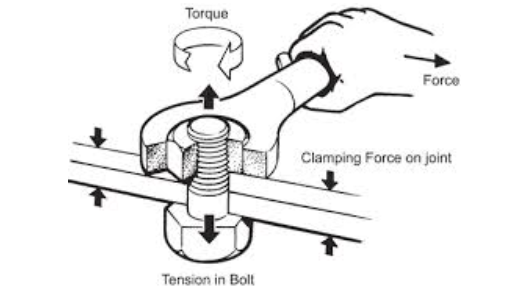
H.2.3 Joint Component
Joint component represents elements such as Bolts, Rivets, etc. Refer section 10.17 for joint component structure.
H.2.4 Joint Data Access
An external system can exchange joint data using the methods defined in section 7.8.
Selection of joints can be done using the method defined in section 7.8.5 which selects the joining process needed to perform the joining operation.