4.1 Overview
Automation does not end with equipment control; it also includes higher levels of control that manage personnel, equipment, and materials across production areas. Effectiveness in manufacturing companies is not based solely on equipment control capability. The ISA-95 Enterprise/Control System Integration standard defines 5 levels of activities in a manufacturing organization. Generally, automation and control support Levels 1 and 2, Manufacturing Operations Management (MOM) systems support Level 3, and business Enterprise Resource Planning (ERP) systems support Level 4 activities. ISA-95 defines four primary types of information that often must be exchanged among MOM systems and between ERP systems and MOM systems, these types are;
Information about material and the properties of materials,
Information about equipment as it pertains to the operations being performed,
Information about the physical assets that make up the equipment,
Information about personnel and their roles and qualifications.
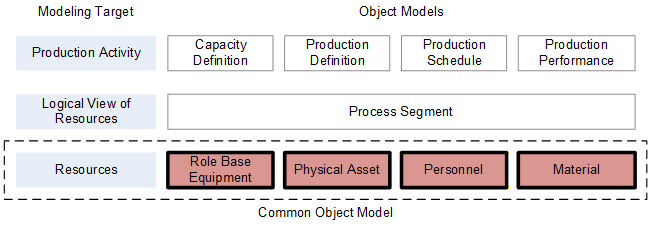
ISA-95 provides a standard manner to uniquely describe this information for exchange, including the interrelationships between the various types of information. The ISA-95 standard is described in multiple parts, where each part describes a portion of the standard. The 2010 versions of Parts 1 and 2 of the ISA-95 standard have been used to define a UA companion standard using OPC UA constructs for the purpose of exposing the ISA-95 objects and attributes in an OPC UA environment. This first release of the UA companion standard supports a subset of the entire ISA-95 standard, covering the role based equipment, physical asset, material and personnel object models in ISA-95 (see Figure 1). Later revisions of the companion standard may include support for the other ISA-95 object models such as process segment, operations definition, operations schedule, operations performance and operations capability object models.