
5.2.1 POWERLINK Objects and their attributes
One of the very significant differences between POWERLINK and OPC UA is that OPC UA provides metadata to each object directly through the Server, whereas POWERLINK can transport metadata only through XDD files or specification documents. Table 9 and Table 10 show examples for object definitions in the POWERLINK Communication Profile EPSG DS 301.
| Index | 1006h | Object Type | VAR |
| Name | NMT_CycleLen_U32 | ||
| Data Type | UNSIGNED32 | Category | M |
| Value Range | refer below | Access | rws, valid on reset |
| Default Range | - | PDO Mapping | No |
| Sub-Index | 09h | ||
| Name | Prescaler_U16 | ||
| Data Type | UNSIGNED16 | Category | MN: M, CN: O |
| Value Range | 0, 1-1000 | Access | rws, valid on reset |
| Default Range | 2 | PDO Mapping | No |
Figure 14 shows the same information in the XDD format defined in EPSG DS311.
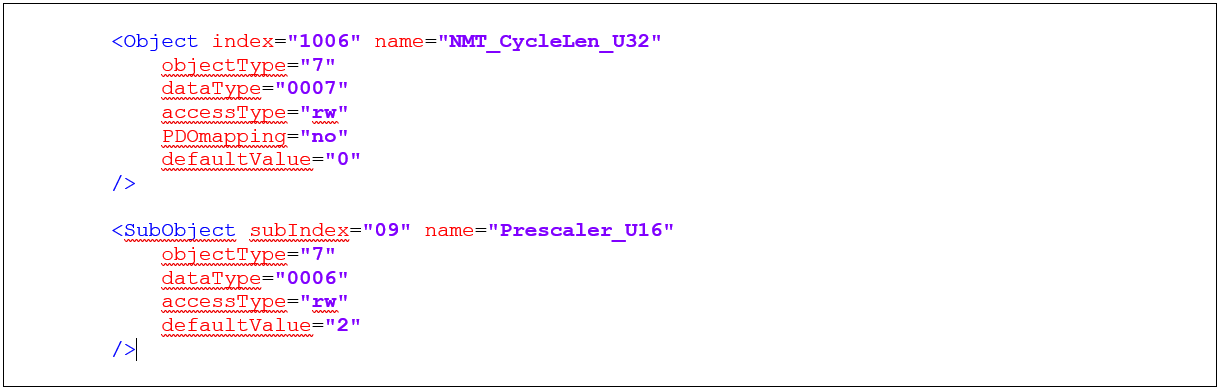
Table 11 lists the attributes that are specified for POWERLINK Objects, and how they are mapped to OPC UA mechanisms.
| POWERLINK Attribute | Description |
| Index | Index and Sub-Index are provided by the Information Model as Properties of the Objects as defined in 5.2.2, 5.2.3 and 5.2.4. |
| SubIndex | |
| Name | The name of the POWERLINK Object shall be used as the BrowseName and the DisplayName of the OPC UA Node |
| Object Type | The relevant object types of POWERLINK are VAR, ARRAY and RECORD. The VariableTypes PowerlinkArrayType, PowerlinkRecordType and PowerlinkVariableType are used to represent such objects from the POWERLINK Object Dictionary and extend the BaseDataVariableType by POWERLINK specific information about the object. POWERLINK Objects of the type ARRAY shall be modelled as PowerlinkArrayType (5.2.2) POWERLINK Objects of the type RECORD shall be modelled as PowerlinkRecordType (5.2.3) POWERLINK Objects of the type VAR shall be modelled as PowerlinkVariableType (5.2.4) |
| Data Type | The mapping of primitive datatypes is defined in Table 22. In certain cases the Information Model makes an exception and uses a Structure DataType to improve the usability. Examples for such exceptions: PowerlinkErrorEntryDataType (7.5.1), encoded as DOMAIN in POWERLINK PowerlinkPDOMappingEntryDataType (7.5.3), encoded as UINT64 in POWERLINK Also for usability reasons some variables are modelled as Enumeration. Examples for such cases: NMT_CurrNMTState_U8 (PowerlinkNMTStateEnumeratioin) NMT_ResetCmd_U8 (PowerlinkNMTResetCmdEnumeration) |
| Value Range | The Value Range of the POWERLINK Object can be provided by the optional Property Range of the PowerlinkVariableType (5.2.4). |
| Category | POWERLINK defines the 3 categories Mandatory (M), Optional (O) and Conditional (Cond). OPC UA defines the ModellingRules Mandatory and Optional. Since OPC UA does provide an ModellingRule which can be mapped to Conditional of POWERLINK, the mapping is the following: Category M becomes the ModellingRule Mandatory Category O becomes the ModellingRule Optional Category Cond becomes the ModellingRule Optional and requires a textual description at the objects definition about the condition that makes the object mandatory. |
| Access | Access and PDO Mapping are provided by the Property PowerlinkAttributes defined for the PowerlinkVariableType (5.2.4). |
| PDO Mapping | |
| Default Value | The default value of the object is provided by the optional Property DefaultValue of the PowerlinkVariableType (5.2.4). |