
6 OPEN-SCS Data Representation Model
6.1 General
The OPC UA OPEN-SCS Information Model is a representation of the OPEN-SCS data model in OPC Methods, ObjectTypes, VariableTypes, DataTypes and ReferenceTypes.
This model generates standard types. All OPEN-SCS types will be defined in their own namespace and will begin with "OPENSCS"
The following conventions apply to ObjectType, VariableType and DataType naming:
All ObjectTypes include "ObjectType" as part of the name
All DataTypes that are structures include "DataType" as part of the name, this is to be able to differentiate them from any VariableTypes that will just end in Type.
All enumerations will end in "Enum", to clearly identify that it is an enumeration.
All base DataTypes (int32, float, …) used in the OPC UA server will be those defined in OPC UA, see OPC 10000-6 for more detail on the representation of the datatypes.
6.2 Instance AddressSpace
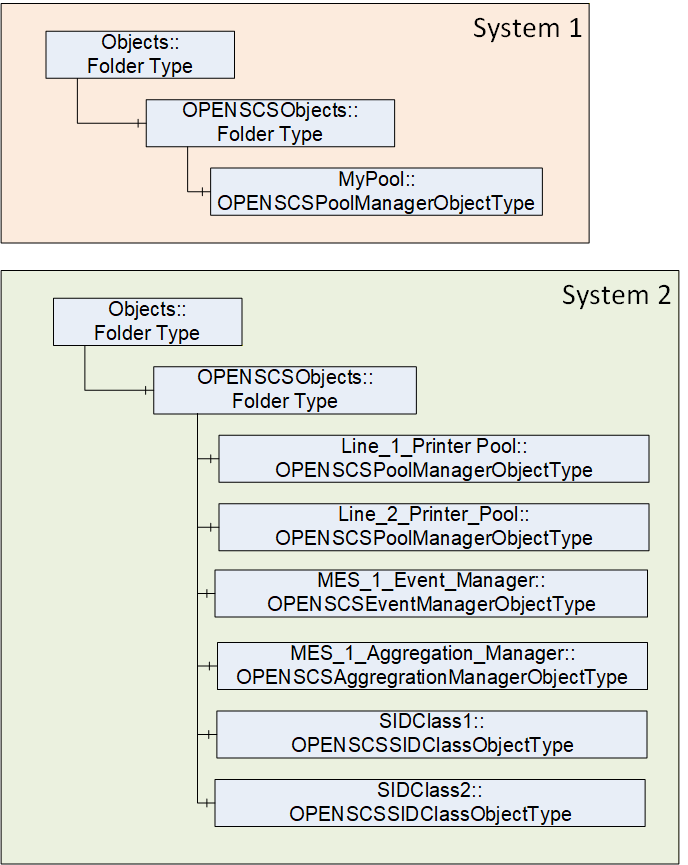
Figure 10 provides an example of the instance object model for OPEN-SCS.
The OPC UA Server shall have an OPENSCSObjects folder under the OPC defined Objects folder on a UA server. This folder shall contain instances of OPENSCSPoolObjectType, OPENSCSEventManagerType, and/or OPENSCSSIDClassType.
6.3 ObjectTypes
6.3.1 OPENSCSPoolManagerObjectType
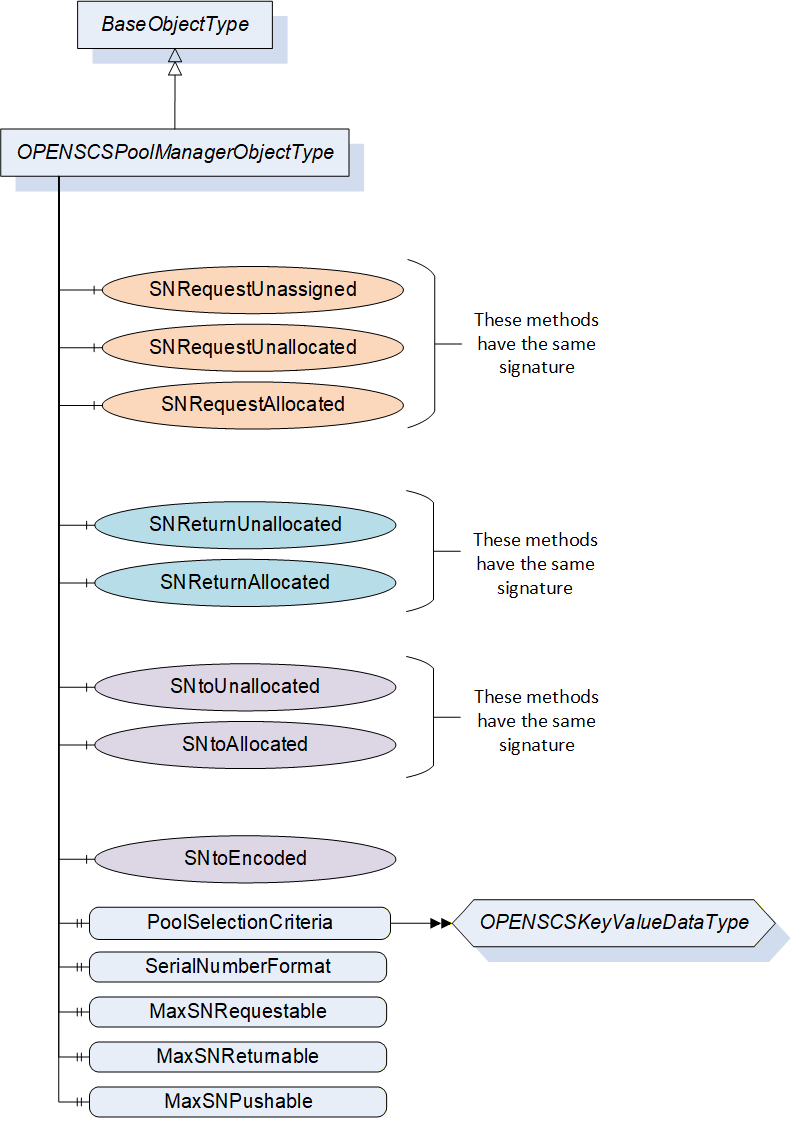
The OPEN-SCS model for pool management when adapted to OPC UA results in a number of methods attached to a pool manager object, as illustrated in Figure 11.
A pool manager may manage one or more pools of serial numbers. Depending on the profile supported the pool manager may:
Return serial numbers of the appropriate state based on a request method from a specified pool in the server (SNRequestUnassigned, SNRequestUnallocated and SNRequestAllocated).
Accept returned serial numbers of the appropriate state based on a return method to a specified pool in the server (SNReturnUnallocated and SNReturnAllocated).
Accept unsolicited serial number of a specified state to be added to the server's pool (SNtoUnallocated, SNtoAllocated and SNtoEncoded).
The pool manager may use pool selection criteria to determine which pool is to be used on a method call. The pool selection criteria available from the pool manager are available in the PoolSelectionCriteria key/value pairs. The selection criteria are read only and are defined by the configuration of the pool manager server.
The formats for the returned serial number are defined by the SNFormat parameter and must match a serial number format defined in the pool manager server.
6.3.1.1 OPENSCSPoolManagerObjectType Definition
Table 4 is the AddressSpace definition of an OPENSCSPoolManagerObjectType.
| Attribute | Value | ||||
| BrowseName | OPENSCSPoolManagerObjectType | ||||
| IsAbstract | False | ||||
| References | NodeClass | BrowseName | Data Type | TypeDefinition | Other |
|---|---|---|---|---|---|
| Subtype of the BaseObjectType defined in OPC 10000-5 | |||||
| 0:HasComponent | Method | SNRequestUnassigned | See 6.3.1.2 | O | |
| 0:HasComponent | Method | SNRequestUnallocated | See 6.3.1.3 | O | |
| 0:HasComponent | Method | SNRequestAllocated | See 6.3.1.4 | O | |
| 0:HasComponent | Method | SNReturnUnallocated | See 6.3.1.5 | O | |
| 0:HasComponent | Method | SNReturnAllocated | See 6.3.1.6 | O | |
| 0:HasComponent | Method | SNtoUnallocated | See 6.3.1.7 | O | |
| 0:HasComponent | Method | SNtoAllocated | See 6.3.1.8 | O | |
| 0:HasComponent | Method | SNtoEncoded | See 6.3.1.9 | O | |
| 0:HasProperty | Variable | PoolSelectionCriteria | OPENSCSKeyValueDataType[] | 0:PropertyType | M |
| 0:HasProperty | Variable | SNFormat | 0:String[] | 0:PropertyType | M |
| 0:HasProperty | Variable | MaxSNRequestable | 0:UInt32 | 0:PropertyType | M |
| 0:HasProperty | Variable | MaxSNReturnable | 0:UInt32 | 0:PropertyType | M |
| 0:HasProperty | Variable | MaxSNPushable | 0:UInt32 | 0:PropertyType | M |
PoolSelectionCriteria - Defines a read-only set of key value pairs which define the selection criteria used to determine the pool from which serial numbers are requested or returned. For example: "GTIN", "SCSCGP", and "PoolID".
SNFormat - Defines a read-only set of possible serial number formats that may be used on pushes, requests or returns of serial numbers. For example: "SERIALONLY", "LITERAL", and "EPCURI". As a minimum the value "SERIALONLY" shall be supported.
MaxSNRequestable - Defines a read-only maximum number of serial numbers which can be requested in a single method call. If the request methods are not supported, this number shall be zero.
MaxSNReturnable - Defines a read-only maximum number of serial numbers which can be returned in a single method call. If the return methods are not supported, this number shall be zero.
MaxSBPushable - Defines a read-only maximum number of serial numbers which can be pushed to the server in a single method call. If the push methods (SNtoUnallocated, SNtoAllocated, SNtoEncoded) methods are not supported, this number shall be zero.
6.3.1.2 SNRequestUnassigned Method
SNRequestUnassigned -This Method requests unassigned serial numbers from an OPC UA Server that is performing serial number management for a specific Serial Number Collection.
The signature of this Method is specified below. Table 5 and Table 6 specify the Arguments and AddressSpace representation, respectively.
Signature
	SNRequestUnassigned (
		[in]	String				SNCollectionID
	[in]	UInt32				Count
	[in]	String				SNFormat
	[in]	OPENSCSKeyValueDataType[]	PoolSelectionCriteria
	[in]	String			   	RequestToken
	[out]	OPENSCSReturnEnum	   	ReturnStatus
	[out]	OPENSCSSNCollectionDataType 	SNCollection
	[out]	String			   	ReturnedRequestToken
);| Argument | Description |
|---|---|
| SNCollectionID | Identifies the Serial Number Collection from which unassigned Serial Numbers are to be provided. If the Serial Number Collection ID does not match a Serial Number Collection managed by the Information Provider, then an "Invalid Serial Number Collection" error is returned. If the Serial Number Collection ID is not provided, then the default Serial Number Collection shall be selected. |
| Count | Identifies the number of Serial Numbers requested. If fewer Serial Numbers are available from the pool, then are requested, then an "Insufficient Serial Numbers" status is returned, and the number of Serial Numbers that are available are returned. |
| SNFormat | Defines the desired serial number format (see the OPENSCS PSS Specification for format definitions) for the requested serial numbers. If the Serial Number Format is not known to the server, then an "Invalid Serial Number Format" error is returned. |
| PoolSelectionCriteria | Identified value to be used by the method provider to determine which Serial Numbers to return. If no Pool Selection Criteria is defined, then the default Pool Selection Criteria of the method provider is used. If the pool selection criteria is not known to the server, then an "Invalid selection Criteria" error is returned. |
| RequestToken | If it has a value of null, then this is the initial request for Serial Numbers. If the value is not null, then this is a follow-on request because the number of Serial Numbers requested in a previous call were not available as an immediate response. RequestTokens are provided to 1) support asynchronous transactions, where there can be delays between requests and the availability of Serial Numbers, and 2) where more Serial Numbers are requested than can be exchanged in a single transaction. If the Request Token has a value not understood by the Information Provider, then an "Invalid Parameter" error is returned. |
| ReturnStatus | Returns the status of the method execution. |
| SNCollection | Contains requested Serial Number collection with Serial Numbers of the specified state. If no serial numbers are returned (not available), then this argument returns null. |
| ReturnedRequestToken | If null or an empty string, then all requested numbers have been sent. If non null or an empty string, then there are more serial numbers to be returned and the returned Request Token is to be passed as an input parameter on a subsequent call. |
Method Result Codes are defined as part of the Call service (see OPC 10000-4 and Table 95).
| Attribute | Value | ||||
| BrowseName | SNRequestUnassigned | ||||
| IsAbstract | True | ||||
| References | NodeClass | BrowseName | DataType | TypeDefinition | ModellingRule |
|---|---|---|---|---|---|
| 0:HasProperty | Variable | InputArguments | Argument[] | 0:PropertyType | Mandatory |
| 0:HasProperty | Variable | OutputArguments | Argument[] | 0:PropertyType | Mandatory |
6.3.1.3 SNRequestUnallocated Method
SNRequestUnassigned -This method requests unallocated serial numbers from an OPC UA Server that is performing serial number management for a specific Serial Number Pool.
The signature of this Method is specified below. Table 7 and Table 8 specify the Arguments and AddressSpace representation, respectively.
Signature
	SNRequestUnallocated (
		[in]	String				SNCollectionID
	[in]	UInt32				Count
	[in]	String				SNFormat
	[in]	OPENSCSKeyValueDataType[]	PoolSelectionCriteria
	[in]	String			   	RequestToken
	[out]	OPENSCSReturnEnum	   	ReturnStatus
	[out]	OPENSCSSNCollectionDataType 	SNCollection
	[out]	String			   	ReturnedRequestToken
);| Argument | Description |
| SNCollectionID | See 6.3.1.2. |
| Count | See 6.3.1.2. |
| SNFormat | See 6.3.1.2. |
| PoolSelectionCriteria | See 6.3.1.2. |
| RequestToken | See 6.3.1.2. |
| ReturnStatus | See 6.3.1.2. |
| SNCollection | See 6.3.1.2. |
| ReturnedRequestToken | See 6.3.1.2. |
Method Result Codes are defined as part of the Call service (see OPC 10000-4 and Table 95).
| Attribute | Value | ||||
| BrowseName | SNRequestUnallocated | ||||
| IsAbstract | True | ||||
| References | NodeClass | BrowseName | DataType | TypeDefinition | ModellingRule |
|---|---|---|---|---|---|
| 0:HasProperty | Variable | InputArguments | Argument[] | 0:PropertyType | Mandatory |
| 0:HasProperty | Variable | OutputArguments | Argument[] | 0:PropertyType | Mandatory |
6.3.1.4 SNRequestAllocated Method
SNRequestAllocated -This method requests allocated serial numbers from an OPC UA Server that is performing serial number management for a specific Serial Number Pool.
The signature of this Method is specified below. Table 9 and Table 10 specify the Arguments and AddressSpace representation, respectively.
Signature
	SNRequestAllocated (
		[in]	String				SNCollectionID
	[in]	UInt32				Count
	[in]	String				SNFormat
	[in]	OPENSCSKeyValueDataType[]	PoolSelectionCriteria
	[in]	String			   	RequestToken
	[out]	OPENSCSReturnEnum	   	ReturnStatus
	[out]	OPENSCSSNCollectionDataType SNCollection
	[out]	String			   	ReturnedRequestToken
);| Argument | Description |
| SNCollectionID | See 6.3.1.2. |
| Count | See 6.3.1.2. |
| SNFormat | See 6.3.1.2. |
| PoolSelectionCriteria | See 6.3.1.2. |
| RequestToken | See 6.3.1.2. |
| ReturnStatus | See 6.3.1.2. |
| SNCollection | See 6.3.1.2. |
| ReturnedRequestToken | See 6.3.1.2. |
Method Result Codes are defined as part of the Call service (see OPC 10000-4 and Table 95).
| Attribute | Value | ||||
| BrowseName | SNRequestAllocated | ||||
| IsAbstract | True | ||||
| References | NodeClass | BrowseName | DataType | TypeDefinition | ModellingRule |
|---|---|---|---|---|---|
| 0:HasProperty | Variable | InputArguments | Argument[] | 0:PropertyType | Mandatory |
| 0:HasProperty | Variable | OutputArguments | Argument[] | 0:PropertyType | Mandatory |
6.3.1.5 SNReturnUnallocated Method
SNReturnUnallocated - This method sends unallocated serial numbers back to an OPC UA Server that is performing serial number management of unassigned serial numbers for a specific Serial Number Pool.
The signature of this Method is specified below. Table 11 and Table 12 specify the Arguments and AddressSpace representation, respectively.
Signature
	SNReturnUnallocated (
		[in]	OPENSCSSNCollectionDataType	SNCollection
	[in]	OPENSCSKeyValueDataType[]	PoolSelectionCriteria
	[in]	String				SNFormat
	[out]	OPENSCSReturnEnum		ReturnStatus
);| Argument | Description |
| SNCollection | Contains a Serial Number Collection from which Serial Numbers were originally provided. If the Serial Number Collection ID does not match a Serial Number Collection managed by the Information Provider, then an "Invalid Serial Number Collection" error is returned. |
| PoolSelectionCriteria | Identified value to be used by the method provider to determine which pool to return the Serial Numbers to. If no Pool Selection Criteria is defined, then the default Pool Selection Criteria of the method provider is used. If the pool selection criteria is not known to the server, then an "Invalid selection Criteria" error is returned. |
| SNFormat | The serial number format of the serial numbers being returned. If the Serial Number Format is not known to the method provider, then an "Invalid Serial Number Format" error is returned. |
| ReturnStatus | Returns the status of the method execution. |
Method Result Codes are defined as part of the Call service (see OPC 10000-4 and Table 95).
| Attribute | Value | ||||
| BrowseName | SNReturnUnallocated | ||||
| IsAbstract | True | ||||
| References | NodeClass | BrowseName | DataType | TypeDefinition | ModellingRule |
|---|---|---|---|---|---|
| 0:HasProperty | Variable | InputArguments | Argument[] | 0:PropertyType | Mandatory |
| 0:HasProperty | Variable | OutputArguments | Argument[] | 0:PropertyType | Mandatory |
6.3.1.6 SNReturnAllocated Method
SNReturnAllocated - This method sends allocated serial numbers back to an OPC UA Server that is performing serial number management of unallocated serial numbers for a specific Serial Number Pool.
The signature of this Method is specified below. Table 13 and Table 14 specify the Arguments and AddressSpace representation, respectively.
Signature
	SNReturnAllocated (
		[in]	OPENSCSSNCollectionDataType	SNCollection
	[in]	OPENSCSKeyValueDataType[]	PoolSelectionCriteria
	[in]	String				SNFormat
	[out]	OPENSCSReturnEnum		ReturnStatus
);| Argument | Description |
| SNCollection | See 6.3.1.5. |
| PoolSelectionCriteria | See 6.3.1.5. |
| SNFormat | See 6.3.1.5. |
| ReturnStatus | See 6.3.1.5. |
Method Result Codes are defined as part of the Call service (see OPC 10000-4 and Table 95).
| Attribute | Value | ||||
| BrowseName | SNReturnAllocated | ||||
| IsAbstract | True | ||||
| References | NodeClass | BrowseName | DataType | TypeDefinition | ModellingRule |
|---|---|---|---|---|---|
| 0:HasProperty | Variable | InputArguments | Argument[] | 0:PropertyType | Mandatory |
| 0:HasProperty | Variable | OutputArguments | Argument[] | 0:PropertyType | Mandatory |
6.3.1.7 SNtoUnallocated Method
SNtoUnallocated - This method sends unsolicited serial numbers to be placed into the unallocated state to an OPC UA Server that is performing serial number management for a specific Serial Number Pool.
The signature of this Method is specified below. Table 15 and Table 16 specify the Arguments and AddressSpace representation, respectively.
Signature
	SNtoUnallocated (
	[in]	OPENSCSSNCollectionDataType 	SNCollection
	[in]	OPENSCSKeyValueDataType[]	PoolSelectionCriteria
	[in]	String				SNFormat
	[out]	OPENSCSReturnEnum	  	ReturnStatus
);| Argument | Description |
| SNCollection | The Serial Number Collection containing Serial Numbers. |
| PoolSelectionCriteria | Identified value to be used to identify the pool that unused Serial Numbers can be sent back to. If the pool selection criteria is not known to the server, then an "Invalid selection Criteria" error is returned. |
| SNFormat | The serial number format of the pushed serial numbers. If the Serial Number Format is not known to the method provider, then an "Invalid Serial Number Format" error is returned. |
| ReturnStatus | Returns the status of the method execution. |
Method Result Codes are defined as part of the Call service (see OPC 10000-4 and Table 95).
| Attribute | Value | ||||
| BrowseName | SNtoUnallocated | ||||
| IsAbstract | True | ||||
| References | NodeClass | BrowseName | DataType | TypeDefinition | ModellingRule |
|---|---|---|---|---|---|
| 0:HasProperty | Variable | InputArguments | Argument[] | 0:PropertyType | Mandatory |
| 0:HasProperty | Variable | OutputArguments | Argument[] | 0:PropertyType | Mandatory |
6.3.1.8 SNtoAllocated Method
SNtoAllocated - This method sends unsolicited serial numbers to be placed into the reserved state to an OPC UA Server that is performing serial number management for a specific Serial Number Pool.
The signature of this Method is specified below. Table 17 and Table 18 specify the Arguments and AddressSpace representation, respectively.
Signature
	SNtoAllocated (
	[in]	OPENSCSSNCollectionDataType 	SNCollection
	[in]	OPENSCSKeyValueDataType[]	PoolSelectionCriteria
	[in]	String				SNFormat
	[out]	OPENSCSReturnEnum	  	ReturnStatus
);| Argument | Description |
| SNCollection | See 6.3.1.7. |
| PoolSelectionCriteria | See 6.3.1.7. |
| SNFormat | See 6.3.1.7. |
| ReturnStatus | See 6.3.1.7. |
Method Result Codes are defined as part of the Call service (see OPC 10000-4 and Table 95).
| Attribute | Value | ||||
| BrowseName | SNtoAllocated | ||||
| IsAbstract | True | ||||
| References | NodeClass | BrowseName | DataType | TypeDefinition | ModellingRule |
|---|---|---|---|---|---|
| 0:HasProperty | Variable | InputArguments | Argument[] | 0:PropertyType | Mandatory |
| 0:HasProperty | Variable | OutputArguments | Argument[] | 0:PropertyType | Mandatory |
6.3.1.9 SNtoEncoded Method
SNtoEncoded - This method sends unsolicited serial numbers to be placed into the encoded state to an OPC UA Server that is performing serial number management for a specific Serial Number Pool. It may include label properties associated with the encoding run.
The signature of this Method is specified below. Table 19 and Table 20 specify the Arguments and AddressSpace representation, respectively.
Method Signature
	SNtoEncoded (
		[in]	OPENSCSSNCollectionType	SNCollection
	[in]	OPENSCSKeyValueDataType[]	PoolSelectionCriteria
	[in]	String				SNFormat
	[out]	OPENSCSReturnEnum		ReturnStatus
);| Argument | Description |
| SNCollection | Identifies the Collection with Serial Numbers. |
| PoolSelectionCriteria | The pool selection criteria which are used to return unused serial numbers to a serial number management server. |
| SNFormat | The serial number format of the pushed serial numbers. If the Serial Number Format is not known to the method provider, then an "Invalid Serial Number Format" error is returned. |
| ReturnStatus | Returns the status of the method execution. |
Method Result Codes are defined as part of the Call service (see OPC 10000-4 and Table 95).
| Attribute | Value | ||||
| BrowseName | SNtoEncoded | ||||
| IsAbstract | True | ||||
| Reference | NodeClass | BrowseName | DataType | TypeDefinition | ModellingRule |
|---|---|---|---|---|---|
| 0:HasProperty | Variable | InputArguments | Argument[] | 0:PropertyType | Mandatory |
| 0:HasProperty | Variable | OutputArguments | Argument[] | 0:PropertyType | Mandatory |
6.3.2 OPENSCSEventManagerObjectType
The OPEN-SCS model for event management when adapted to OPC UA results in several methods attached to an event manager object.
The event manager receives unsolicited events through the event methods. All but one of the event methods have the same method signature. The specific methods supported by an event manager are defined in profiles.
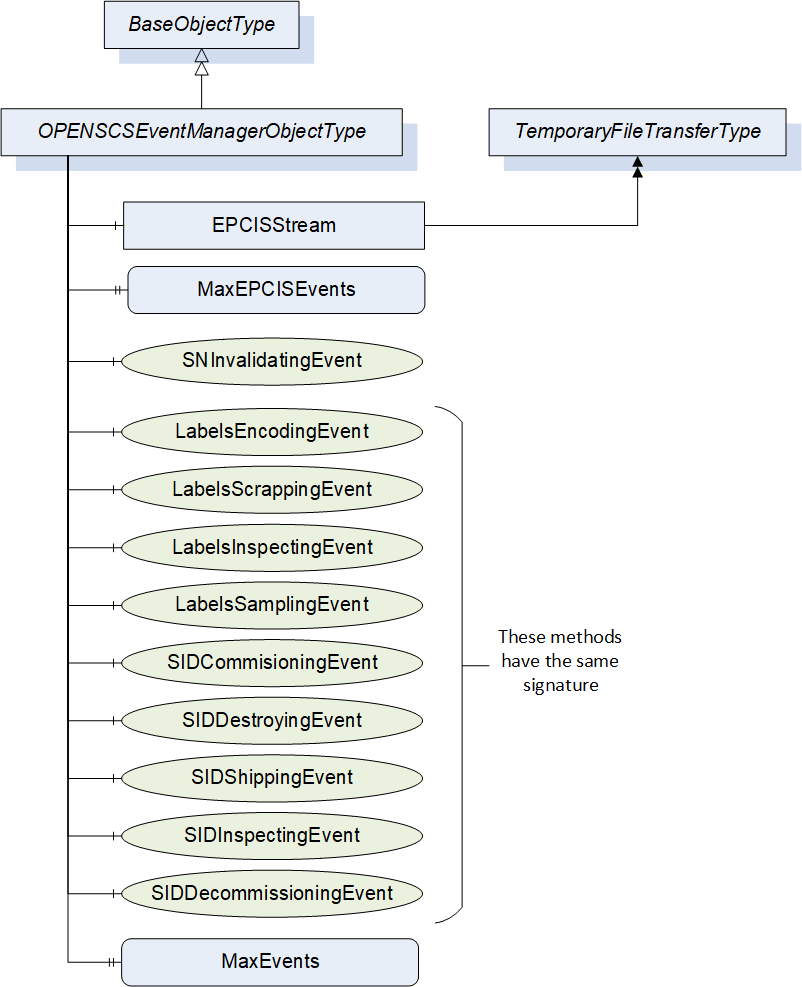
Table 21 is the AddressSpace definition of an OPENSCSEventManagerObjectType.
| Attribute | Value | ||||
| BrowseName | OPENSCSEventManagerObjectType | ||||
| IsAbstract | False | ||||
| References | NodeClass | BrowseName | Data Type | TypeDefinition | Other |
|---|---|---|---|---|---|
| Subtype of the BaseObjectType defined in OPC 10000-5 | |||||
| 0:HasComponent | Object | EPCISStream | TemporaryFileTransferType | Optional | |
| 0:HasComponent | Method | SNInvalidatingEvent | See 6.3.2.1 | Optional | |
| 0:HasComponent | Method | LabelsEncodingEvent | See 6.3.2.3 | Optional | |
| 0:HasComponent | Method | LabelsScrappingEvent | See 6.3.2.4. | Optional | |
| 0:HasComponent | Method | LabelsInspectingEvent | See 6.3.2.5. | Optional | |
| 0:HasComponent | Method | LabelsSamplingEvent | See 6.3.2.6. | Optional | |
| 0:HasComponent | Method | SIDCommissioningEvent | See 6.3.2.7. | Optional | |
| 0:HasComponent | Method | SIDDestroyingEvent | See 6.3.2.8. | Optional | |
| 0:HasComponent | Method | SIDShippingEvent | See 6.3.2.9. | Optional | |
| 0:HasComponent | Method | SIDInspectingEvent | See 6.3.2.10. | Optional | |
| 0:HasComponent | Method | SIDDecommissioningEvent | See 6.3.2.11 | Optional | |
| 0:HasProperty | Variable | MaxEvents | 0:UInt32 | 0:PropertyType | Mandatory |
| 0:HasProperty | Variable | MaxEPCISObjectEventSIDs | 0:UInt32 | 0:PropertyType | Mandatory |
| 0:HasProperty | Variable | MaxEPCISaggregationEvents | 0:UInt32 | 0:PropertyType | Mandatory |
MaxEvents - Defines the read-only maximum number of SN, Label, or SID events which can be received in a single method call.
MaxEPCISObjectEventSIDs - Defines the read-only maximum number of SIDs (SGTINs) in EPCIS object events that may be written in a single EPCISStream file transfer.
MaxEPCISAggregationEvents - Defines the read-only maximum number of EPCIS aggregation events that may be written in a single EPCISStream file transfer
6.3.2.1 EPCISStream Object
The EPCIS file transfer services are provided through a TemporaryFileTransferType, defined in OPC 10000-5. The transferred information is in the form of an EPCIS structured XML file, as described in Annex C. The EPCISStream object is used to push EPCIS Object Events (with various Business Steps in business process such as "urn:epcglobal:cbv:bizstep:commissioning", "urn:epcglobal:cbv:bizstep:inspecting", "urn:epcglobal:cbv:bizstep:packing", "urn:epcglobal:cbv:bizstep:shipping") and EPCIS Object Aggregation Events (with Business Steps as 'urn:epcglobal:cbv:bizstep:packing') to an OPC UA EventManager server.
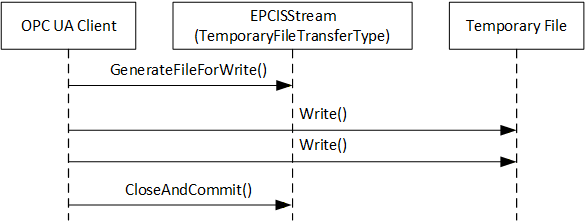
The OPC UA TemporaryFileTransferType method GenerateFileForWrite is used to start the write file transaction. A successful call of this Method creates a temporary FileType Object and returns the NodeId of this Object and the file handle to access the Object. (From OPC 10000-5). The returned FileType object is not browsable in the AddressSpace and can only be accessed with the NodeId and FileHandle returned by the method in the same Session. The returned FileType Object is used to transfer the file stream between OPC UA Client and Server.
The EPCIS structured file is then transferred in blocks to the Event Manager server using the Write method. Once the transfer is complete the CloseAndCommit method is used to close the transfer, and the EventManager processes the transferred information.
The general use of the EPCISStream to transfer an EPCIS file is illustrated in Figure 13.
The GenerateFileForRead method of the EPCISStream object is not specified and shall always return an error from the EventManager.
The generateOptions is used for the GenerateFileForWrite to transfer arguments to the EventManager server that match the arguments used in the EventManager server's event methods.
An EventManager Server shall specify OPENSCSEventStreamArgumentDataType as the concrete DataType of for the Argument Structure for the generateOptions argument in the instance of the GenerateFileForWrite method.
6.3.2.2 SNInvalidatingEvent Method
SNInvalidatingEvent - This method is used to send unsolicited notification of Serial Number Invalidating events to an OPC Server that is performing serial number event management.
The signature of this Method is specified below. Table 22 and Table 23 specify the Arguments and AddressSpace representation, respectively.
Signature
	SNInvalidatingEvent (
		[in]	OPENSCSSNCollectionDataType 	SNCollection
	[in]	String				SNFormat
		[in]	OPENSCSKeyValueDataType[]	OPENSCSEventContext
	[out]	OPENSCSReturnEnum	    	ReturnStatus
);| Argument | Description |
| SNCollection | Identifies the Serial Number Collection. |
| SNFormat | Defines the format of the serial numbers associated to the event. |
| OPENSCSEventContext | Zero or mode key value pairs that define additional context information for the event, such as order number or lot number. |
| ReturnStatus | Returns the status of the method execution. |
Method Result Codes are defined as part of the Call service (see OPC 10000-4 and Table 95).
| Attribute | Value | ||||
| BrowseName | SNInvalidatingEvent | ||||
| IsAbstract | True | ||||
| References | NodeClass | BrowseName | DataType | TypeDefinition | ModellingRule |
|---|---|---|---|---|---|
| 0:HasProperty | Variable | InputArguments | Argument[] | 0:PropertyType | Mandatory |
| 0:HasProperty | Variable | OutputArguments | Argument[] | 0:PropertyType | Mandatory |
6.3.2.3 LabelsEncodingEvent Method
LabelsEncodingEvent - This method is used to send unsolicited notification of Labels Encoding events to an OPC Server that is performing label event management.
The signature of this Method is specified below. Table 24 and Table 25 specify the Arguments and AddressSpace representation, respectively.
Signature
	LabelsEncodingEvent (
		[in]	OPENSCSLabelCollectionDataType	LabelCollection
	[in]	String					SNFormat
		[in]	OPENSCSKeyValueDataType[]		OPENSCSEventContext
	[out]	OPENSCSReturnEnum	    		ReturnStatus
);| Argument | Description |
| LabelCollection | Identifies the Label Collection with Serial Numbers and optional label properties. |
| SNFormat | Defines the format of the serial numbers associated to the event. |
| OPENSCSEventContext | Zero or mode key value pairs that define additional context information for the event, such as order number or lot number. |
| ReturnStatus | Returns the status of the method execution. |
Method Result Codes are defined as part of the Call service (see OPC 10000-4 and Table 95).
| Attribute | Value | ||||
| BrowseName | LabelsEncodingEvent | ||||
| IsAbstract | True | ||||
| References | NodeClass | BrowseName | DataType | TypeDefinition | ModellingRule |
|---|---|---|---|---|---|
| 0:HasProperty | Variable | InputArguments | Argument[] | 0:PropertyType | Mandatory |
| 0:HasProperty | Variable | OutputArguments | Argument[] | 0:PropertyType | Mandatory |
6.3.2.4 LabelsScrappingEvent Method
LabelsScrappingEvent - This method is used to send unsolicited notification of Labels Destroying events to an OPC Server that is performing label event management.
The signature of this Method is specified below. Table 26 and Table 27 specify the Arguments and AddressSpace representation, respectively.
Signature
	LabelsScrappingEvent (
		[in]	OPENSCSLabelCollectionDataType	LabelCollection
	[in]	String					SNFormat
		[in]	OPENSCSKeyValueDataType[]		OPENSCSEventContext
	[out]	OPENSCSReturnEnum	    		ReturnStatus
);| Argument | Description |
| LabelCollection | See 6.3.2.3 |
| SNFormat | See 6.3.2.3 |
| OPENSCSEventContext | See 6.3.2.3 |
| ReturnStatus | See 6.3.2.3 |
Method Result Codes are defined as part of the Call service (see OPC 10000-4 and Table 95).
| Attribute | Value | ||||
| BrowseName | LabelsScrappingEvent | ||||
| IsAbstract | True | ||||
| References | NodeClass | BrowseName | DataType | TypeDefinition | ModellingRule |
|---|---|---|---|---|---|
| 0:HasProperty | Variable | InputArguments | Argument[] | 0:PropertyType | Mandatory |
| 0:HasProperty | Variable | OutputArguments | Argument[] | 0:PropertyType | Mandatory |
6.3.2.5 LabelsInspectingEvent Method
LabelsInspectingEvent - This method is used to send unsolicited notification of Label Inspecting events to an OPC Server that is performing label event management.
The signature of this Method is specified below. Table 28 and Table 29 specify the Arguments and AddressSpace representation, respectively.
Signature
	LabelsInspectingEvent (
		[in]	OPENSCSLabelCollectionDataType	LabelCollection
	[in]	String					SNFormat
		[in]	OPENSCSKeyValueDataType[]		OPENSCSEventContext
	[out]	OPENSCSReturnEnum	    		ReturnStatus
);| Argument | Description |
| LabelCollection | See 6.3.2.3 |
| SNFormat | See 6.3.2.3 |
| OPENSCSEventContext | See 6.3.2.3 |
| ReturnStatus | See 6.3.2.3 |
Method Result Codes are defined as part of the Call service (see OPC 10000-4 and Table 95).
| Attribute | Value | ||||
| BrowseName | LabelsInspectingEvent | ||||
| IsAbstract | True | ||||
| References | NodeClass | BrowseName | DataType | TypeDefinition | ModellingRule |
|---|---|---|---|---|---|
| 0:HasProperty | Variable | InputArguments | Argument[] | 0:PropertyType | Mandatory |
| 0:HasProperty | Variable | OutputArguments | Argument[] | 0:PropertyType | Mandatory |
6.3.2.6 LabelsSamplingEvent Method
LabelsSamplingEvent - This method is used to send unsolicited notification of Label Sampling events to an OPC Server that is performing label event management.
The signature of this Method is specified below. Table 30 and Table 31specify the Arguments and AddressSpace representation, respectively.
Signature
	LabelsSamplingEvent (
		[in]	OPENSCSLabelCollectionDataType	LabelCollection
	[in]	String					SNFormat
		[in]	OPENSCSKeyValueDataType[]		OPENSCSEventContext
	[out]	OPENSCSReturnEnum	    		ReturnStatus
);| Argument | Description |
| LabelCollection | See 6.3.2.3 |
| SNFormat | See 6.3.2.3 |
| OPENSCSEventContext | See 6.3.2.3 |
| ReturnStatus | See 6.3.2.3 |
Method Result Codes are defined as part of the Call service (see OPC 10000-4 and Table 95).
| Attribute | Value | ||||
| BrowseName | LabelsInspectingEvent | ||||
| IsAbstract | True | ||||
| References | NodeClass | BrowseName | DataType | TypeDefinition | ModellingRule |
|---|---|---|---|---|---|
| 0:HasProperty | Variable | InputArguments | Argument[] | 0:PropertyType | Mandatory |
| 0:HasProperty | Variable | OutputArguments | Argument[] | 0:PropertyType | Mandatory |
6.3.2.7 SIDCommissioningEvent Method
SIDCommissioningEvent - This method is used to send unsolicited notification of SID Commissioning events to an OPC Server that is performing SID event management.
The signature of this Method is specified below.
Table 32 and Table 33 specify the Arguments and AddressSpace representation, respectively.
Signature
	SIDCommissioningEvent (
		[in]	OPENSCSLabelCollectionDataType	LabelCollection
	[in]	String					SNFormat
		[in]	OPENSCSKeyValueDataType[]		OPENSCSEventContext
	[out]	OPENSCSReturnEnum	    		ReturnStatus
);| Argument | Description |
| LabelCollection | See 6.3.2.3 |
| SNFormat | See 6.3.2.3 |
| OPENSCSEventContext | See 6.3.2.3 |
| ReturnStatus | See 6.3.2.3 |
Method Result Codes are defined as part of the Call service (see OPC 10000-4 and Table 95).
| Attribute | Value | ||||
| BrowseName | SIDCommissioningEvent | ||||
| IsAbstract | True | ||||
| References | NodeClass | BrowseName | DataType | TypeDefinition | ModellingRule |
|---|---|---|---|---|---|
| 0:HasProperty | Variable | InputArguments | Argument[] | 0:PropertyType | Mandatory |
| 0:HasProperty | Variable | OutputArguments | Argument[] | 0:PropertyType | Mandatory |
6.3.2.8 SIDDestroyingEvent Method
SIDDestroyingEvent - This method is used to send unsolicited notification of SID Destroying events to an OPC Server that is performing SID event management.
The signature of this Method is specified below. Table 34 and Table 35 specify the Arguments and AddressSpace representation, respectively.
Signature
	SIDDestroyingEvent (
		[in]	OPENSCSLabelCollectionDataType	LabelCollection
	[in]	String					SNFormat
		[in]	OPENSCSKeyValueDataType[]		OPENSCSEventContext
	[out]	OPENSCSReturnEnum	    		ReturnStatus
);| Argument | Description |
| LabelCollection | See 6.3.2.3 |
| SNFormat | See 6.3.2.3 |
| OPENSCSEventContext | See 6.3.2.3 |
| ReturnStatus | See 6.3.2.3 |
Method Result Codes are defined as part of the Call service (see OPC 10000-4 and Table 95).
| Attribute | Value | ||||
| BrowseName | SIDDestroyingEvent | ||||
| IsAbstract | True | ||||
| References | NodeClass | BrowseName | DataType | TypeDefinition | ModellingRule |
|---|---|---|---|---|---|
| 0:HasProperty | Variable | InputArguments | Argument[] | 0:PropertyType | Mandatory |
| 0:HasProperty | Variable | OutputArguments | Argument[] | 0:PropertyType | Mandatory |
6.3.2.9 SIDShippingEvent Method
SIDShippingEvent - This method is used to send unsolicited notification of SID Shipping events to an OPC Server that is performing SID event management.
The signature of this Method is specified below. Table 36 and Table 37 specify the Arguments and AddressSpace representation, respectively.
Signature
	SIDShippingEvent (
		[in]	OPENSCSLabelCollectionDataType	LabelCollection
	[in]	String					SNFormat
		[in]	OPENSCSKeyValueDataType[]		OPENSCSEventContext
	[out]	OPENSCSReturnEnum	    		ReturnStatus
);| Argument | Description |
| LabelCollection | See 6.3.2.3 |
| SNFormat | See 6.3.2.3 |
| OPENSCSEventContext | See 6.3.2.3 |
| ReturnStatus | See 6.3.2.3 |
Method Result Codes are defined as part of the Call service (see OPC 10000-4 and Table 95).
| Attribute | Value | ||||
| BrowseName | SIDShippingEvent | ||||
| IsAbstract | True | ||||
| References | NodeClass | BrowseName | DataType | TypeDefinition | ModellingRule |
|---|---|---|---|---|---|
| 0:HasProperty | Variable | InputArguments | Argument[] | 0:PropertyType | Mandatory |
| 0:HasProperty | Variable | OutputArguments | Argument[] | 0:PropertyType | Mandatory |
6.3.2.10 SIDInspectingEvent Method
SIDInspectingEvent - This method is used to send unsolicited notification of SID Inspecting events to an OPC Server that is performing SID event management.
The signature of this Method is specified below. Table 38 and Table 39 specify the Arguments and AddressSpace representation, respectively.
Signature
	SIDInspectingEvent (
		[in]	OPENSCSLabelCollectionDataType	LabelCollection
	[in]	String					SNFormat
		[in]	OPENSCSKeyValueDataType[]		OPENSCSEventContext
	[out]	OPENSCSReturnEnum	    		ReturnStatus
);| Argument | Description |
| LabelCollection | See 6.3.2.3 |
| SNFormat | See 6.3.2.3 |
| OPENSCSEventContext | See 6.3.2.3 |
| ReturnStatus | See 6.3.2.3 |
Method Result Codes are defined as part of the Call service (see OPC 10000-4 and Table 95).
| Attribute | Value | ||||
| BrowseName | SIDInspectingEvent | ||||
| IsAbstract | True | ||||
| References | NodeClass | BrowseName | DataType | TypeDefinition | ModellingRule |
|---|---|---|---|---|---|
| 0:HasProperty | Variable | InputArguments | Argument[] | 0:PropertyType | Mandatory |
| 0:HasProperty | Variable | OutputArguments | Argument[] | 0:PropertyType | Mandatory |
6.3.2.11 SIDDecommissioningEvent Method
SIDDecommissioningEvent - This method is used to send unsolicited notification of SID Decommissioning events to an OPC Server that is performing SID event management.
The signature of this Method is specified below. Table 40 and Table 41 specify the Arguments and AddressSpace representation, respectively.
Signature
	SIDDecommissioningEvent (
		[in]	OPENSCSLabelCollectionDataType	LabelCollection
	[in]	String					SNFormat
		[in]	OPENSCSKeyValueDataType[]		OPENSCSEventContext
	[out]	OPENSCSReturnEnum	    		ReturnStatus
);| Argument | Description |
| LabelCollection | See 6.3.2.3 |
| SNFormat | See 6.3.2.3 |
| OPENSCSEventContext | See 6.3.2.3 |
| ReturnStatus | See 6.3.2.3 |
Method Result Codes are defined as part of the Call service (see OPC 10000-4 and Table 95).
| Attribute | Value | ||||
| BrowseName | SIDDecommissioningEvent | ||||
| IsAbstract | True | ||||
| References | NodeClass | BrowseName | DataType | TypeDefinition | ModellingRule |
|---|---|---|---|---|---|
| 0:HasProperty | Variable | InputArguments | Argument[] | 0:PropertyType | Mandatory |
| 0:HasProperty | Variable | OutputArguments | Argument[] | 0:PropertyType | Mandatory |
6.3.3 OPENSCSAggregationManagerObjectType
The OPEN-SCS model for aggregation management when adapted to OPC UA results in two methods attached to an aggregation manager object.
The aggregation manager receives unsolicited events through the aggregation methods. The aggregation methods have the same method signature. The specific methods supported by an aggregation manager are defined in profiles.
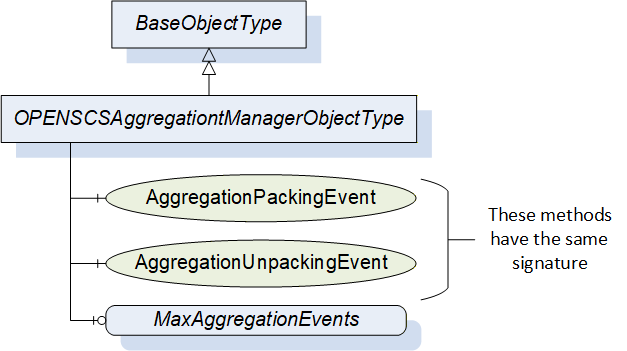
Table 42 is the AddressSpace definition of an OPENSCSAggregationManagerObjectType.
| Attribute | Value | ||||
| BrowseName | OPENSCSAggregationManagerObjectType | ||||
| IsAbstract | False | ||||
| References | NodeClass | BrowseName | Data Type | TypeDefinition | Other |
|---|---|---|---|---|---|
| Subtype of the BaseObjectType defined in OPC 10000-5 | |||||
| 0:HasComponent | Method | AggregationPackingEvent | See 6.3.3.1. | M | |
| 0:HasComponent | Method | AggregationUnpackingEvent | See 6.3.3.2. | M | |
| 0:HasProperty | Variable | MaxAggregationEvents | 0:UInt32 | 0:PropertyType | M |
MaxAggregationEvents - Defines a read-only maximum number of AggregationElements for packing and unpacking events which can be received in a single method call.
6.3.3.1 AggregationPackingEvent Method
AggregationPackingEvent - This method is used to send unsolicited notification of Aggregation Packing events to an OPC Server that is performing aggregation management.
The signature of this Method is specified below. Table 43 and Table 44 specify the Arguments and AddressSpace representation, respectively.
Signature
	AggregationPackingEvent (
	  [in] OPENSCSAggregationDataType[] 	AggregationElement
	  [in] String					ParentSNFormat
	  [in] String					PackedElementSNFormat
	  [in] OPENSCSKeyValueDataType[]		AggregationContext
 	  [out] OPENSCSReturnEnum	    		ReturnStatus
);| Argument | Description |
| AggregationElement | Specifies the parent element and the packed element collection that is to be added to the parent element. |
| ParentSNFormat | Defines the format of the parent Serial Numbers associated to the event. |
| PackedElementSNFormat | Defines the format of the packed element Serial Numbers associated to the event. |
| AggregationContext | Zero or mode key value pairs that define additional context information for the event, such as order number or lot number. |
| ReturnStatus | Returns the status of the method execution. |
Method Result Codes are defined as part of the Call service (see OPC 10000-4 and Table 95).
| Attribute | Value | ||||
| BrowseName | AggregationPackingEvent | ||||
| IsAbstract | True | ||||
| References | NodeClass | BrowseName | DataType | TypeDefinition | ModellingRule |
|---|---|---|---|---|---|
| 0:HasProperty | Variable | InputArguments | Argument[] | 0:PropertyType | Mandatory |
| 0:HasProperty | Variable | OutputArguments | Argument[] | 0:PropertyType | Mandatory |
6.3.3.2 AggregationUnpackingEvent Method
AggregationUnpackingEvent - This method is used to send unsolicited notification of Aggregation Unpacking events to an OPC Server that is performing aggregation management.
The signature of this Method is specified below. Table 45 and Table 46 specify the Arguments and AddressSpace representation, respectively.
Signature
	AggregationUnpackingEvent (
	  [in] OPENSCSAggregationDataType[] 	AggregationElement
	  [in] String					ParentSNFormat
	  [in] String					PackedElementSNFormat
	  [in] OPENSCSKeyValueDataType[]		AggregationContext
 	  [out] OPENSCSReturnEnum	    		ReturnStatus
);| Argument | Description |
| AggregationElement | Specifies the parent element and the packed element collection that is to be removed from the parent element. |
| ParentSNFormat | See 6.3.3.1 |
| PackedElementSNFormat | See 6.3.3.1 |
| AggregationContext | See 6.3.3.1 |
| ReturnStatus | See 6.3.3.1 |
Method Result Codes are defined as part of the Call service (see OPC 10000-4 and Table 95).
| Attribute | Value | ||||
| BrowseName | AggregationUnpackingEvent | ||||
| IsAbstract | True | ||||
| References | NodeClass | BrowseName | DataType | TypeDefinition | ModellingRule |
|---|---|---|---|---|---|
| 0:HasProperty | Variable | InputArguments | Argument[] | 0:PropertyType | Mandatory |
| 0:HasProperty | Variable | OutputArguments | Argument[] | 0:PropertyType | Mandatory |
6.3.4 OPENSCSSIDClassObjectType
SID Class objects are used to obtain information about the SID Classes that may be supported by a server. This information is read-only and is defined by the server, as illustrated in Figure 15.
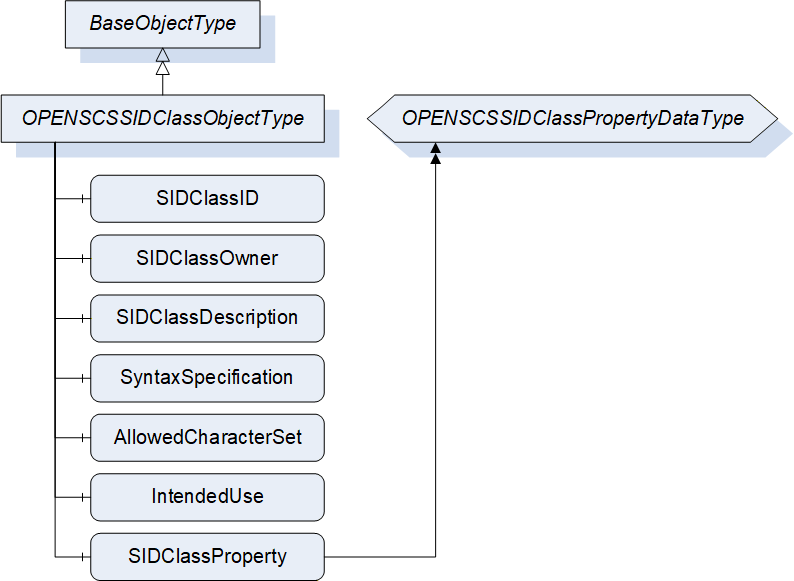
Table 47 defines the structure of an OPENSCSSIDClassObjectType.
| Attribute | Value | ||||
| BrowseName | OPENSCSSIDClassObjectType | ||||
| IsAbstract | False | ||||
| References | Node Class | BrowseName | Data Type | TypeDefinition | Other |
|---|---|---|---|---|---|
| Subtype of the BaseObjectType defined in OPC 10000-5 | |||||
| 0:HasProperty | Variable | SIDClassID | 0:String | 0:PropertyType | M, RO |
| 0:HasProperty | Variable | SIDClassOwner | String | 0:PropertyType | M, RO |
| 0:HasProperty | Variable | SIDClassDescription | String | 0:PropertyType | O, RO |
| 0:HasProperty | Variable | SyntaxSpecification | String | 0:PropertyType | M, RO |
| 0:HasProperty | Variable | AllowedCharacterSet | String | 0:PropertyType | M, RO |
| 0:HasProperty | Variable | IntendedUse | String | 0:PropertyType | O, RO |
| 0:HasProperty | Variable | SIDClassProperty | OPENSCSSIDClassPropertyDataType[] | 0:PropertyType | O, RO |
SIDClassID - An identification of the SID Class of the Serial Number Collection. For example: GS1:SSCC
SIDClassOwner - An identification of the owning, or controlling organization, which defines the information in the SID Class. For example: GS1The Global Language of Business, www.gs1.org
SIDClassDescription - Additional information and description about the SID Class.
SyntaxSpecification - Defines the rules for the syntax of a SID. The format is not defined in this specification and must be negotiated between Information Providers and Information Requesters during design or change management of a system.
AllowedCharacterSet - A string containing the allowed characters that may be used in representing the Serial Number in a SID.
IntendedUse - A string containing a natural language description of the use of the SID. Defines the intended use of the SID Class, such as logistics tracking or pallet aggregations.
SIDClassProperty - An array of property elements, each of which may have associated label property definitions.
6.4 DataTypes
6.4.1 OPENSCSAggregationDataType
The OPENSCSAggregationDataType is a type of structure that identifies a parent element and a collection of packed elements. This is used in the aggregation packing and unpacking methods.
The structure is defined in Table 48
| Name | Type | Description |
| OPENSCSAggregationDataType | structure | |
ParentElement | OPENSCSLabelDataType | Identifies the single serial number representing the aggregation which acts as the parent |
ParentElementCollection | OPENSCSLabelCollectionDataType | Identifies the Serial Number Collection that was added to, or removed from, the parent element. |
Table 49 is the AddressSpace definition of an OPENSCSCollectionDataType.
| Attribute | Value | ||||
| BrowseName | OPENSCSAggregationDataType | ||||
| IsAbstract | False | ||||
| Reference | NodeClass | BrowseName | DataType | TypeDefinition | ModellingRule |
|---|---|---|---|---|---|
| Subtype of the Structure defined in OPC 10000-5 | |||||
6.4.2 OPENSCSCollectionDataType
The OPENSCSCollectionDataType is an abstract subtype of OPC UA Structure that defines a collection of Serial Numbers and associated Collection information. No instances of this type can exist.
There is always at least one Serial Number in the collection.
The structure is defined in Table 50.
| Name | Type | Description |
| OPENSCSCollectionDataType | structure | |
|---|---|---|
ID | 0:String | An identification of the Collection. It usually refers to a specific packaging level of a specific product. However, several products may share the same Pool ID if manufacturer or serial number authority wants to ensure globally unique serial numbers across all products. |
Description | 0:String | Additional information and description about the Collection. |
State | OPENSCSSerialNumberStateEnum | State of the Serial Numbers in the Collection as defined in Table 1 - Serial Number State Definitions. |
AssociatedPoolID | 0:String | An identification of the Serial Number Pool from which the Serial Numbers were obtained. |
SerialNumbers | String [] | Array of Serial Numbers in the collection. |
Table 51 is the AddressSpace definition of an OPENSCSCollectionDataType.
| Attribute | Value | ||||
| BrowseName | OPENSCSCollectionDataType | ||||
| IsAbstract | True | ||||
| Reference | NodeClass | BrowseName | DataType | TypeDefinition | ModellingRule |
|---|---|---|---|---|---|
| Subtype of the Structure defined in OPC 10000-5 | |||||
6.4.3 OPENSCSEventStreamArgumentDataType
The OPENSCSEventStreamArgumentDataType is a subtype of OPC UA Structure that defines the generateOptions argument for an EPCISStream GenerateFileForWrite method. It defines the serial number format information for object events and for aggregation events, and event context information. The structure is defined in Table 54.
| Name | Type | Description |
| OPENSCSEventStreamArgumentDataType | structure | |
SNFormat | 0:String | The format for of serial numbers in object events, can be a null string if there are no object events in the transferred events. |
ParentSNFormat | 0:String | The format for of parent serial numbers in aggregation events, can be a null string if there are no aggregation events in the transferred events. |
PackedElementSNFormat | 0:String | The format for of packed element serial numbers in aggregation events, can be a null string if there are no aggregation events in the transferred events. |
EventContext | OPENSCSKeyValueDataType[] | Zero or more key value pairs that define additional context information for the event, such as order number or lot number. |
Table 55 is the AddressSpace definition of an OPENSCSEventStreamArgumentDataType.
| Attribute | Value | ||||
| BrowseName | OPENSCSEventStreamArgumentDataType | ||||
| IsAbstract | False | ||||
| Reference | NodeClass | BrowseName | DataType | TypeDefinition | ModellingRule |
|---|---|---|---|---|---|
| Subtype of the Structure defined in OPC 10000-5 | |||||
6.4.4 OPENSCSKeyValueDataType
The OPENSCSKeyValueDataType is a subtype of OPC UA Structure that defines two linked data items: the key, which is a unique identifier for some item of data, and the value, which is the data that is identified. The structure is defined in Table 54.
| Name | Type | Description |
|---|---|---|
| OPENSCSKeyValueDataType | structure | |
Key | 0:String | unique identifier for some item of data |
Value | 0:String | data that is identified |
Table 55 is the AddressSpace definition of an OPENSCSKeyValueDataType.
| Attribute | Value | ||||
| BrowseName | OPENSCSKeyValueDataType | ||||
| IsAbstract | False | ||||
| Reference | NodeClass | BrowseName | DataType | TypeDefinition | ModellingRule |
|---|---|---|---|---|---|
| Subtype of the Structure defined in OPC 10000-5 | |||||
6.4.5 OPENSCSLabelDataType
The OPENSCSLabelDataType describes a subtype of Structure type that defines a single serial number and label, which may be associated with an SID, and collection of properties in the form of OPENSCSKeyValueDataType. The structure is defined in Table 56.
| Name | Type | Description |
|---|---|---|
| OPENSCSLabelDataType | structure | |
ID | 0:String | The serial number of the label in the SID or EPC format. |
LabelProperties | OPENSCSKeyValueDataType[] | An optional array of additional properties in the form of Key/Value pairs |
Table 57 is the address space definition of an OPENSCSLabelDataType.
| Attribute | Value | ||||
| BrowseName | OPENSCSLabelDataType | ||||
| IsAbstract | False | ||||
| Reference | NodeClass | BrowseName | DataType | TypeDefinition | ModellingRule |
|---|---|---|---|---|---|
| Subtype of the Structure defined in OPC 10000-5 | |||||
6.4.6 OPENSCSLabelCollectionDataType
The OPENSCSLabelCollectionDataType describes a type that defines a collection of Labels with Serial Numbers and associated Collection information. The structure is defined in Table 58.
| Name | Type | Description |
|---|---|---|
| OPENSCSLabelCollectionDataType | structure | |
LabelCollection | OPENSCSLabelDataType[] | The collections of labels with serial numbers |
LabelCollectionProperties | OPENSCSKeyValueDataType[] | An optional array of additional properties in the form of Key/Value pairs which are valid for the whole collection |
Table 59 is the AddressSpace definition of an OPENSCSLabelCollectionDataType.
| Attribute | Value | ||||
| BrowseName | OPENSCSLabelCollectionDataType | ||||
| IsAbstract | False | ||||
| Reference | NodeClass | BrowseName | DataType | TypeDefinition | Modelling Rule |
|---|---|---|---|---|---|
| Subtype of the OPENSCSCollectionDataType | |||||
6.4.7 OPENSCSLabelPropertyDataType
The structure is defined in Table 60.
| Name | Type | Description |
| OPENSCSLabelPropertyDataType | structure | |
PropertyID | 0:String | An identification of the label property. |
PropertyDescription | 0:String | Additional information and description about the label property. |
PropertyValue | 0:String | Defines value for the specific label property. The format is not defined in this specification and must be negotiated between Information Providers and Information Requesters during design or change management of a system. |
Table 61 is the AddressSpace definition of an OPENSCSLabelPropertyDataType.
| Attribute | Value | ||||
| BrowseName | OPENSCSLabelPropertyDataType | ||||
| IsAbstract | False | ||||
| References | Node Class | BrowseName | Data Type | TypeDefinition | Modelling Rule |
|---|---|---|---|---|---|
| Subtype of Structure defined in OPC 10000-5 | |||||
6.4.8 OPENSCSReturnEnum
The OPENSCSReturnEnum describes the possible return status from an OPENSCS Method call.
The OPENSCSReturnEnum is defined in Table 62.
| Name | Value | Description |
| Undefined0 | 0 | Undefined value, should never be seen. |
| NoError1 | 1 | There were no errors in processing the method. |
| InvalidSerialNumberCollection2 | 2 | The Serial Number Collection ID does not match a Serial Number Collection managed by the server. |
| InsufficientSerialNumbers3 | 3 | Fewer Serial Numbers are available from the pool, then are requested. |
| InvalidSerialNumbersFormat4 | 4 | The serial number format is not known or defined in the server. |
| InvalidRequestToken5 | 5 | The Request Token has a value not understood by the server. |
| InvalidSelectionCriteria6 | 6 | The Selection Criteria is not known or defined in the server. |
| UnableToAcceptSerialNumberEvents7 | 7 | The server cannot accept Serial Number events. |
| UnableToAcceptLabelEvents8 | 8 | The server cannot accept Label events. |
| UnableToAcceptSIDEvents9 | 9 | The server cannot accept SID events. |
| UnknownAggregationSID10 | 10 | The SID of the aggregation for packing or unpacking is unknown. |
| InsufficientPrivilegeToExecute11 | 11 | The server has determined that the client does not have sufficient privilege for the method to execute. |
6.4.9 OPENSCSSerialNumberStateEnum
The OPENSCSSerialNumberStateEnum listed in Table 63 describes the possible serial number states.
| Name | Value | Description |
| Unassigned0 | 0 | See Table 1. |
| Unallocated1 | 1 | See Table 1. |
| Allocated2 | 2 | See Table 1. |
| SNInvalid3 | 3 | See Table 1. |
| Encoded4 | 4 | See Table 1. |
| LabelSampled5 | 5 | See Table 1. |
| LabelScrapped6 | 6 | See Table 1. |
| Commissioned7 | 7 | See Table 1. |
| Sampled8 | 8 | See Table 1. |
| Inactive9 | 9 | See Table 1. |
| Destroyed10 | 10 | See Table 1. |
| Released11 | 11 | See Table 1. |
6.4.10 OPENSCSSIDClassPropertyDataType
The structure is defined in Table 64.
| Name | Type | Description |
| OPENSCSSIDClassPropertyDataType | structure | |
PropertyID | 0:String | An identification of the SID Class Property. |
PropertyDescription | 0:String | Additional information and description about the SID Class Property. |
PropertyValue | 0:String | Defines value for the specific SID Class Property. The format is not defined in this specification and must be negotiated between Information Providers and Information Requesters during design or change management of a system. |
LabelProperty | OPENSCSLabelPropertyDataType[] |
Table 65 is the AddressSpace definition of an OPENSCSSIDClassPropertyDataType.
| Attribute | Value | ||||
| BrowseName | OPENSCSSIDClassPropertyDataType | ||||
| IsAbstract | False | ||||
| References | Node Class | BrowseName | Data Type | TypeDefinition | Modelling Rule |
|---|---|---|---|---|---|
| Subtype of Structure defined in OPC 10000-5 | |||||
6.4.11 OPENSCSSNCollectionDataType
The OPENSCSSNCollectionDataType describes a subtype of OPENSCSCollectionDataType type that defines a collection of Serial Numbers and associated Collection information.
Table 66 is the AddressSpace definition of an OPENSCSSNCollectionDataType.
| Attribute | Value | ||||
| BrowseName | OPENSCSSNCollectionDataType | ||||
| IsAbstract | False | ||||
| Reference | NodeClass | BrowseName | DataType | TypeDefinition | ModellingRule |
|---|---|---|---|---|---|
| Subtype of the OPENSCSCollectionDataType | |||||
6.5 Product Master Data
Product master data, as defined in the OPEN-SCS PSS specification should be exchanged using material models defined in the OPC Unified Architecture for ISA 95 Common Object Model Companion Specification. See https://opcfoundation.org/markets-collaboration/isa-95/ or https://opcfoundation.org/developer-tools/specifications-OPC UA-collaborations/isa-95-common-object-model/