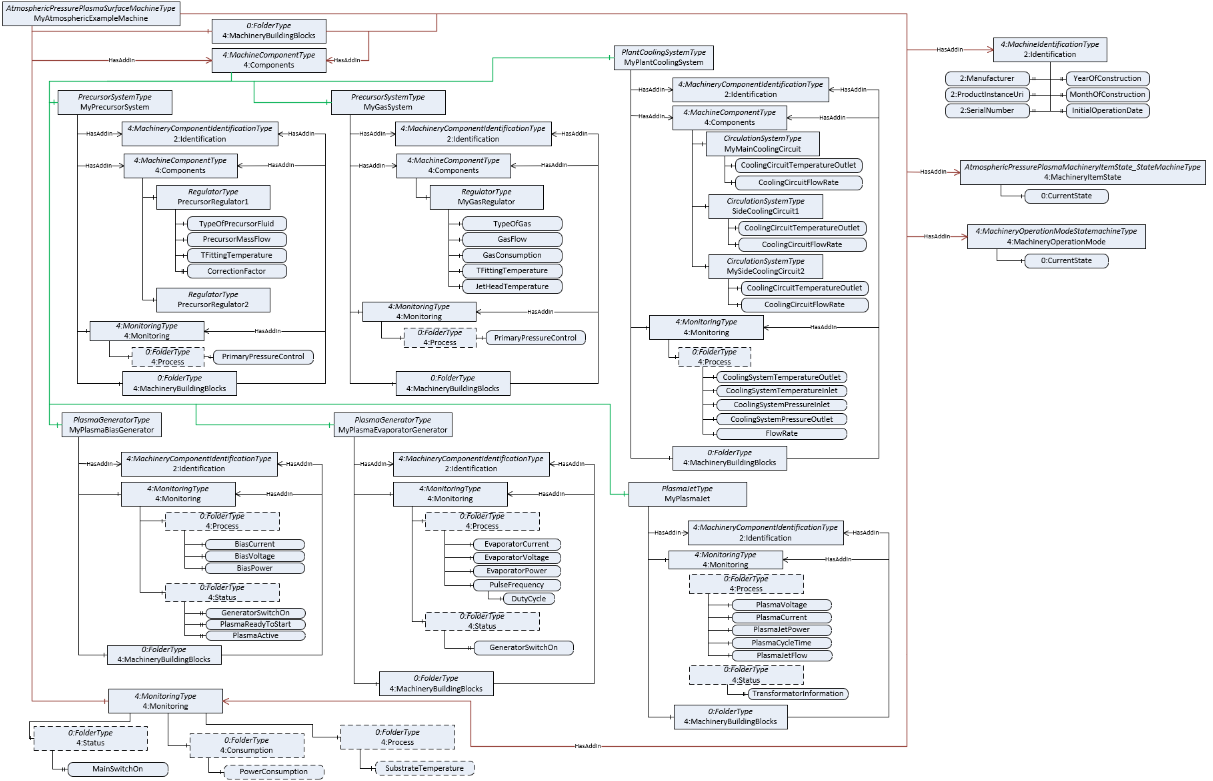
B.2 Instantiation of an exemplary atmospheric pressure plasma surface treatment machine
shows an exemplary atmospheric pressure plasma surface treatment machine.
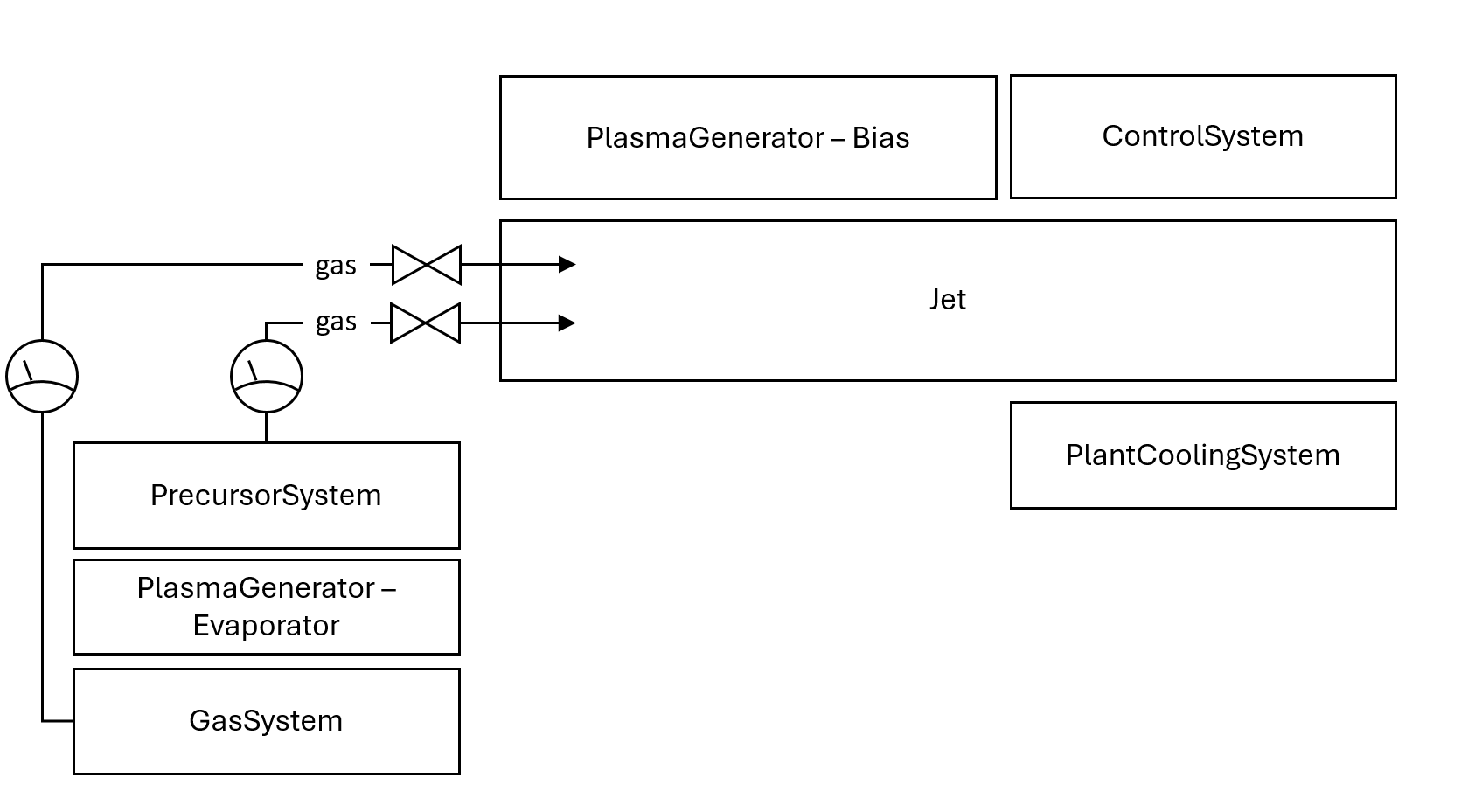
An atmospheric pressure plasma surface treatment machine comprises several essential components to enable the diverse plasma surface treatments.
The plasma jet is the central component where the plasma treatment process takes place. As the name of the machine type suggests, the plasma treatment process is carried out at atmospheric pressures, instead of below low pressure.
The plasma is generated inside the jet by a high voltage between a stator and a rotor and is blown out through the jet head using working gas that is provided by the gas system.
The atmospheric pressure plasma surface machine directed at the material serve to generate and spread the plasma. Plasma surface treatment is a versatile technique that can be used to improve the performance of materials in a range of applications.
The gas system comprises the precisely regulated addition of pure or premixed process gases, reactive gases, usually via separate lines and gas flow controllers into the processing jet. Often various different gases are needed to promote specific effects and reactions during the plasma treatment.
The precursor system is basically the same as the gas system. The main difference is the use of precursor feedstock, which is usually liquid. The precursor fluid must first be converted into a gaseous state via an evaporator system before the vapour / gas is injected into the supply line and fed into the jet via gas flow controller.
The creation of layers in the plasma process occurs either the chemical rout meaning purely from the gas phase or through the physical rout by the evaporation of solids or powders or by combining these or different methods for coating synthesis. In order to transfer solid or powder source material into the vapour phase plasma generators of various power levels, modes and frequencies are used for the wide range of different evaporator systems.
Basically and generally speaking, the plasma generator - bias is necessary for the surface activation of the workpieces. It generates the needed plasma. Devices of various power levels, modes and frequencies are used. The plasma generator - bias is usually connected directly with the workpiece motion device. In simple words, a quasi-neutral plasma is a combination of charged, excited, and neutral species. The bias is used to attract charged and exited gas and/or vapor species to the workpiece surfaces. Depending on the polarization the bias is used for various purposes such as electron heating, ion etching, ion incorporation, coating densification etc. during different process steps. Sometimes the plasma generator - bias is not directly attached to the workpiece motion device, but for instance to a so call plasma screen for indirect activation of the workpiece surface.
The control system is mainly a PLC / computer-based system that monitors and controls all process parameters. It is the brain of each atmospheric pressure plasma surface treatment machine. It provides monitoring of all critical parameters, relevant status information, recipe management and data logging features, etc.
An additionally plant cooling system cools a special jet to a constant temperature if needed.
The following page shows how the example machine described can be implemented in an information model using OPC UA for PlasmaSurfaceTechnology.