The WwEventsDispatcherType represents a container that is an event dispatcher for machine events and is formally defined in Table 42.
Table 42 – WwEventsDispatcherType Definiton
|
Attribute |
Value |
||||
|
BrowseName |
WwEventsDispatcherType |
||||
|
IsAbstract |
False |
||||
|
References |
Node Class |
BrowseName |
DataType |
TypeDefinition |
Other |
|
Subtype of the 0:BaseObjectType defined in OPC 10000-5 |
|||||
|
0:GeneratesEvent |
ObjectType |
0:BaseEventType |
|
|
|
|
0:GeneratesEvent |
ObjectType |
WwBaseEventType |
|
|
|
|
0:GeneratesEvent |
ObjectType |
WwConditionType |
|
|
|
|
0:GeneratesEvent |
ObjectType |
WwAcknowledgeableConditionType |
|
|
|
|
0:GeneratesEvent |
ObjectType |
WwAlarmConditionType |
|
|
|
|
Conformance Units |
|||||
|
Woodworking Machine Events |
|||||
|
Woodworking Event Propagation |
|||||
|
Woodworking Event Messages |
|||||
|
Woodworking Stateful Event Messages |
|||||
A wide variety of events and states can trigger messages on a plant, machine or component. Events and the associated messages are rather temporary and therefore cannot be subscribed directly. However, filtering can be realized with the event types like WwBaseEventType, WwConditionType, WwAcknowledgeableConditionType or WwAlarmConditionType. The woodworking events implement the interface IWwEventMessageType.
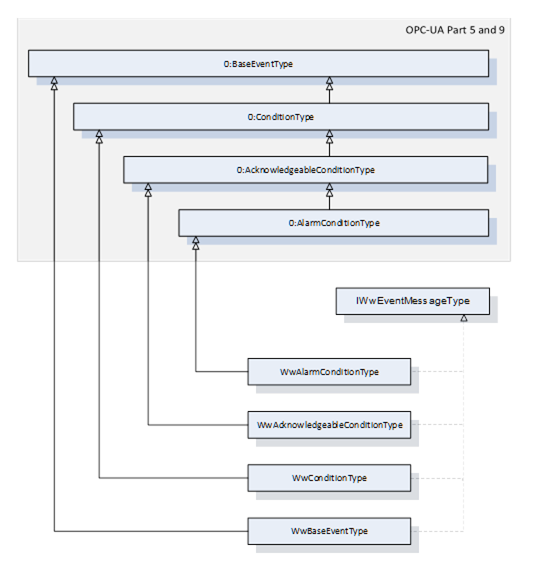
Figure 11 – Overview of Woodworking Event Types
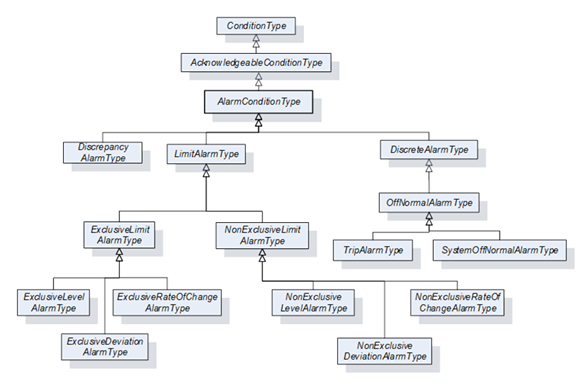
Woodworking machines do not need to provide the woodworking Types like WwBaseEventType. Instead, it can be an object based on any OPC UA 0:BaseEventType or a subtype, which also contains an implementation of the IWwEventMessageType interface. So it is possible to use the full range of OPC UA AlarmTypes like 0:LimitAlarmType:
Note: Due to the implementation of the selected SDK (Software Developer Kit) to support the realization of the server application, it is possible that the condition methods such as AddComment, Acknowledge or Confirm cannot be used for conditions outside the AddressSpace.