This layout is specially configured for AliasName update messages. For additional detail on PubSub and header layouts see OPC 10000-14.
A UADP NetworkMessage header shall consist of the following fields according to this header layout:
Additional restrictions:
- The datatype for the PublisherId shall be UInt64
Note: For the PublisherId the DataType UInt64 was selected because it allows a simple way for a Publisher to generate unique PublisherIds by using the local MAC address (48 Bit) as part of the PublisherId.
The NetworkMessage header layout is shown in Figure D.2.
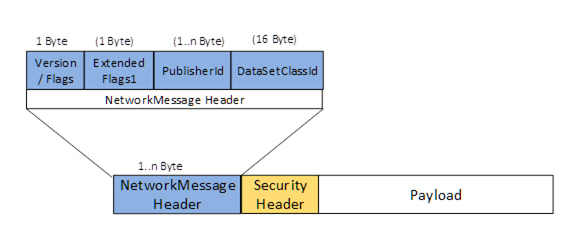
Figure D.2 – UADP NetworkMessage header layout
Table D.5 shows the configuration for the NetworkMessage header.
Table D.5 – UADP NetworkMessage header layout
|
Name |
Type |
Restrictions |
|
UADPVersion |
Bit[0-3] |
The version shall be 1 |
|
UADPFlags |
Bit[4-7] |
Bit 4: PublisherId enabled = 1 Bit 5: GroupHeader enabled = 0 Bit 6: PayloadHeader enabled = 0 Bit 7: ExtendedFlags1 enabled = 1 |
|
ExtendedFlags1 |
Byte |
Bit range 0-2: PublisherId Type 011 The PublisherId is of DataType UInt64 Bit 3: DataSetClassId enabled = 1 Bit 4: SecurityHeader enabled configurable (default=1) Bit 5: Timestamp enabled = 0 Bit 6: PicoSeconds enabled = 0 Bit 7: ExtendedFlags2 enabled = 0 |
|
PublisherId |
UInt64 |
Configured value for the PubSubConnection. The datatype shall be UInt64. |
|
DataSetClassId |
Guid |
The DataSetClassId associated with the DataSets in the NetworkMessage. All DataSetMessages in the NetworkMessage shall have the same DataSetClassId. – It shall be 65880051-7e5b-4a96-ae47-e0ef4704b924 |
UADP messages may be signed to ensure integrity. In this case a security header and a signature have to be added to the message.
This header layout is basically the same as the header layout defined in D.3.2 but with additional security level ‘Signing but no encryption’. The NetworkMessage header layout with signing is shown in Figure D.3
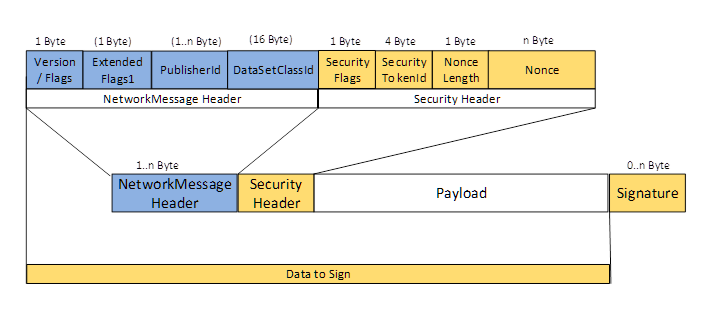
Figure D.3 – UADP NetworkMessage header layout with integrity (signing)
Table D.6 shows the configuration for the NetworkMessage header with signing. The table contains only the added or modified rows from Table D.5.
Table D.6 – UADP NetworkMessage header layout with integrity (signing)
|
Name |
Type |
Restrictions |
|
ExtendedFlags1 |
Byte |
Bit 4: SecurityHeader enabled = 1 |
|
SecurityHeader |
|
|
|
SecurityFlags |
Byte |
Bit 0: NetworkMessage Signed enabled = 1 Bit 1: NetworkMessage Encryption enabled = 0 Bit 2: SecurityFooter enabled = 0 Bit 3: Force key reset enabled = 0 Bit range 4-7: Reserved |
|
SecurityTokenId |
IntegerId |
The ID of the security token that identifies the security key in a SecurityGroup. |
|
NonceLength |
Byte |
The length of the Nonce used to initialize the encryption algorithm. |
|
MessageNonce |
Byte[NonceLength] |
A number used exactly once for a given security key. |
A UADP DataSetMessage header shall consist of the following fields according to this header layout:
Additional remarks:
- Field is encoded as a Variant
- The following types of DataSetMessages (Data Key Frame, Data Delta Frame, Keep Alive, etc.) are supported
The DataSetMessage header layout is shown in Figure D.4.
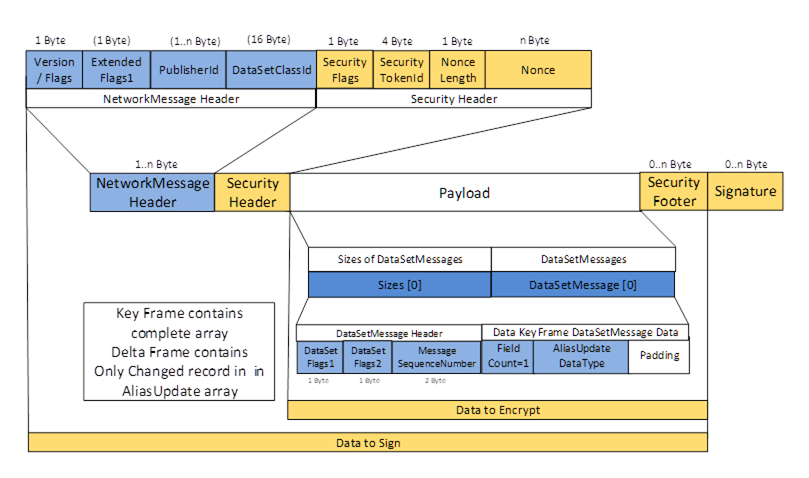
Figure D.4 – UADP DataSetMessage header layout
Table D.7 shows the configuration for the DataSetMessage header.
Table D.7 – UADP DataSetMessage header layout
|
Name |
Type |
Description |
|
DataSetFlags1 |
Byte |
Bit 0: Indicates whether this DataSetMessage is valid Bit range 1-2: Field Encoding 00 - VariantBit 3: DataSetMessageSequenceNumber enabled = 1 Bit 4: Status enabled = 0 Bit 5: ConfigurationVersionMajorVersion enabled = 0 Bit 6: ConfigurationVersionMinorVersion enabled = 0 Bit 7: DataSetFlags2 enabled = 1 |
|
DataSetFlags2 |
Byte |
Bit range 0-3: UADP DataSetMessage type Shall be 0000 for a Data Key Frame Shall be 0001 for a Data Delta Frame Shall be 0011 for a Keep Alive Bit 4: Timestamp enabled = 0 Bit 5: PicoSeconds enabled = 0 (not included in the DataSetMessage header) |
For a description of Data KeyFrame, Data Delta Frames and Keep Alive see OPC 10000-14.
Bibliography
ANSI/ISA-S5.1-1984 (R 1992), Instrumentation Symbols and Identification
https://webstore.ansi.org/standards/isa/isa1984r1992
__________